How Contact-Level Orchestration Changes the Way Sales Follows Up


Despite continued investment in ABM tools from GTM teams, follow-up still isn’t as effective as it should be.
Data vendors (which a lot of those ABM tools started out as) would have you believe the problem is a lack of account intelligence.
But 77% of respondents in Pretzl’s ABM Insight Report say they’re drowning in data; they’re just lacking the insight they need to do anything useful with it.
The devil is in the details (or, rather, in the lack thereof).
For most teams, ABM orchestration is built on account-level rollups—vague intent signals or surge scores that don’t clearly tell Sales who to contact or what to say, just that “someone at the company is interested.”
It’s tough for Sales to sell to people when the intel they have doesn’t tell them anything about said people.
Contact-level orchestration gives reps that context. Each signal is tied to a real person and a specific topic you can build into your sales cadence, so follow-up reflects each buyer’s context, not an abstract account-level score.
In this guide, we’ll dig into how ABM teams can use contact-level orchestration to shape buying journeys for each stakeholder based on what they actually care about.
Why account-level signals leave Sales guessing
This is what most account-based marketing teams see from their ABM tools today:
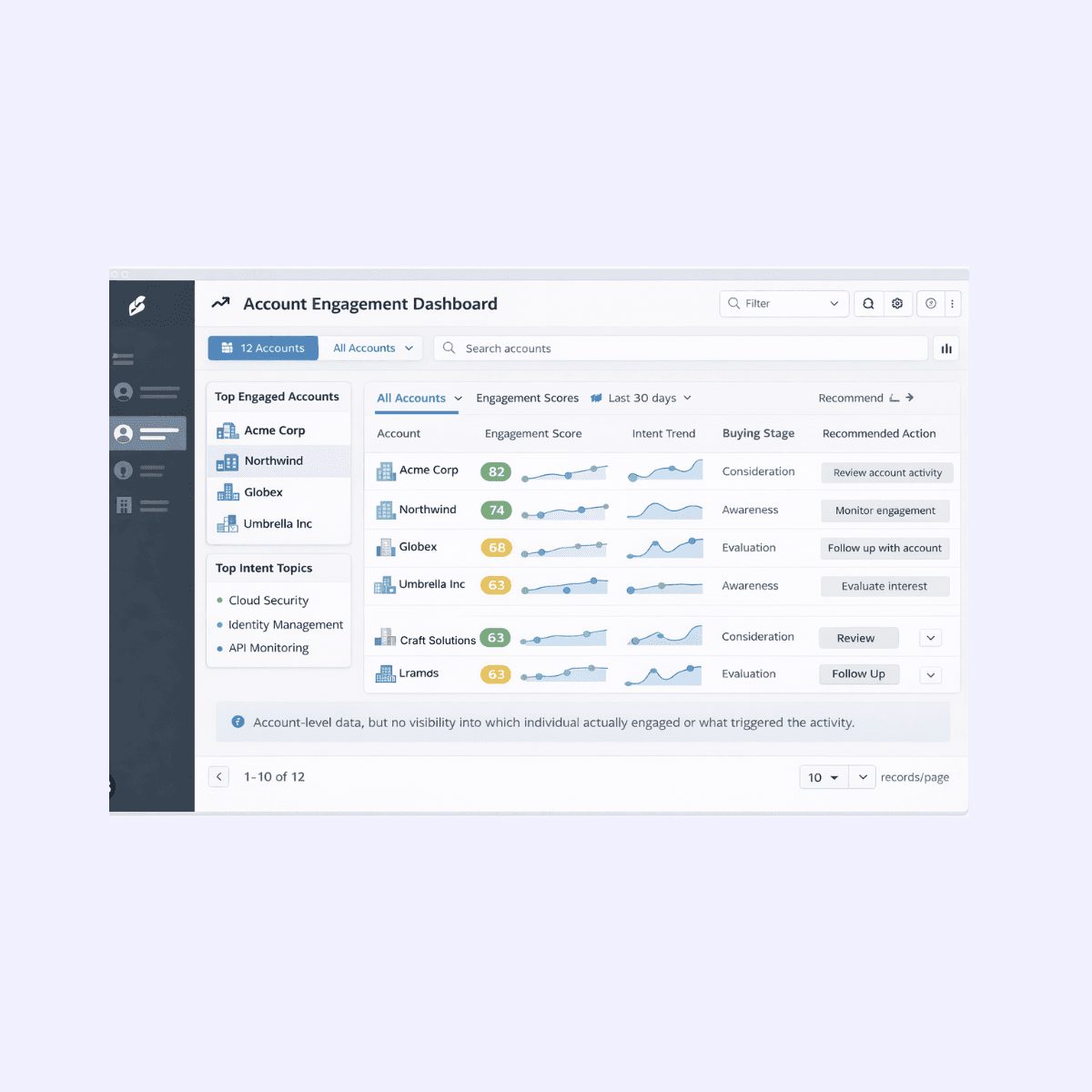
Signals are aggregated at the account-level, which makes for nice-looking dashboards, but collapses real buyer journeys into averages and hides who actually engaged and what they engaged with.
You can see that target accounts are “in-market”, but at the practical level, Sales is still left guessing:
Who actually showed intent? What were they interested in? What should I say now?
It's why, despite heavy enterprise investment in intent tools and ABM orchestration, Sales frequently reports that they still don’t know who to call.
And so the standard workflow plays out:
- An account spikes, trends, or reaches a scoring threshold in the ABM tool
- Nobody knows who exactly to speak to
- An automated sequence runs, and everyone gets the same, generic (and maybe a little creepy) outreach they’ve seen a hundred times:
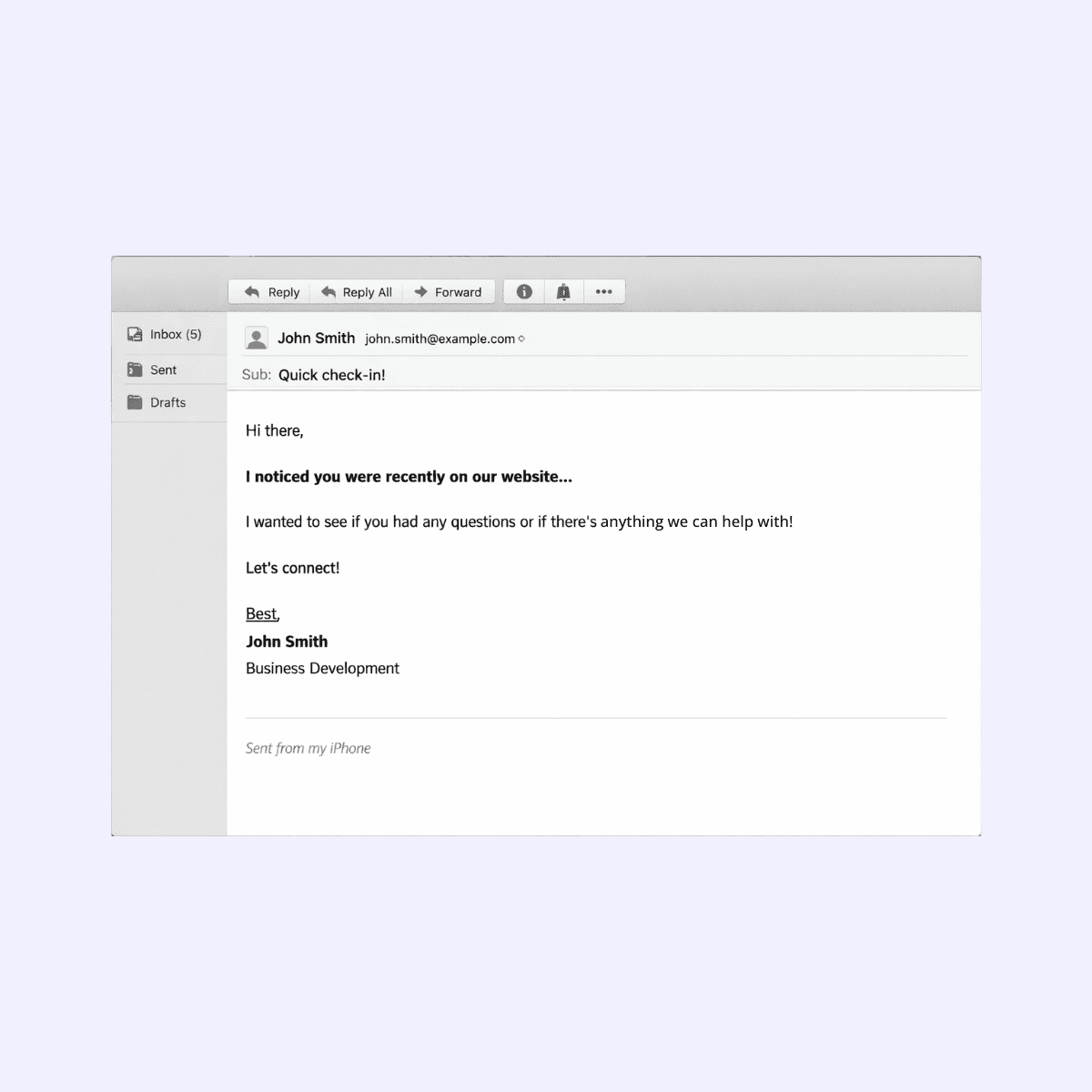
And your ABM tool calls it a win because a workflow was “orchestrated”.
But just because a sequence ran or a score crossed a threshold doesn’t mean the right person got the right follow-up, or that it made any measurable influence on moving that deal forward.
What’s missing is the context that turns account-level trends into meaningful sales follow-up.
How contact-level orchestration replaces guesswork
For reps deciding who to reach out to and what to say, context is everything.
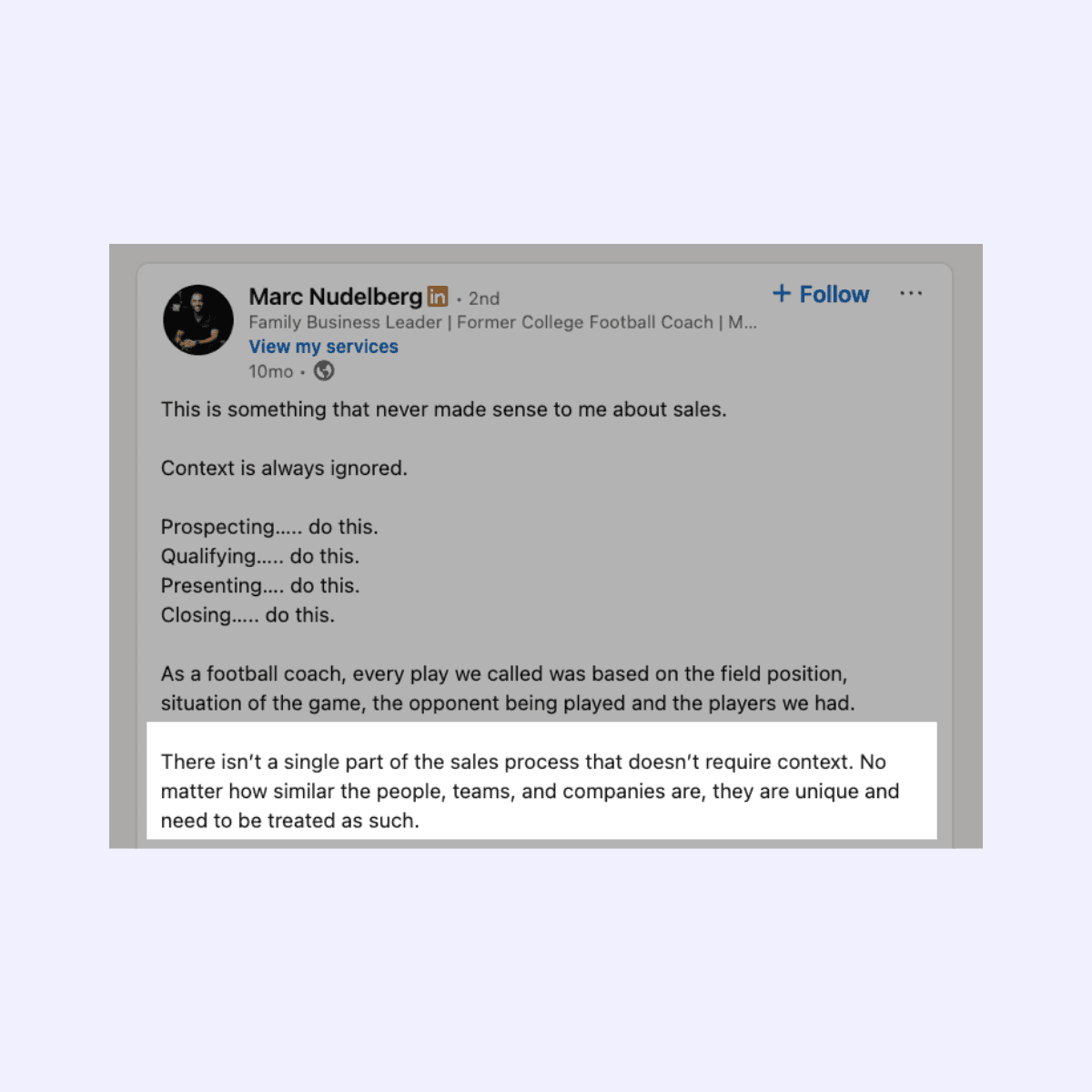
Knowing that someone searched with or engaged with a given topic is helpful. Knowing who engaged, and the specific topic they engaged with, fundamentally changes how follow-up is framed.
Contact-level orchestration provides that context, shifting the unit of action from “account” to “person.”
It allows teams to move beyond stage-based sequencing and trigger follow-up based on specific signals from specific individuals, making outreach more relevant, timely, and effective.
Here’s how contact-level orchestration helps ABM teams shape stakeholder journeys around what each person actually cares about.
Follow-up is guided by what individual buyers actually care about
With contact-level orchestration, GTM teams can craft outreach that’s relevant to each person’s needs.
That’s because outreach is triggered by contact-level intent signals instead of account scores.
For example, with Influ2, if a prospect is researching a relevant topic, reps don’t see that “someone at a target account” is interested. They get detailed intent signals that tell them:
- Who was reading relevant content on a third-party site
- What topic they were researching
- Which website the content is on
- When they engaged
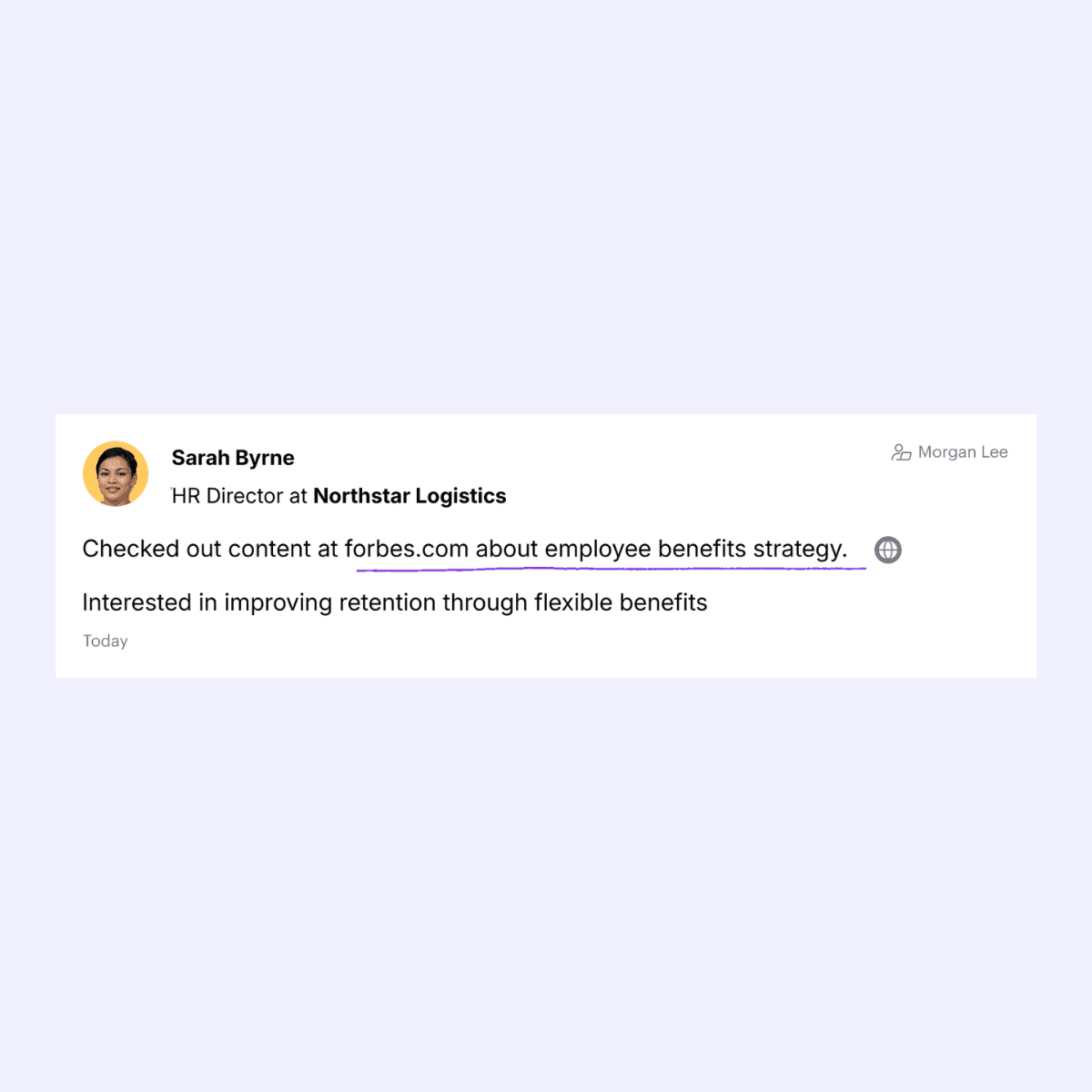
Sales follow-up then becomes much more specific and relevant to each individual buyer, referencing what the person actually cares about and tying that back to how your product can help.

Marketing can then support with relevant contact-level ad air cover with Influ2, so the ads buyers see have the same messaging as the Sales outreach they receive.

Sales engages buyers while they’re still in motion
We surveyed 50 senior-level B2B buyers across enterprise and mid-market companies, and they told us where their buying journey typically begins: when a current tool stops meeting their needs.
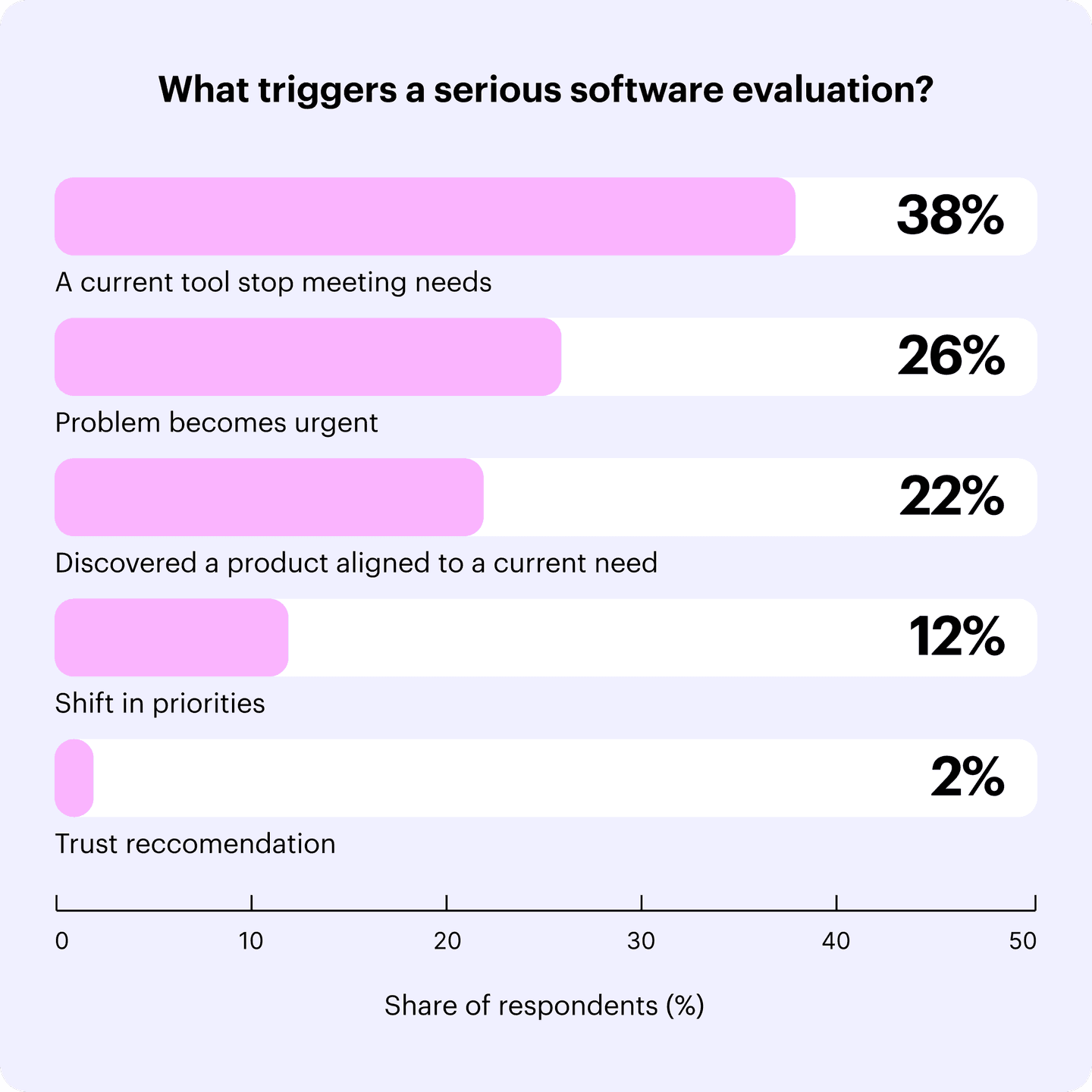
To get involved in the buying journey that early, reps can’t wait for an account to hit a scoring threshold.
By that time, the interested buyer has already moved on.
Contact-level orchestration gives reps the tools they need to jump on individual engagement when the buyer is still in motion.
Instead of waiting for an ABM tool to tell you an account is "in market" (by which time the actual interested contact has probably shifted priorities or mentally purchased from a competitor), Sales can orchestrate follow-up as soon as a prospect shows signs of interest.
For example, with Influ2, reps might receive a social signal about a buying group member within a target account, like this:
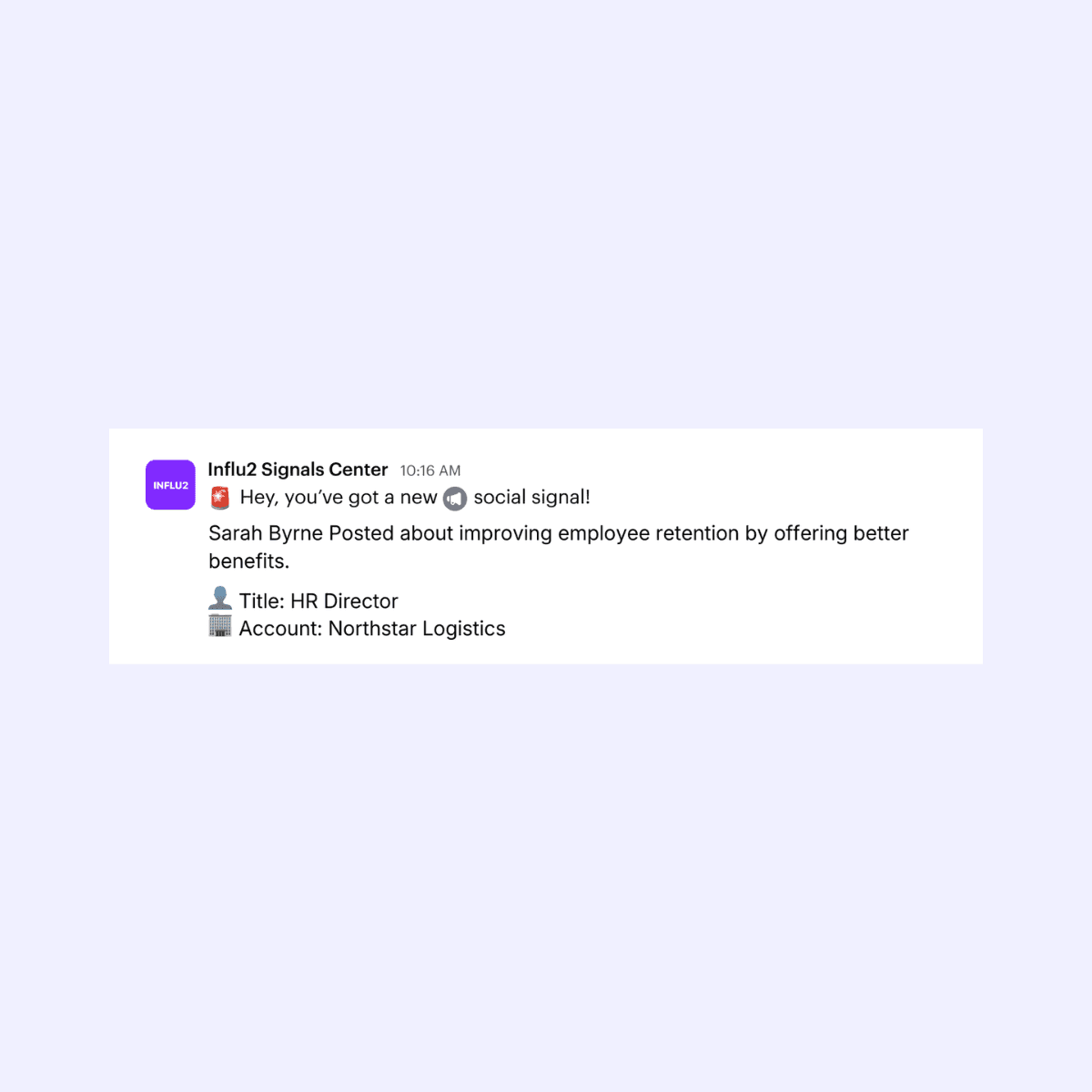
And they can instantly trigger the next step in their outreach workflow, such as:
- Commenting on the LinkedIn post
- Emailing with a report about improving employee retention
This kind of immediacy is what helps you get involved early in the buying journey, not once the buying committee is in the decision stage.
Outreach is multithreaded across the entire buying group
Enterprise purchases are almost always influenced by multiple decision makers, and each has different needs, goals, and objections to raise during the buying process.
In many B2B deals, senior leaders are at the front of the buying decision, but IT, security, and finance are also involved, often blocking the deal with practical objections.
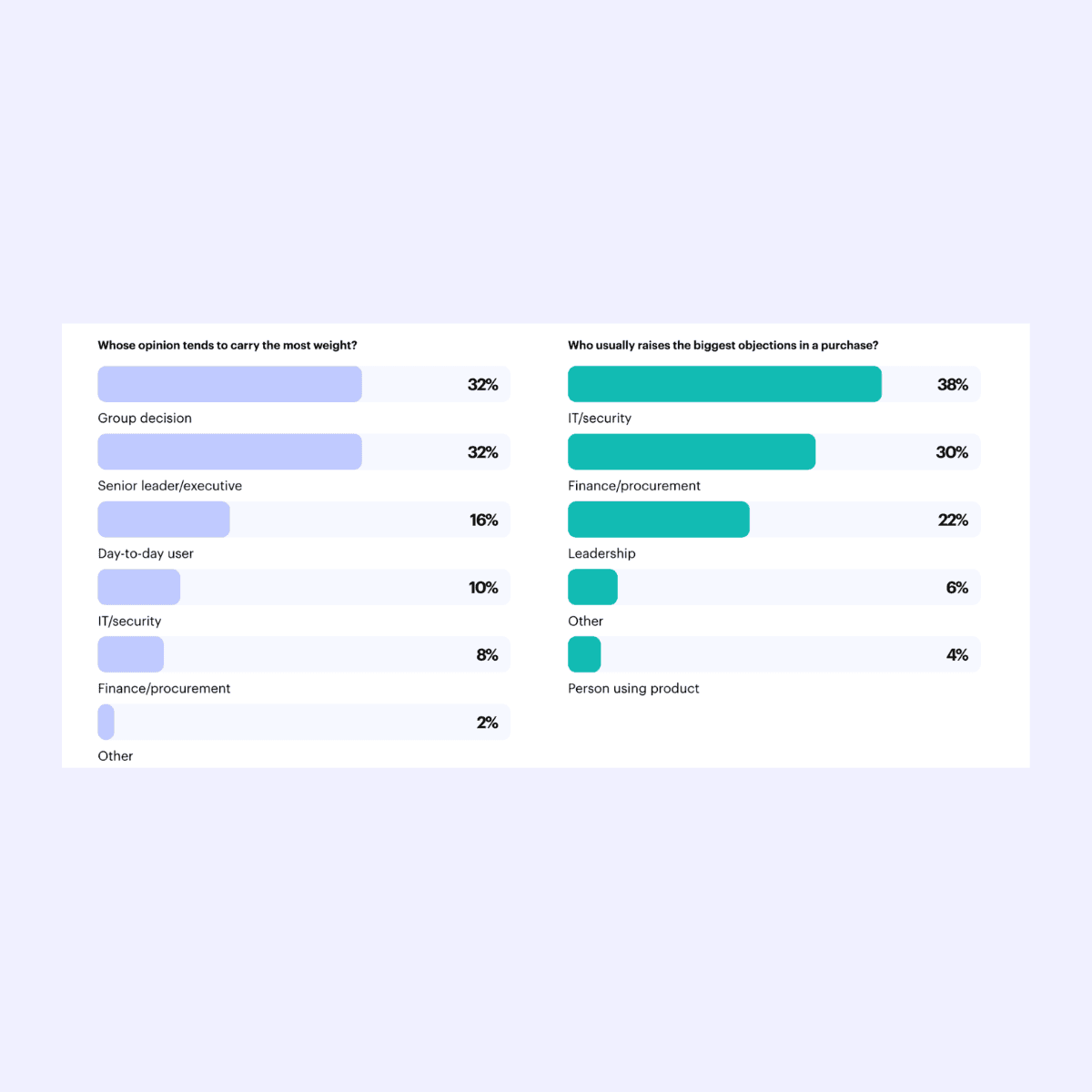
The winning GTM teams are those that effectively multithread and create engagement across the buying group, using contact-level orchestration to spot early buying signals and serve messaging that matches each decision maker's context.
Say the HR Director, driving a deal your team is working on, is researching a competitor, and a contact-level signal comes through from Influ2:

You’ve set up an orchestration workflow so that whenever a prospect at a target account is researching a competitor:
- The sales rep on the account is notified
- The relevant competitor battlecard is loaded up into the notes for the next scheduled call.
- You start showing them ads with reviews and case studies from customers who’ve made the switch to you from that competitor
But it's not just the HR Director who receives outreach.
Since you know that the CTO is almost always a deal-blocker on these kinds of deals, Marketing can target them (the quiet stakeholders) with relevant ads while Sales is doing outreach.
While the HR Director sees trust content like case studies, the CTO sees ads promoting detailed whitepapers comparing your product with the competitor’s on factors like security protocols and ease of integration.
Orchestration reflects how people actually make decisions
People are people.
They don’t move through funnels in perfect stages, as much as our ABM tools might like them to.
They change their minds, forget ads, explore topics sporadically, and sometimes abandon buying journeys altogether. In our ABM That Starts With People report, we learned that 66% of B2B buyers either occasionally or frequently change their priorities during the buying process.
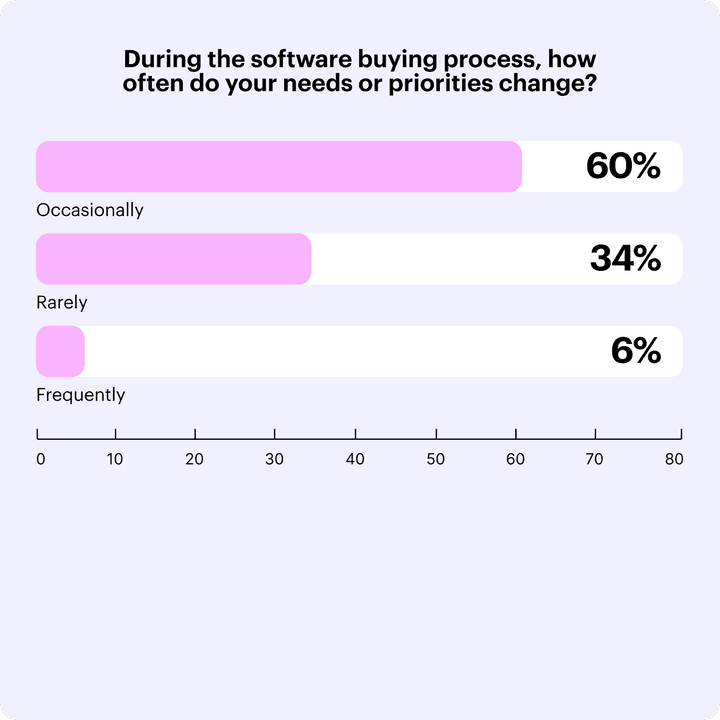
Contact-level orchestration reflects that reality by responding to individual engagement signals.
Maybe a prospect that was previously engaging with content about campaign performance suddenly starts researching data privacy on Google.
Instead of keeping that contact in the same nurture track or ad program, you can adapt:
- A sales email sequence launches, sharing security-focused content
- The prospect is moved into a different ad journey, highlighting compliance and integrations
Rather than assuming the buyer is progressing neatly from awareness to consideration to decision, contact-level orchestration helps your actions reflect what prospects are actually doing in the moment.
Contact-level orchestration makes sales follow-up actionable
For most teams, orchestration still runs on account-level signals. Sales knows an account is “active,” but not who engaged, what they cared about, or what the next step should be.
Contact-level orchestration changes that.
When signals are tied to a specific person and topic, reps know who to reach out to, what to reference, and how to connect their outreach to the buyer’s actual interest.
That shift turns orchestration from automated workflows into coordinated action, where Sales and Marketing respond to real buyer signals instead of guessing what might be happening inside an account.
Want to see how contact-level signals translate into measurable business outcomes? Schedule a demo with Influ2.

Dominique Jackson is a Content Marketer Manager at Influ2. Over the past 10 years, he has worked with startups and enterprise B2B SaaS companies to boost pipeline and revenue through strategic content initiatives.

