
How Enterprise Decision-Makers Actually Buy B2B Software


Behind every B2B deal is a real person trying to solve a real problem inside a complex organization—with a buying committee to convince and internal politics to navigate.
So we asked 50 Directors, VPs, and C-level leaders at enterprise and mid-market companies how their software buying decisions unfold from start to finish.
These are the people responsible for aligning stakeholders, managing risk, and justifying spend across their companies. And the results revealed a lot about what buyer journeys look like in 2026.
In this guide, we explore:
- What actually triggers the buying journey at larger companies
- How competitive most deals really are
- How buying committees form (and who carries the most influence)
- What shapes perception before Sales ever gets involved
- Where deals stall and what speeds them up
Who we talked to
We surveyed 50 senior-level B2B buyers across enterprise and mid-market companies.
Here’s a breakdown of our participants:
- 50% C-level
- 26% “Head of” function
- 24% Director/Senior Manager
- 62% enterprise companies (1,000+ employees)
- 38% mid-market companies (200-999 employees)
- Top industries: Technology, Manufacturing, Healthcare
What triggers the B2B buying process in 2026?
Most people don’t buy software on a whim. Our survey found that buying journeys start with a pain or friction point, not just because a tool looked interesting.
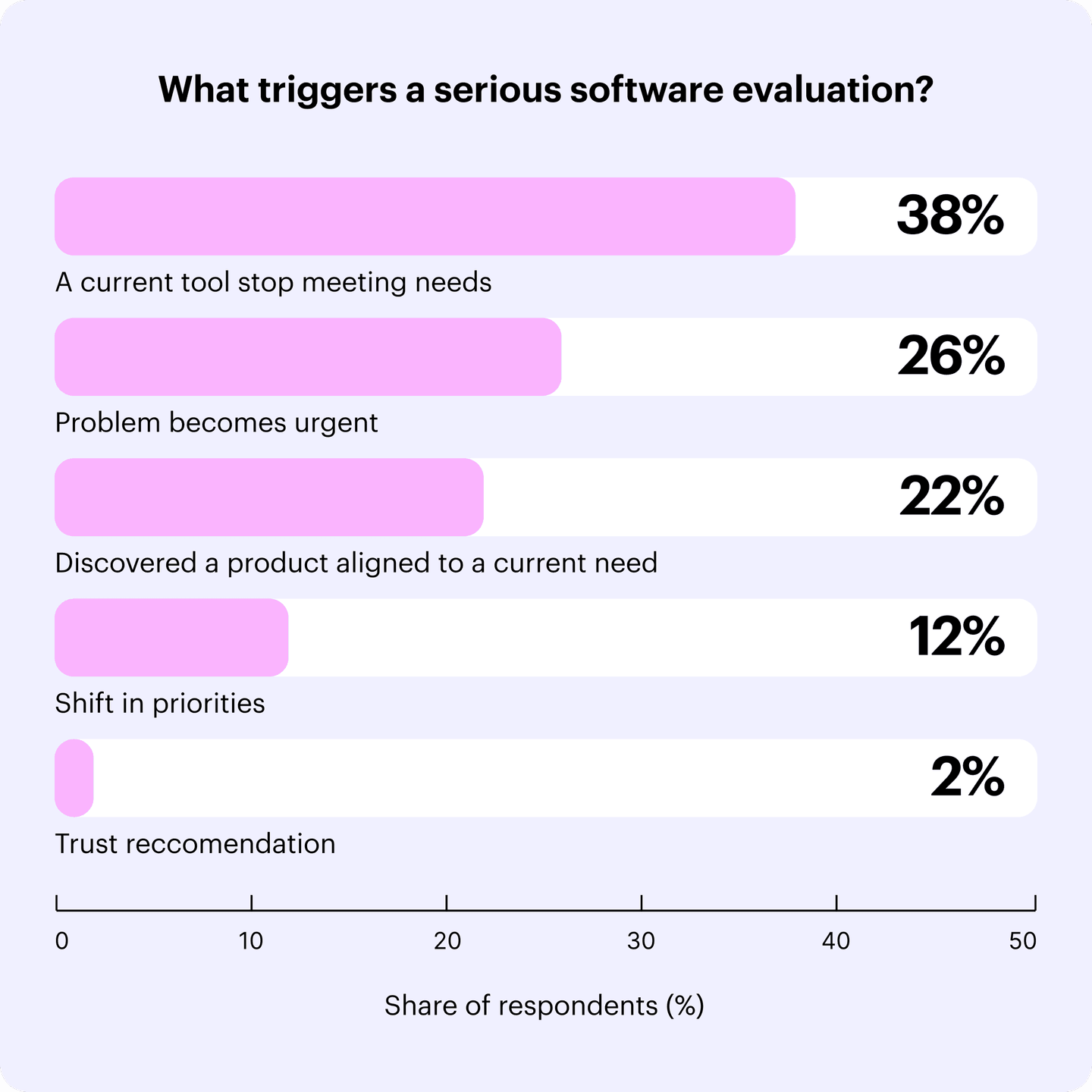
Enterprises were more likely to start a buying journey because a current tool stops meeting their needs (42%), while only 13% started after discovering a new product that aligned with a current need. However, 37% of mid-market companies start their buying journey after discovering a product that could solve a current need.
Only 2% of total respondents said they started their buying journey purely because someone they trust recommended a tool. However, as we’ll explore later, peer recommendations play a larger role further in the buying journey.
This data shows why you can’t afford to be passive and hope prospects stumble across your product. You need to be visible early on when they first notice a pain.
The challenge is that most people start the research process way before reaching out to vendors. They’re Googling, asking AI, reading articles, or even posting about their pain points on social media.
If you don’t have visibility into when that’s happening, you’re probably showing up too late in the process.
Influ2 comes in handy here.
Upload a list of people you want to target (you can sync directly from your CRM) and Influ2 tracks relevant signals from search, third-party content, social media posts, and engagement with your ads from those specific people.
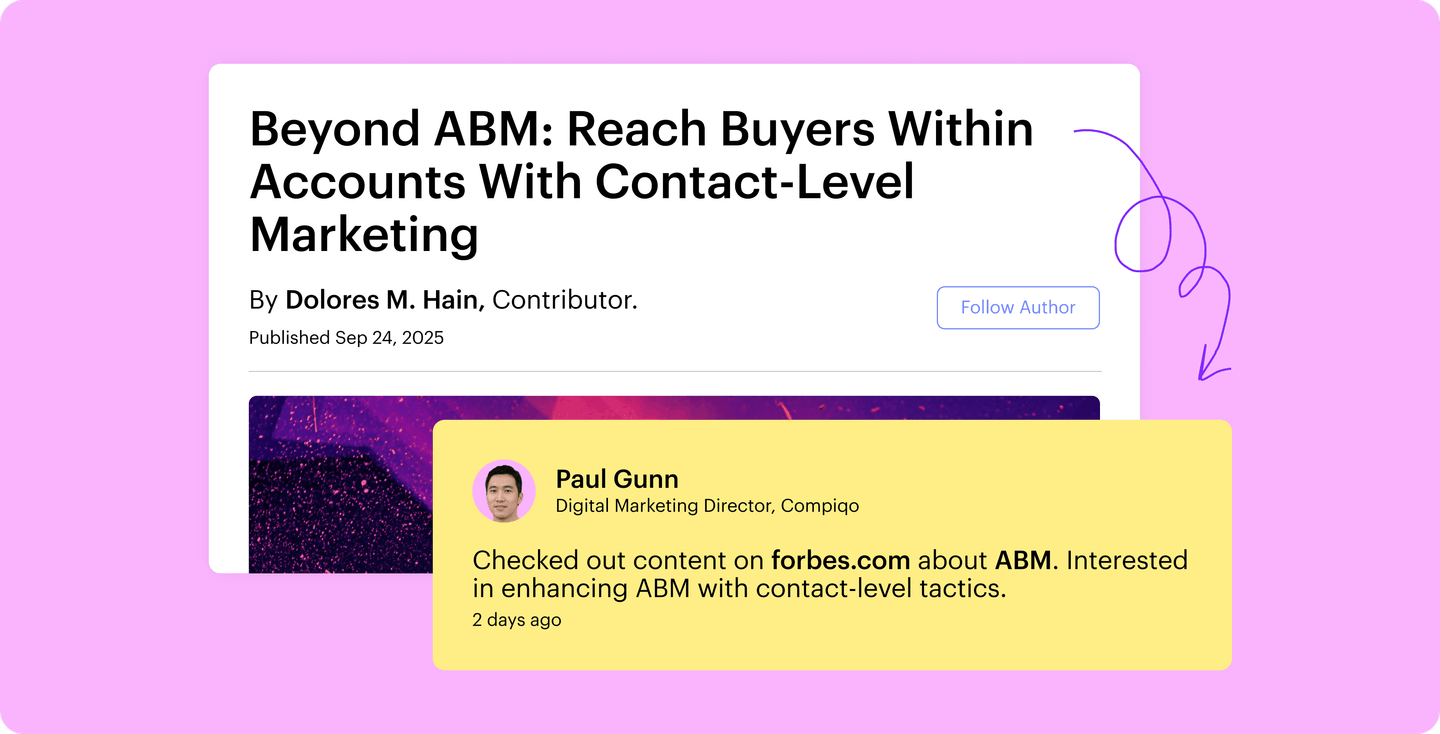
For instance, say you’re trying to win Anthropic as a client for your project management software. Upload a list of people in the buying committee to Influ2, then add relevant keywords and topics for your business.
Influ2 will surface when those people search for those terms, read related content, or post about those topics online—along with exactly what they searched, read, or shared.
The signals get passed to your sales team so they can reach out earlier in the buying journey with a message that reflects each person’s current interests and pain points.
Buyers have a shortlist—you need to be on it
According to our survey, 74% of B2B buyers are evaluating 3-5 vendors at once, so never assume you’re the only company they’re talking to or being approached by.
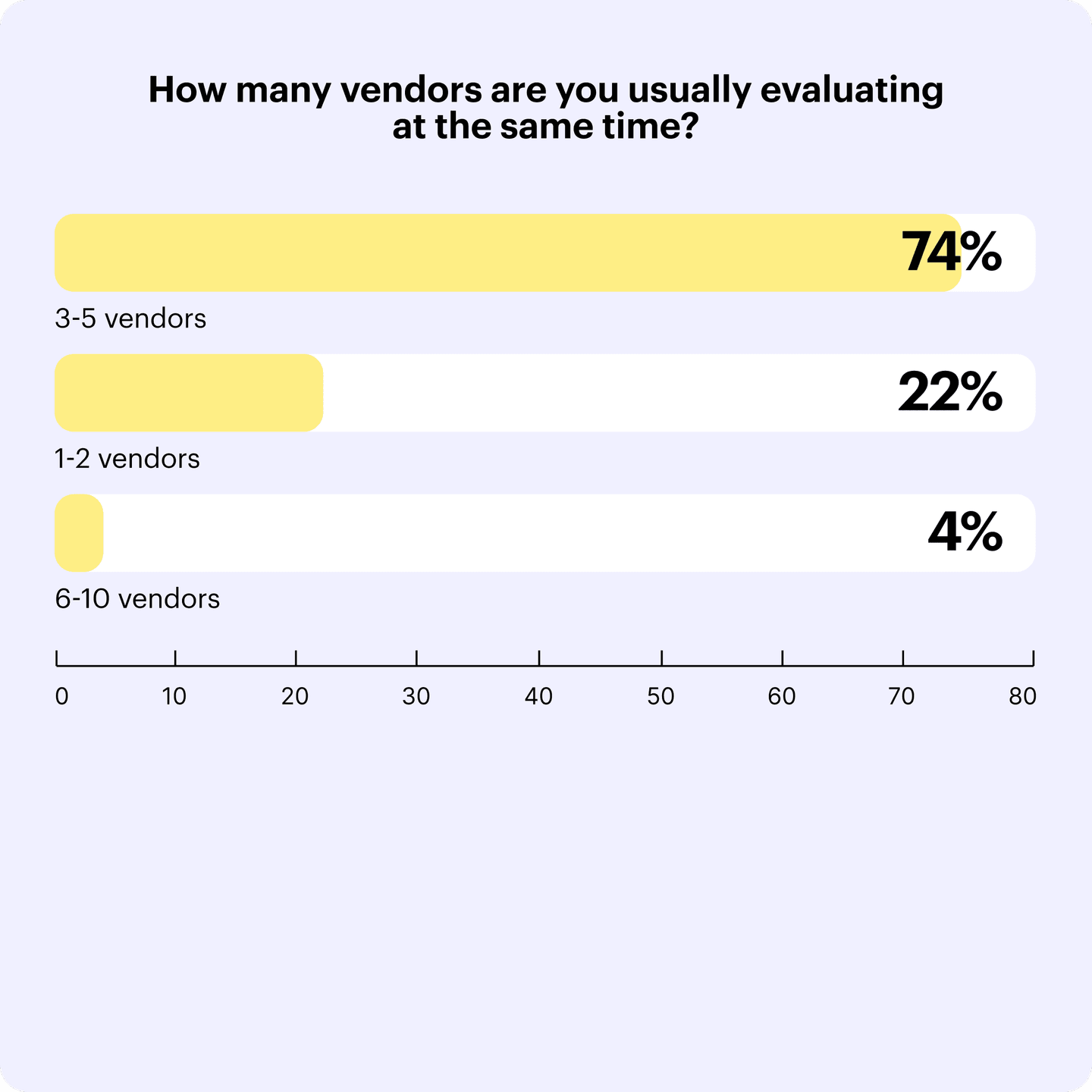
Eighty-one percent of enterprise companies evaluate 3-5 vendors, and only 13% evaluate 1-2. Mid-market companies were a little more divided—63% evaluate 3-5 vendors and 37% evaluate 1-2.
This trend makes differentiation extremely important. Your website, ads, sales outreach, and other channels should make it clear how your solution stands out from the rest of the market.
One way to get an advantage is to know exactly which competitors you’re up against.
Sales can ask directly. However, some prospects prefer not to share that info while they’re actively talking to multiple vendors.
But another option is to use Influ2 to monitor when your target prospects search a competitor’s name.
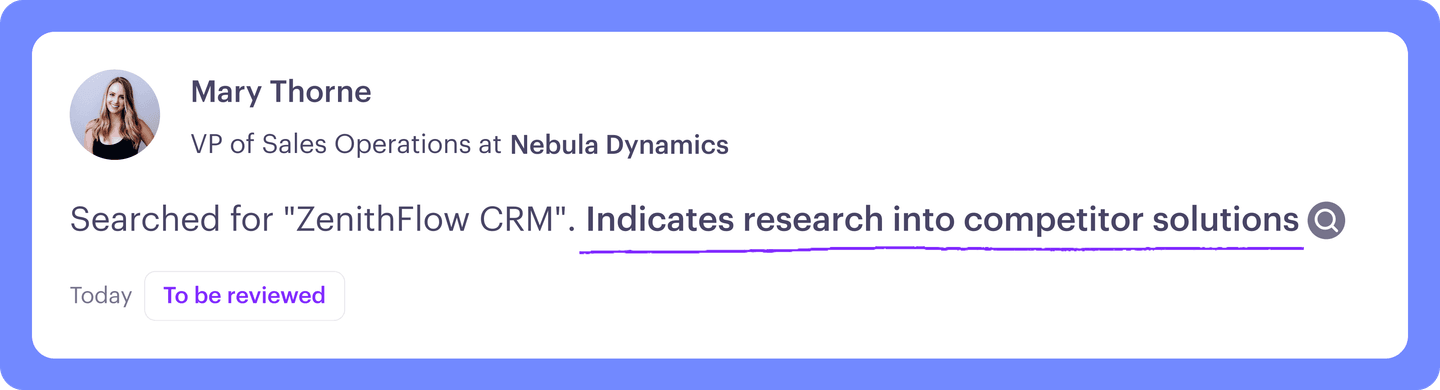
With that info, Sales can frame their conversations around your differentiators, and Marketing can run ads to landing pages that compare your product to the competitors that prospects are researching.
Buyers form opinions about you before talking to a salesperson
We know that prospects research your company before talking to Sales directly. But we were curious about what GTM teams can do to make a strong first impression.
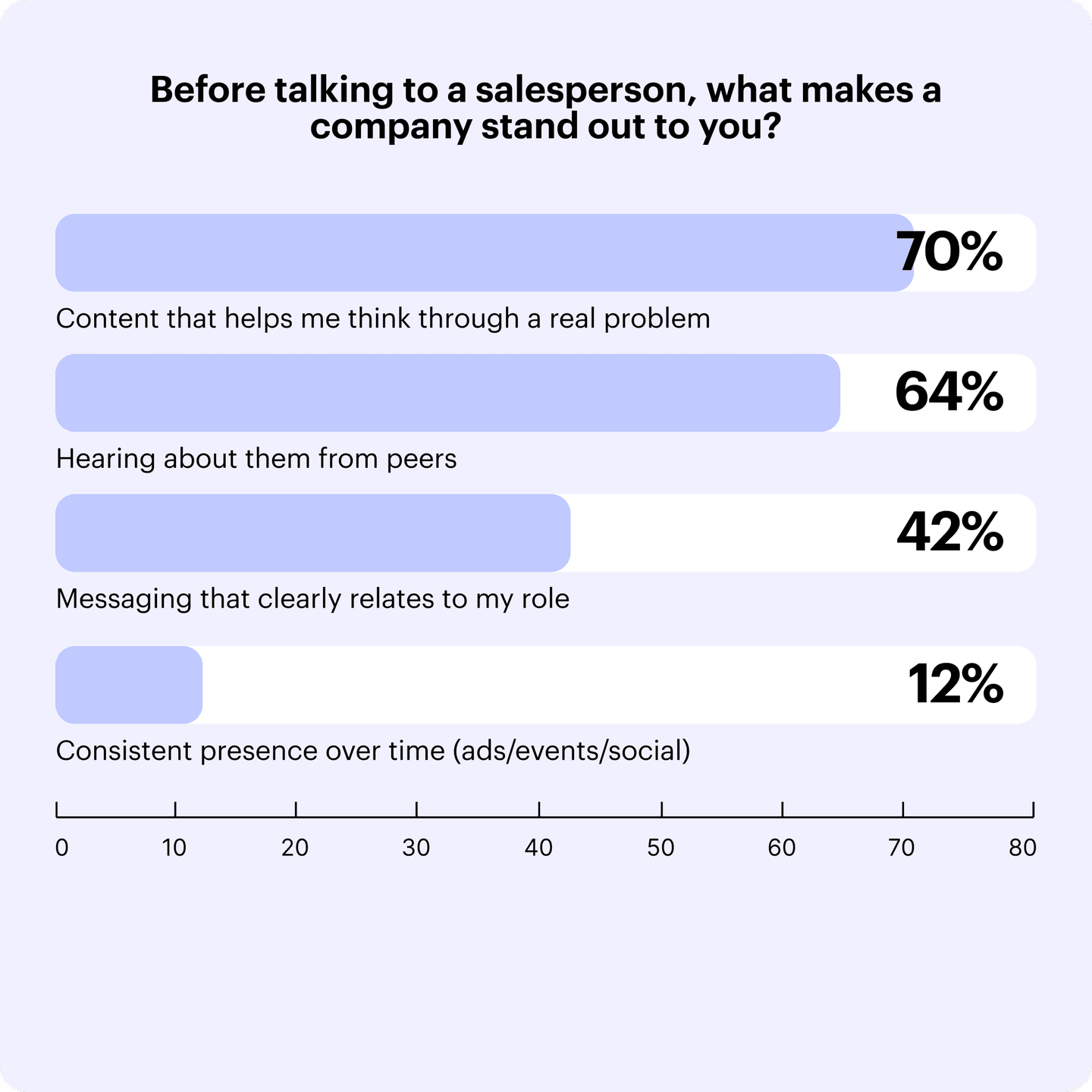
There’s a clear pattern: to stand out, you need to be trusted and useful.
We asked buyers their top piece of advice for companies trying to earn their business, and one Director of Procurement said, “Target advertising! Don’t be generic, because we easily lose focus and chase new ‘house on fire ‘issues.”
A Director of Product Marketing had similar feedback, “Create messaging that clearly resonates with problems that I am trying to solve, unique to my industry and role.”
What matters more than just being visible is making prospects feel that you understand their problem and can help them solve it.
Seventy percent of B2B buyers we surveyed said the number one thing companies can do to stand out is provide content that helps them think through a real problem.
That could be how-to articles, original data and insights, or anything else that ties directly to the challenges they’re experiencing. And buyers expect you to provide that value consistently throughout the buying journey at every touchpoint.
One Director of Growth Marketing we surveyed said the top thing companies can do to speed up the buying process is to make sure “value is communicated from the research process through the sales process.”
Our survey found that word of mouth is another important factor—64% of respondents said hearing about a company from peers makes them stand out before talking to a salesperson. Prospects want to know that other people trust you and have had success with your product.
Here’s how to act on these insights.
Use Influ2 to target each buyer with ads specific to their role and stage in the sales process.
For instance, after prospects have an initial sales call and become open opportunities, you could show them ads that highlight relevant product use cases or case studies with companies similar to theirs.
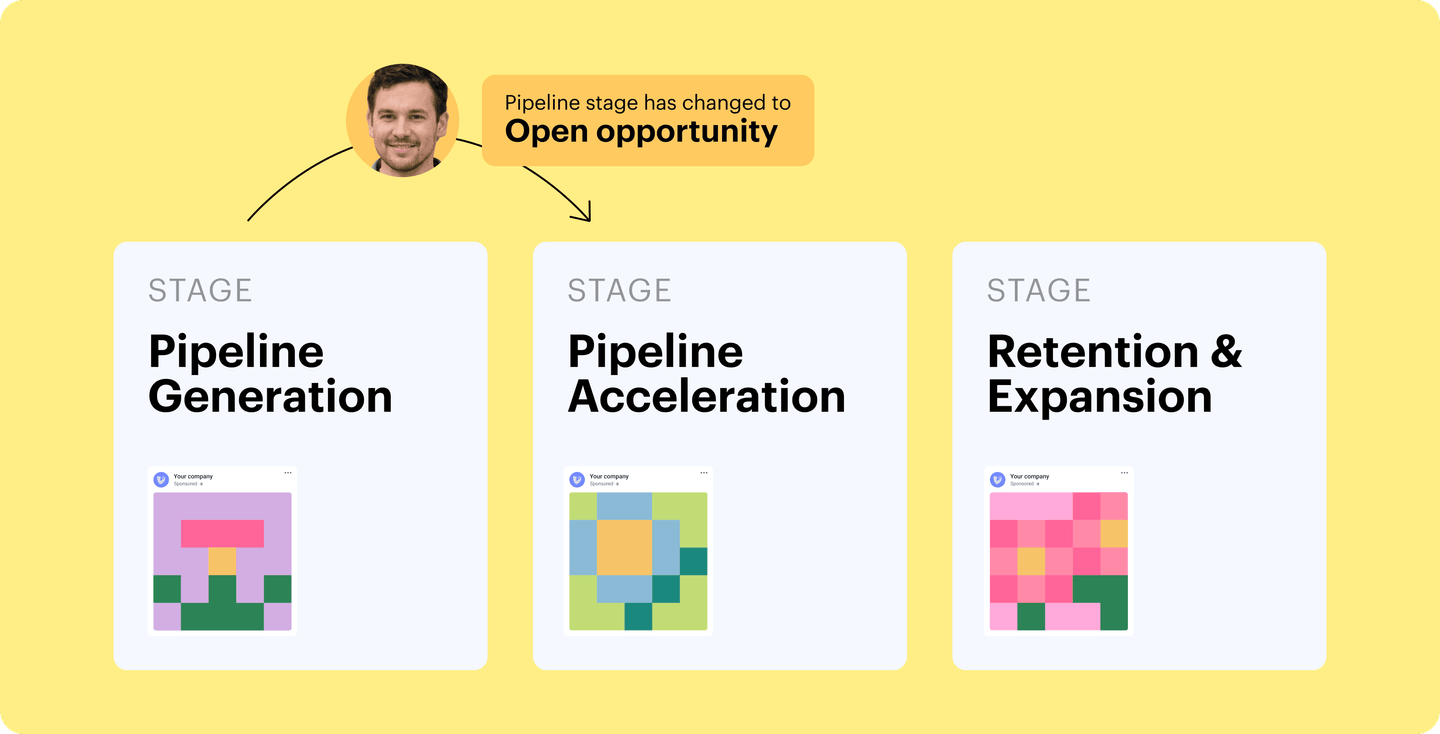
Since Influ2 offers contact-level ads, you can get granular on which prospects see which ads, even within the same buying group.
For example, if you sell marketing automation software, ads that’d be relevant to the email marketing manager might not be as effective on the content marketing manager, even though they’re both part of the buying group.
With Influ2, Marketing can show each of them different ads, track when they engage, and share that information with Sales so they can follow up.
Who influences buying decisions, and what slows them down?
There’s an assumption that selling to bigger companies automatically means dealing with a huge buying group. But our survey found that this isn't always the case.
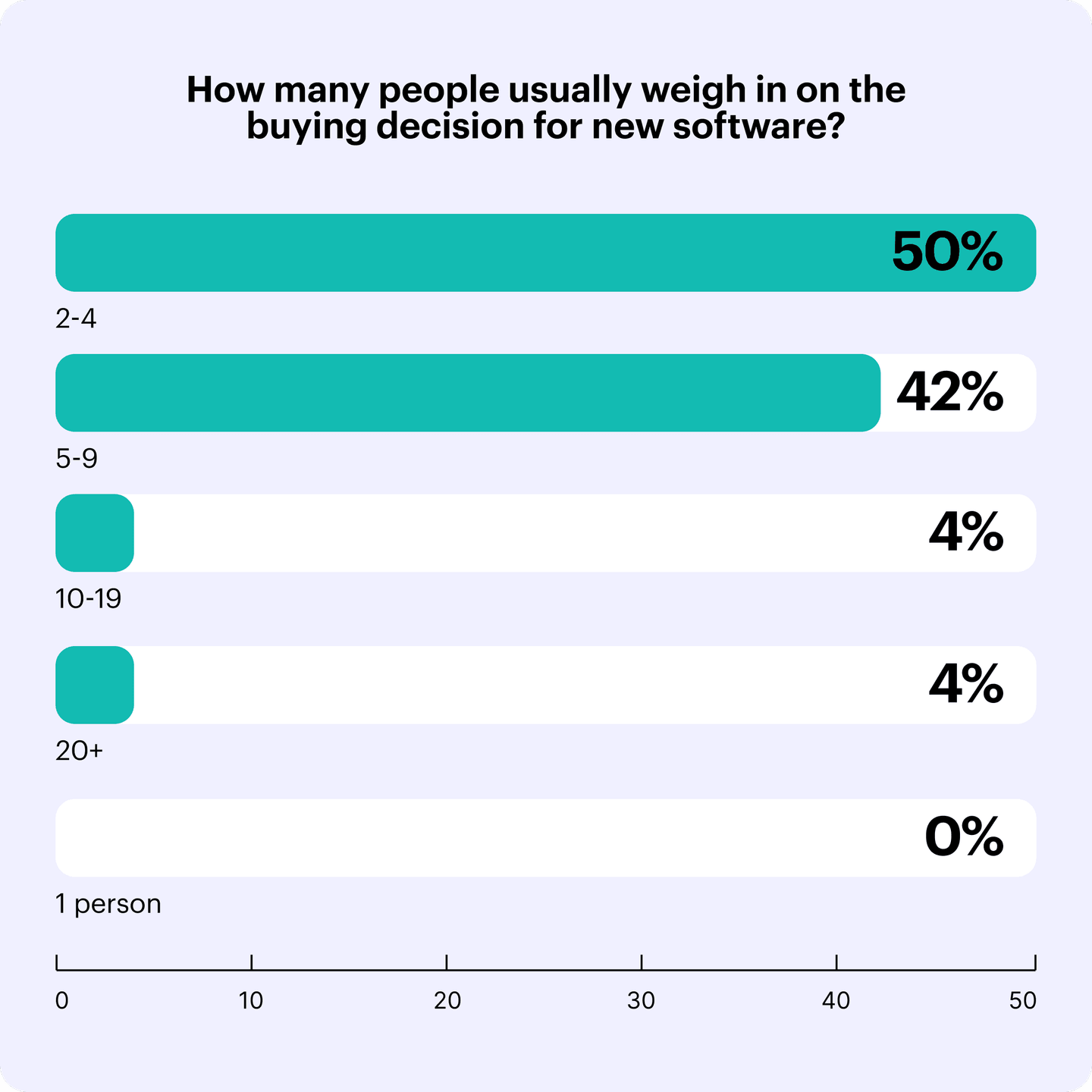
On average, respondents from enterprise companies had larger buying committees. All of the respondents with buying groups of 10+ people were from enterprise companies.
But the majority of buying groups were either 2-4 people (50%) or 5-9 people (42%). We also dug into whose opinion carries the most weight when teams decide on a vendor.
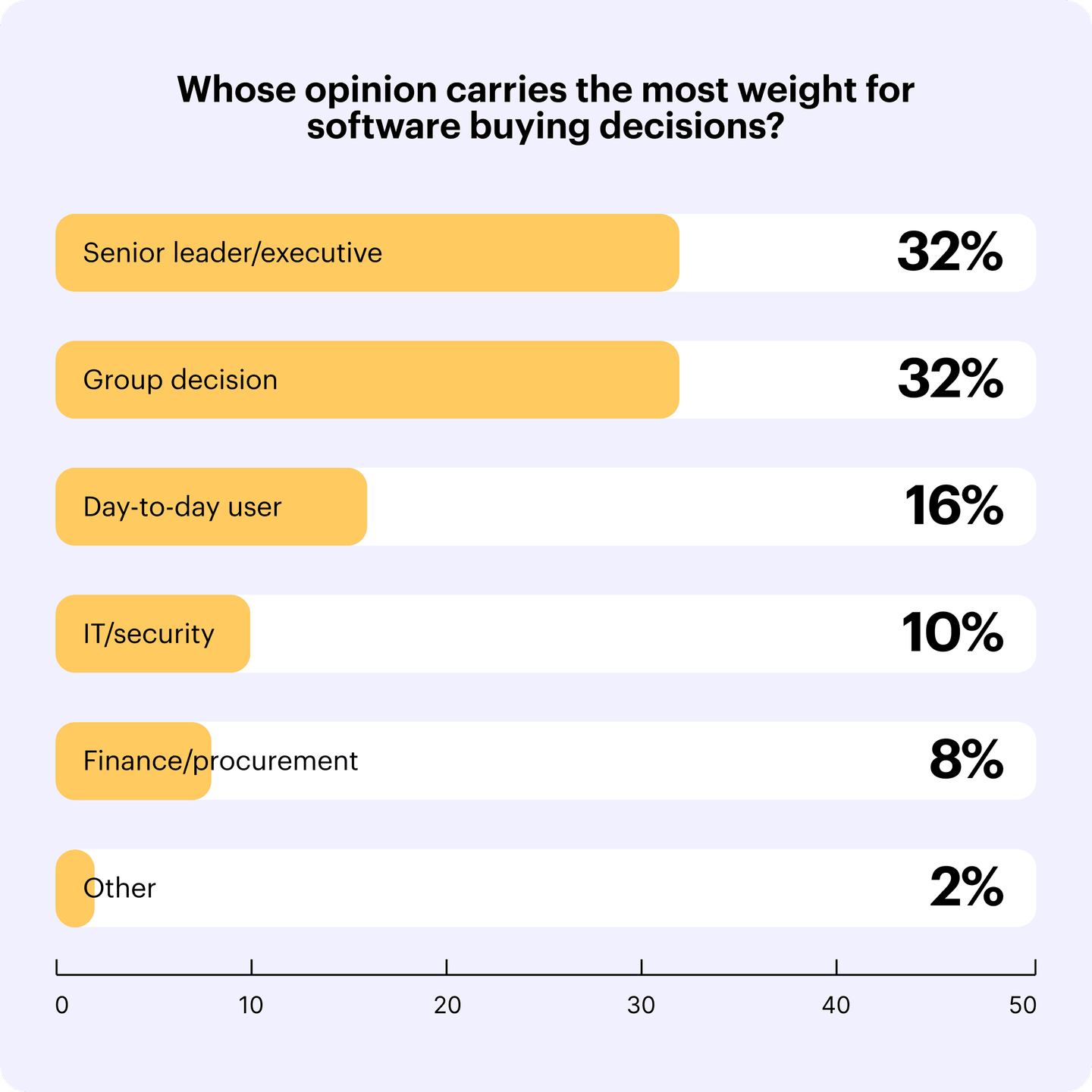
The results were split. Thirty-two percent said a senior leader or executive’s opinion carried the most weight, while the same percentage (32%) said it’s a group decision.
Shockingly, the day-to-day user came in only at 16%, meaning if you’re only targeting the end-user, you’re missing out on a good chunk of the decision makers you need to influence.
Another interesting finding was that although IT, Finance, and Procurement don’t usually have the final say, they have significant influence over how quickly a deal moves.
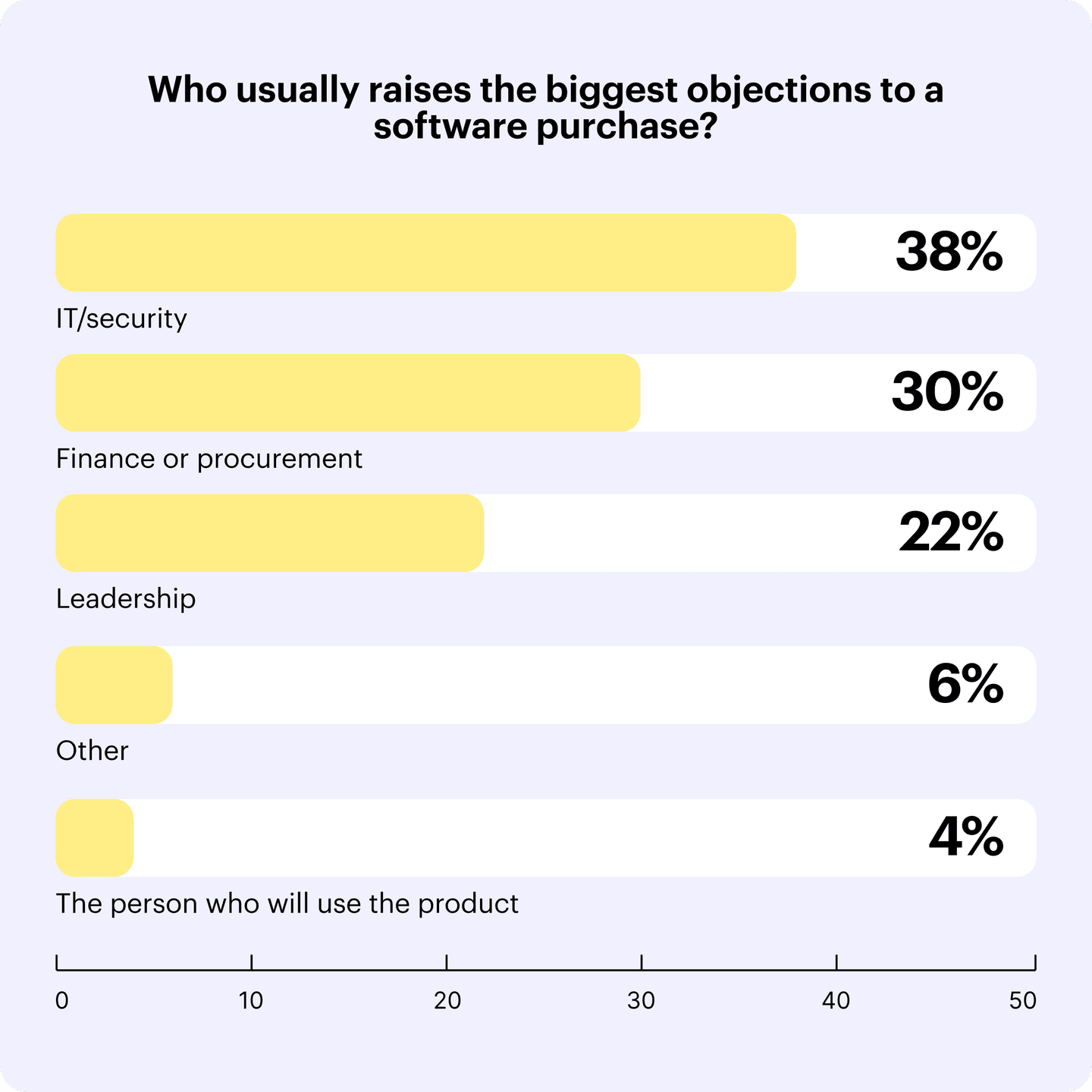
When we asked who raises the biggest objections in a purchase, IT and Security were top of the list at 38%, while Finance and Procurement came in second at 30%.
We also asked what, specifically, slows down buying decisions.
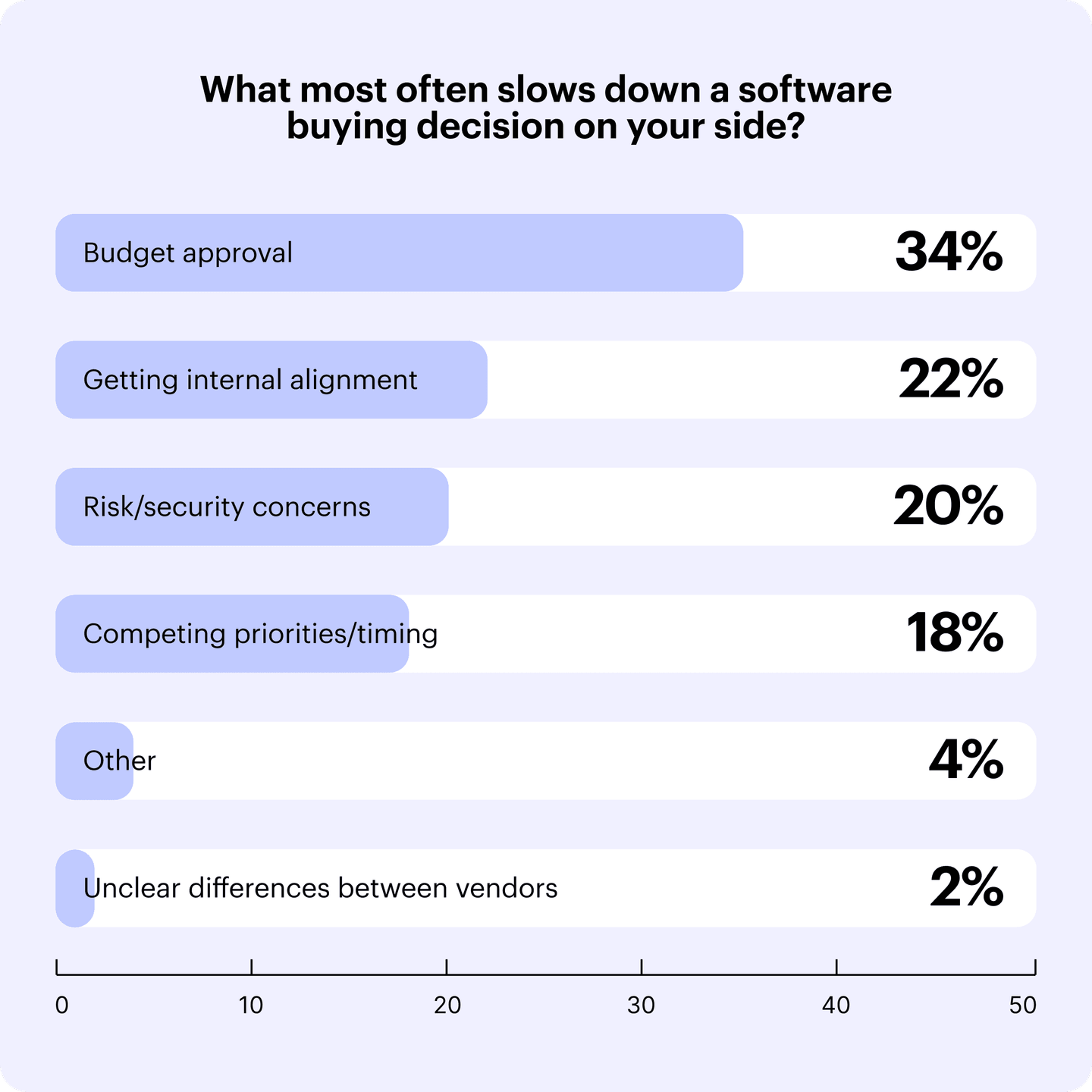
Budget approval (34%) was the top bottleneck for deals, while security concerns were third at 20%.
The second most common response was getting internal alignment (22%). That’s not too surprising, since most buying decisions are made collectively.
The most important takeaway from these responses is that it’s not enough to just focus on one person when you’re targeting mid-market or enterprise companies.
Your champion (typically the person who’ll use your product the most) has a voice, but they also need to convince the rest of the team.
To win deals, you need to influence the entire buying group, including the people Sales may never talk to. Even if you can’t directly solve issues like budget approval, you can make it easier for your champion to sell your product internally.
When we asked what’s helped speed up the buying process, one Director of Procurement at an enterprise company said: “Very clear examples of the solutions helping other companies like ours. It’s hard to get the attention of stakeholders, so connecting the dots is such an unlock.”
Influ2’s contact-level ads are very useful here. Find out the people involved in the buying decision that aren’t in sales calls but have influence, and target them with relevant ads that show your value.
Our survey made it clear that people are less moved by “This is why our product is great.” You need to answer, “How can your product help my company do X?”
But keep in mind that the “X” could be different for each person within the same company, and it might even change over time.
Expect buyers’ priorities to change throughout the process
Every salesperson has experienced this: You’ve been talking to a prospect for weeks or months, and conversations seem to be trending in the right direction. Then seemingly out of nowhere, things change.
You get ghosted, the prospect says they’re re-evaluating, or they bring up new requirements and priorities they never mentioned before.
The reality is you’re selling to people, and people are indecisive. One study found that the average American second guesses 41% of their daily decisions.
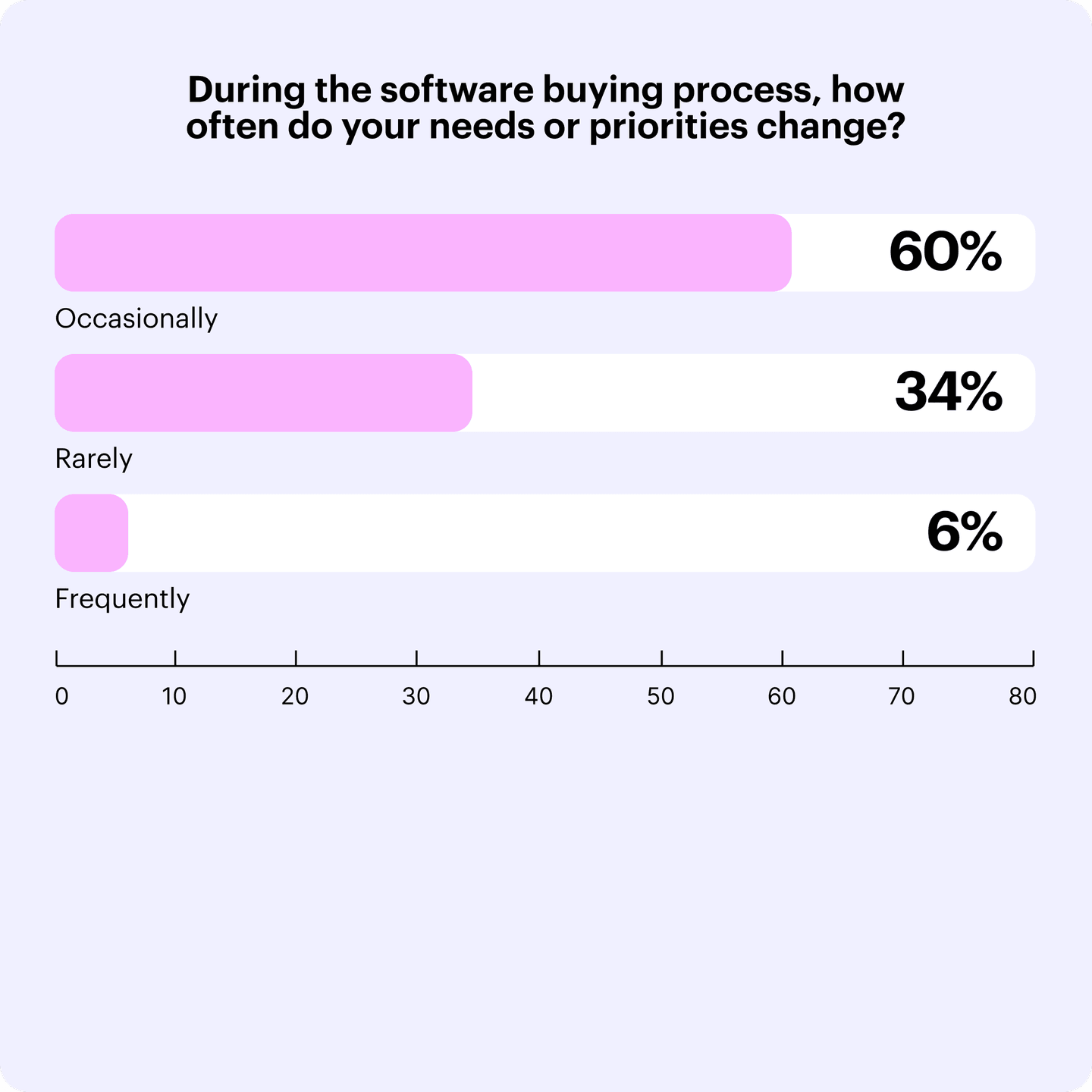
That helps explain why 66% of B2B buyers we surveyed either occasionally or frequently change their needs or priorities during the buying process.
How you respond to those changes is what makes the difference. It’s kind of like in football. You might have a game plan mapped out, but when it’s halftime, and the other team is doing things you didn’t plan for, you need to make a change.
Influ2 makes it easy to adapt to each prospect’s actual behavior.
Say you’re selling enterprise CRM software. During your initial demo, a prospect mentioned their biggest priority was task tracking and time management.
But one of the topics you’re monitoring signals for in Influ2 is “CRM integration.” Weeks after the demo, the prospect posts on LinkedIn “does anyone know a good CRM that integrates with Zendesk?” That’s valuable information that Marketing and Sales need to know.
Influ2 will show you the post. Then Sales can reach out to let them know you have a Zendesk integration, and Marketing could run ads highlighting how a similar customer set up their workflow.
Does your GTM strategy reflect what buyers actually want?
So many conversations about winning B2B deals focus on the mechanics: Account identification, sales stages, cadences, etc.
But this survey data is a reminder of something more important: people are people.
They second-guess themselves, look for validation, worry about risk, change their minds, and bring their own nuance to every decision.
Influ2 is built for that reality, and helps you understand when each person in an account shows interest, and what matters to them, so your GTM strategy reflects the human side of B2B buying.
If you’d like to see what that looks like in practice, we’d love to talk!

Dominique Jackson is a Content Marketer Manager at Influ2. Over the past 10 years, he has worked with startups and enterprise B2B SaaS companies to boost pipeline and revenue through strategic content initiatives.

