5 ABM Case Studies That Show What Actually Works


Whether you’re building an ABM program from scratch or refining an existing one, it helps to see how other teams made it work.
Not just the headline numbers, but details like how they chose audiences, structured campaigns, activated Sales and measured impact.
We’ve put together a list of ABM case studies that give real insights into specific execution choices and the outcomes they influenced, so you can apply them to your own strategy.
A quick snapshot of the case studies
Before diving into each case study, here’s a little teaser of what they achieved.
| Company/Industry | Primary Challenge | ABM Outcome |
| StarTree: Real‑time analytics | Targeting irrelevant contacts; needed alignment on decision‑makers | 3.17x conversion rate increase vs. cold outreach |
| CipherHealth: Healthcare communications | Align marketing and sales to reach people in complex health‑system buying committees | 83% pipeline lift; 20% revenue lift; ROI $122.70 per $1 |
| Quantexa: Data‑analytics platform | Traditional tactics wasted budget; long sales cycles | 5.2x pipeline boost, 4.53x conversion rate |
| Bonterra: Social good software | Unsure if ads were reaching actual decision‑makers | 2x win rate, 2.5x deal value |
| BioCatch: Fraud‑prevention biometrics | Engage all target accounts and convert at least 10% into pipeline; required precision to reach CISOs and fraud leaders | 6x more accounts in pipeline, 41% faster deal velocity, 100 % of late‑stage deals with an engaged contact |
1. How StarTree moved from broad targeting to contact-level ABM
StarTree is an analytics platform that sells to a very specific audience. However, they faced a common challenge: Marketing and Sales weren’t targeting the same people.
Initially, Marketing used a legacy ABM platform that got their message in front of accounts, but they couldn’t see if they were reaching the right people inside those accounts.
As a technical product, StarTree’s users are often a specific type of engineer at larger companies.
Targeting entire accounts or even “personas” led them to waste ad budget on people outside of the buying group.
So they shifted their approach and made three key changes.
Aligned sales and marketing on the same people
The first step was to make sure Marketing’s ads were targeting the same people the sales team was trying to convert. So they aligned audiences down to the contacts, not just accounts. StarTree pulled their contacts from high-priority accounts directly from Salesforce into Influ2, including cold accounts and active pipeline.
But they only wanted to target people within those accounts who matched their ICP, so they filtered their list by industry, persona, and seniority level.
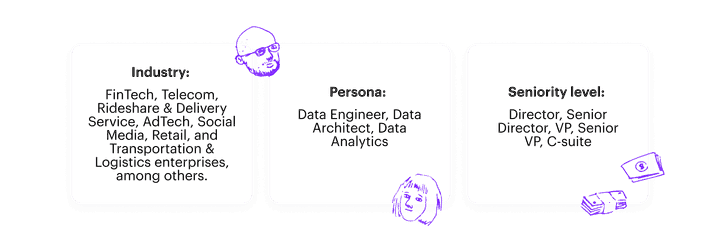
By pulling contacts directly from their CRM into Influ2, Marketing could make sure they were targeting the same people as Sales.
Personalized ads with individual buyer journeys.
Next, StarTree needed to make sure each contact saw ads relevant to their role and place in the sales process.
So they created custom buyer journeys with three stages:
- Top of funnel: These ads built awareness and introduced the idea of real-time analytics.

- Middle of funnel: They promoted use cases and case studies so prospects could see the practical applications of their product.
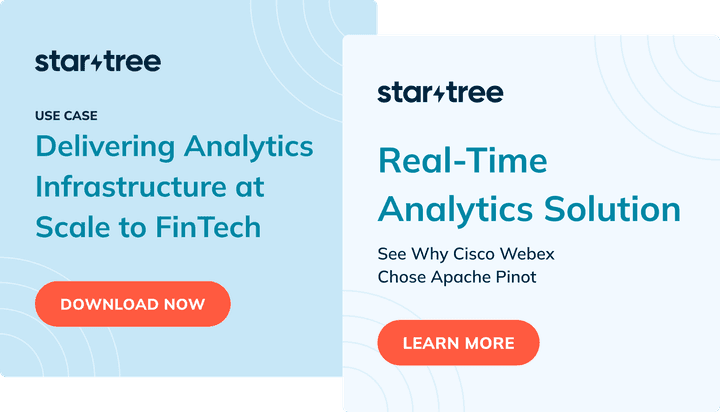
- Bottom of funnel: These ads had a stronger call to action to schedule a consultation.
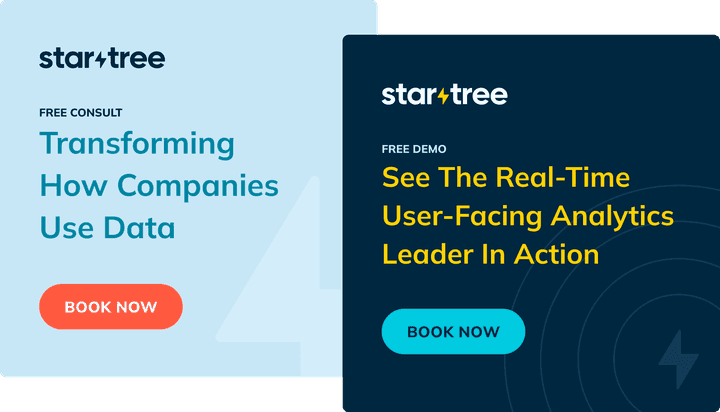
This approach helped StarTree avoid a common mistake: making the wrong ask prospects.
This happens a lot with legacy ABM platforms because you don’t know who from an account has seen or engaged with which ads or where they are in their journey. With Influ2, StarTree could change which ads each person in a buying group saw based on how they engaged.
Give Sales real signals from ad engagement
StarTree built a workflow to send Salesforce notifications whenever a targeted contact clicked an ad or had 15 impressions. Each notification showed Sales the exact person who engaged and what they engaged with.
StarTree’s strategy led to a 3.17x increase in conversion rates for new opportunities influenced by ads.
Takeaways from StarTree’s ABM case study:
- Build a shared list of people Sales and Marketing want to reach
- Tailor messaging to move each person through the journey based on their engagement and sales stage
- Share contact-level signals with Sales, not anonymized account-level signals
2. How CipherHealth aligned Sales and Marketing around buying committees
CipherHealth sells into large U.S.-based health systems, where winning deals means influencing a committee of executive champions, operational leaders, and other stakeholders.
The team’s priority was clear: reach the right decision-makers inside buying committees and give Sales signals they could act on.
To do that, CipherHealth focused less on broad account exposure and more on precision, timing, and coordination.
Reaching the right people, not just accounts
Using their existing tech stack, the team pulled intent and engagement data to understand where accounts were in the buying journey, with a particular focus on accounts in the Decision and Purchase stages.
They then used contact databases to identify key decision-makers within those accounts and synced those contacts into Influ2 with our Salesforce integration.
This approach allowed CipherHealth to consistently deliver ads to the people most likely to influence deals, ultimately reaching 51% of executive champions across their target accounts.
Personalizing ads by buyer stage and use case
Rather than running a single set of ads for every prospect, CipherHealth structured its ad strategy around intent and buyer stage.
They segmented ads by use case and solution, using Influ2 to deliver different messages depending on whether someone was early in their research or actively evaluating vendors.
Their messaging followed a clear progression:
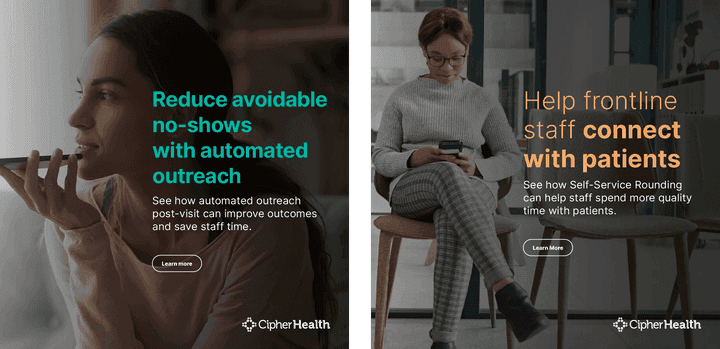
- Awareness stage: Ads addressed buyer pain points such as reducing avoidable no-shows and supporting healthcare staff, helping decision-makers understand the problem CipherHealth solves.
- Decision and purchase stages: Ads focused on ROI metrics and customer success stories, reinforcing confidence for buyers actively considering solutions.

Turning ad engagement into real-time sales action
To make sure ad clicks translated into sales follow-up, CipherHealth integrated Influ2 with Slack and Salesloft.
When a contact clicked on an ad, the sales team received a Slack notification showing who engaged and which campaign or content they interacted with. This gave Sales immediate context and helped them prioritize outreach.
They set up automation rules to handle follow-ups:
- Contacts with only ad impressions were enrolled into automated Salesloft sequences.
- Contacts who clicked ads were routed to SDRs, who tailored their outreach based on the specific content the prospect engaged with.
The orchestration between Marketing and Sales led to positive results:
- 83% increase in pipeline influenced by ads
- 20% increase in influenced revenue versus cold outreach
- $122.70 in influenced revenue for every dollar spent
Takeaways from CipherHealth’s ABM case study:
- In complex buying environments, precision targeting matters more than broad reach
- Ad personalization is most effective when it reflects each buyer’s stage and intent
- Real-time engagement alerts help Sales act faster and with better context
- ABM execution improves when automation supports—not replaces—human follow-up
3. How Quantexa used deal-based ABM to accelerate pipeline as a growing startup
Quantexa sells complex data analytics software into large enterprises. When Adam Woozeer, Director of Digital and ABM, joined the company in 2020, Quantexa was still a relatively small startup competing for attention in long, expensive B2B sales cycles.
At the time, the team relied on traditional marketing tactics and light-touch ABM through LinkedIn. While those efforts helped accelerate some deals, they were costly and difficult to scale.
They had a clear understanding of who they wanted to reach, but needed a way to engage specific decision-makers inside the buying committees without dragging out sales cycles or overhauling their existing tech stack.
Starting small and proving value
Quantexa began by integrating Influ2 with HubSpot and running small one-to-few and one-to-many campaigns. The goal was to demonstrate impact quickly, build internal confidence, and earn buy-in from Sales before expanding further.
From there, Adam partnered closely with sales and SDR teams to launch deal-based marketing (DBM) campaigns, using Influ2 to run ads for specific stakeholders tied to active deals.
“We developed DBM, deal-based marketing, using Influ2 to run personalized ads for specific stakeholders in a deal,” Adam explained. “The campaign was a tremendous success.”
The response was immediate. Prospects noticed the ads, and some even asked Quantexa’s CEO how the company seemed to “follow them everywhere” online.
Using intent data to shape messaging and timing
Quantexa paired Influ2’s contact-level advertising with intent data to guide campaign execution.
The team used Bombora to understand what prospects were researching online—including the questions and objections they were exploring—and combined that insight with first-party data to inform ad creative.
Campaigns were refined through regular check-in calls between Sales and Marketing, using intent signals and sales feedback to adjust messaging and focus on the most relevant stakeholders within each deal.
This approach shifted the team away from relying on form fills and toward targeted engagement with known decision-makers, helping keep deals moving forward.
Results that justified scaling the approach
The impact of this approach was clear.
Compared to cold outreach, Quantexa saw:
- 4.53× higher conversion rate
- 837% return on their Influ2 investment
- 5.2× boost in pipeline
By targeting decision-makers tied to real opportunities and aligning advertising with sales conversations, the team was able to accelerate deals and close major contracts without expanding budget or extending sales cycles.
Takeaways from Quantexa’s ABM case study
- Start small, prove impact, and scale ABM execution from there
- Deal-based campaigns help align ads with real sales opportunities
- Contact-based advertising can work well in an existing stack
- Intent data is most powerful when it informs both messaging and timing
4. How Bonterra proved ABM impact with contact-level execution and sales alignment
Bonterra supports nonprofits, corporations, and public agencies with mission-driven technology.
But internally, its ABM team faced a familiar challenge: prove marketing impact, accelerate pipeline, and keep Sales tightly aligned—all with a lean team.
Before using Influ2, Bonterra’s ABM efforts were running at the account level. Ads were driving traffic, but the team couldn’t confidently answer a critical question:
Are we actually reaching our buyers?
That uncertainty made it difficult to prioritize prospects, support Sales, and clearly demonstrate marketing’s influence on revenue.
Targeting the right people inside priority accounts
Bonterra starts by funneling 6sense account lists into Influ2 to prioritize accounts by buying stage. From there, the team builds high-value segments of 5–15 stakeholders per account, depending on the opportunity.
Using Influ2’s Cohort Designer, they created audience segments aligned to specific outreach goals.
In the first half of the year, Bonterra focused on three core cohorts:
- Customer expansion
- Competitive knockout
- Live events
Each cohort had its own messaging and journey stage alignment. As a result, Bonterra reached 80% of the buying committee across these efforts.
“We knew we were getting to the right people with the right message,” Justin, Bonterra’s Head of ABM, shared.
Full-funnel campaigns designed to drive action
Bonterra didn’t treat campaigns as one-off launches. Each initiative was built as a full-funnel strategy, designed to move prospects from attention to action.
Several campaigns stood out:
- Customer expansion campaign: Targeted existing customers. Over four months, this campaign generated 19 influenced opportunities, including four closed-won deals.
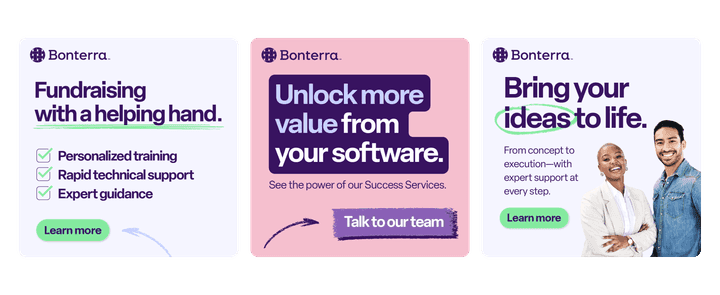
- Competitive knockout campaign: Delivered competitor-focused ads designed to cut through the noise and engage hard-to-reach buyers.
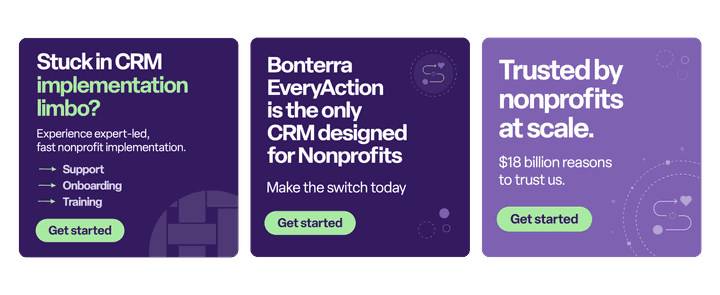
- Event activation campaigns: Targeted attendee lists before and during in-person events to drive awareness, increase booth visits, and extend engagement beyond the event itself.

Making sure Sales never misses a signal
Sales and marketing alignment is built directly into Bonterra’s ABM workflow.
When a contact engages with an Influ2 ad, that signal is sent to a dedicated Slack channel monitored by Sales. Reps can immediately see who engaged and what they engaged with, allowing them to tailor outreach.
If a rep doesn’t follow up within 24 hours, Sales leadership steps in.
“Prospects who clicked on an ad were much more likely to respond to an SDR’s outreach,” Justin explained.
Bonterra defines meaningful engagement as either:
- Clicking on an ad, or
- Viewing all ads in an ad journey
Once a contact meets that threshold, they’re automatically enrolled into a Salesloft sequence with messaging mapped to their ad interactions.
Using performance data to drive alignment and trust
After each campaign, Bonterra delivers a detailed performance review to Sales, Marketing, and senior leadership. These reviews include:
- Influ2 ad metrics (reach, impressions, clicks)
- Sales follow-up data from Salesloft
- Handoff rates and meetings booked
Bonterra reports a 90–95% sales handoff success rate, a level of follow-through that didn’t exist before Influ2.
These insights now shape quarterly ABM priorities, budget decisions, and cross-functional planning — turning campaign performance into a shared source of truth.
Results that reinforced the shift
By aligning Sales and Marketing around contact-level engagement, Bonterra saw measurable improvements across the funnel:
- 80% of buying committees reached
- 39.7% increase in opportunity conversion rate
- 2× higher win rate compared to cold outreach
- 2.5× increase in deal value
- 907% ROI, returning $9 for every $1 spent on Influ2 ads
Takeaways from Bonterra’s ABM case study:
- Proving ABM impact starts with knowing exactly who you’re reaching
- Contact-level signals create faster, more relevant Sales follow-up
- Full-funnel campaigns work best when aligned to buyer stage
- Consistent reporting builds trust and long-term alignment across teams
5. How BioCatch scaled precision ABM to move deals faster
BioCatch operates in a category where precision isn’t optional. Selling fraud prevention technology means reaching a very specific set of buyers—CISOs, CSOs, and fraud leaders—at the right moment.
To scale pipeline with those buyers, BioCatch partnered with MarketBridge, a go-to-market firm known for operationalizing full-funnel ABM strategies.
The goal was ambitious: engage 100% of target accounts and convert at least 10% into pipeline without sacrificing personalization or overwhelming Sales.
Designing ABM around funnel stages, not guesswork
MarketBridge and BioCatch built the campaign around a clear funnel-stage framework using Influ2’s Journey Builder.
Audiences were segmented into three stages—unengaged, engaged, and pipeline—with messaging, calls to action, and media strategy tailored to each.
- Unengaged: Target accounts with no recent interaction, identified using 6sense intent and firmographic data. Campaigns focused on fraud, risk, and cybersecurity decision-makers using one-to-many tactics.
- Engaged: Contacts who had previously interacted with BioCatch content or showed mid-level intent. These audiences were segmented by role, region, and engagement level and activated through one-to-few campaigns.
- Pipeline: Known stakeholders tied to active Salesforce opportunities, including CISOs, CSOs, and fraud leaders. These contacts were prioritized for one-to-one outreach based on opportunity stage and deal influence.
Precision targeting across 200+ audience segments
Rather than casting a wide net, MarketBridge built more than 200 custom audience segments, layering in Influ2 to identify and activate high-value contacts for one-to-one campaigns.
Targeting focused on high-impact roles involved in fraud strategy and operations (i.e., the people most likely to influence decisions).
This approach allowed BioCatch to scale personalization while avoiding wasted impressions on irrelevant stakeholders.
Activating Sales with real-time buyer signals
Sales was brought into the process early.
Marketing surfaced high-priority accounts based on ad engagement and custom scoring. When engagement spiked, Sales could respond quickly and focus on accounts showing real interest, and see exactly what caught their attention.
Creative that evolved with the deal
BioCatch delivered ads that matched messaging to intent, role, region, and deal stage, using localized language and role-relevant narratives.

Creative assets progressed from trust-building content for early-stage audiences to ROI-driven proof points for decision-makers deeper in the funnel.
This continuity helped reinforce BioCatch’s value as prospects moved closer to a decision.
Results that proved the approach
The campaign delivered clear, measurable outcomes:
- 100% of late-stage deals had at least one engaged contact
- 41% faster deal velocity when contacts engaged with Influ2
- 6× more accounts entered active pipeline
- 19 engaged contacts per deal on average
- 85% more accounts moved into active engagement
Takeaways from BioCatch’s ABM case study:
- Segment audiences by funnel stage, not just firmographics
- Use contact-level engagement to trigger timely Sales action
- Personalize messaging by role, region, and buying stage
- Align tech, teams, and timing to support complex buying groups
- Treat ads as a pipeline lever, not just a demand channel
Inspired by these case studies?
If you’re thinking about how to apply the lessons from these case studies to you own ABM program, let’s talk.
Each of the companies above launched contact-level ABM programs made possible with Influ2. If you want to learn how to do the same, book a demo today!

Dominique Jackson is a Content Marketer Manager at Influ2. Over the past 10 years, he has worked with startups and enterprise B2B SaaS companies to boost pipeline and revenue through strategic content initiatives.

