Our View on Ad Personalization and How Influ2 Makes It Possible


One question we hear a lot is, “Does Influ2 support personalized ads?”
It’s not a simple yes-or-no question because personalization means different things to different people.
For some, it’s putting a prospect’s name or company logo on an ad. For others, it’s building fully bespoke 1:1 campaigns. Or you might have another definition entirely.
We wanted to share our view of what effective personalization looks like, and show you how to implement it in your own program.
What does ad personalization really mean?
Ad personalization means tailoring your ads’ message, timing, and sequencing based on what you know about the specific person and account you’re targeting.
When we talk about personalization, what we’re really talking about is relevance.
When ads are relevant, they’re tailored to each person’s:
- Company characteristics (growth stage, size, industry, geography, etc.)
- Buyer persona and role in the decision-making process
- Product use case
- Current stage in the buying journey
- Previous engagements with your marketing and sales touchpoints
The challenge is that most teams can’t deliver this level of relevance with their current tools.
B2B marketers have been limited by legacy ABM platforms that can only target accounts, titles, and personas.
To make ads feel personal and relevant without hitting operational limits, you need to know exactly who is seeing them, not just the companies or titles. That’s only possible with tools that let you run contact-level ads for your ABM program.
How to deliver more relevant ads with Influ2
Influ2 gives you the ability to personalize using four key factors:
- Cohort context
- Personal relevancy
- Sales context
- Individual engagement
Think of them as layers of personalization.
For instance, you might have a cohort of director-level marketers. But not all of them are at the same stage in the sales process, and they’ve all engaged with you differently (clicked different ads, attended different webinars and events, etc.).
So even though they’re all marketing directors, the ads you show each of them at any given time might be different.
Layering in sales context and contact-level intent signals on top of the cohort segmentation is what creates a personalized ad experience.
Here’s how you can make that happen with Influ2.
1. Consider cohort context
Cohorts are segments of your audience, grouped by shared characteristics like industry vertical or company type.
Paddle, for instance, uses cohorts to segment ad audiences based on geographic region, so their EMEA prospects see a different set of messaging than their US clients.
They do this by using Influ2 to build dynamic cohorts based on fields from their CRM. Paddle sets the relevant criteria (e.g., geographic region or company headcount), and Influ2 builds ad audiences from their CRM contacts based on those criteria.
Geography isn’t the only option for segmentation, though.
For example, if your team has access to technographic intel, you can use it to build a cohort of people who currently use a competitor.
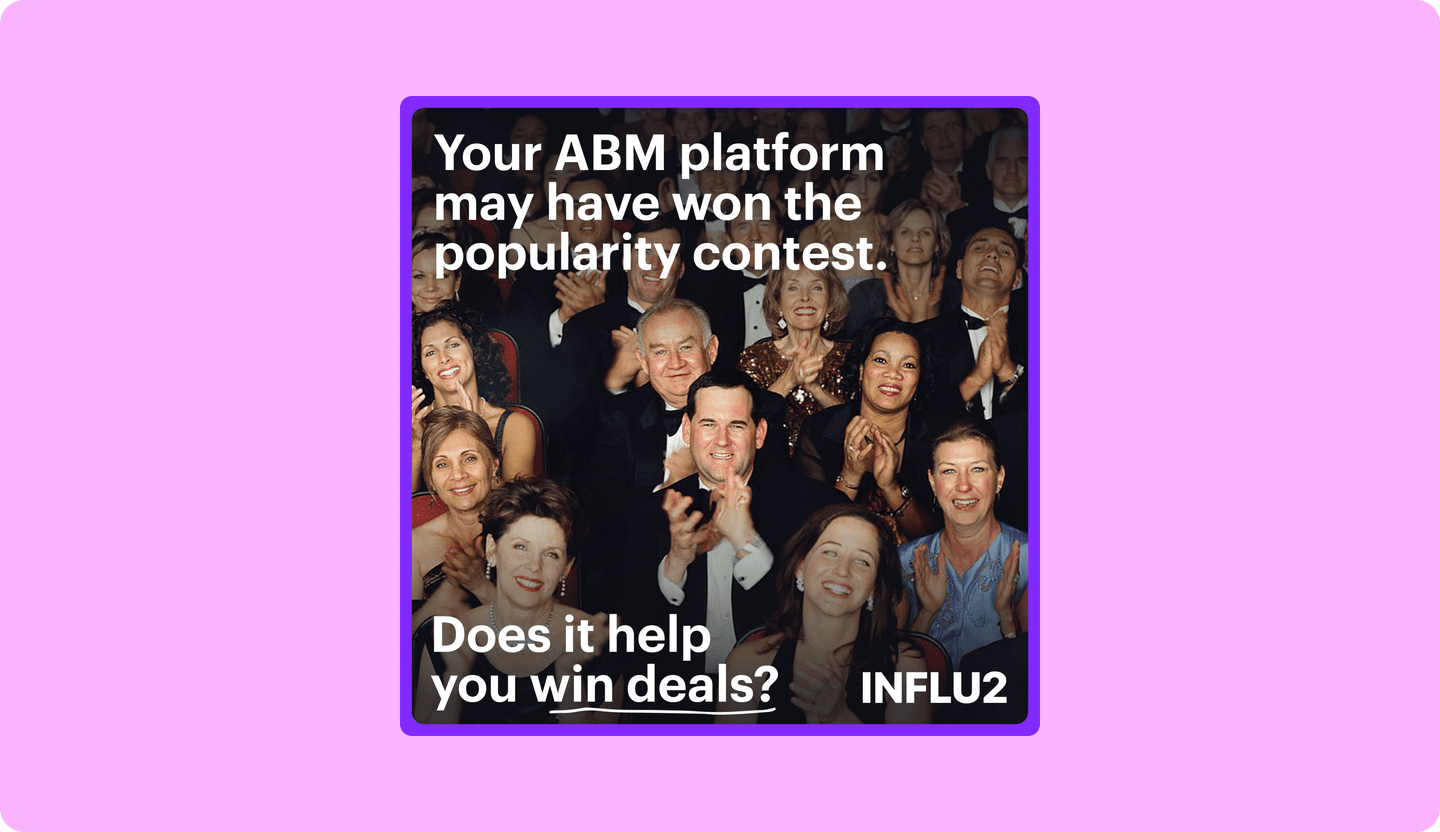
You can also monitor job change alerts and maintain a dynamic cohort of past champions who’ve recently stepped into a new role:
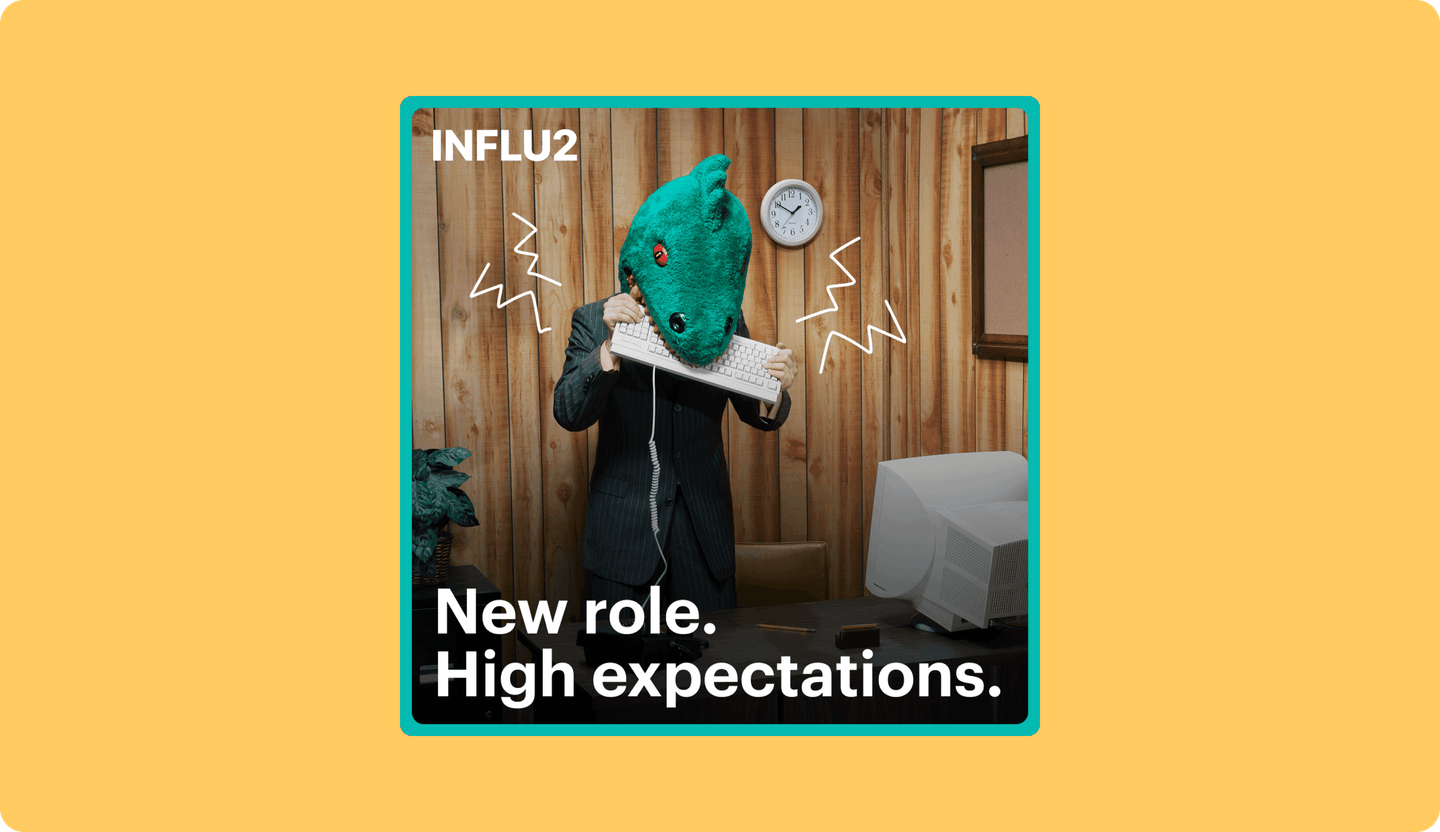
Using cohorts sets up relevancy right off the bat.
Prospects aren’t just seeing generic product-centric ads; they’re receiving messaging that reflects their specific situation (e.g., “I’ve just taken on a new role, and I need to make an impact”).
2. Ensure persona relevancy
Moving a layer deeper, start thinking about what’s relevant for each specific person, their role in the company, and how they’ll interact with your product.
Buyer personas are a smart way to think about this.
Compare these two ads about intent signals—one meant for salespeople and one for marketers.
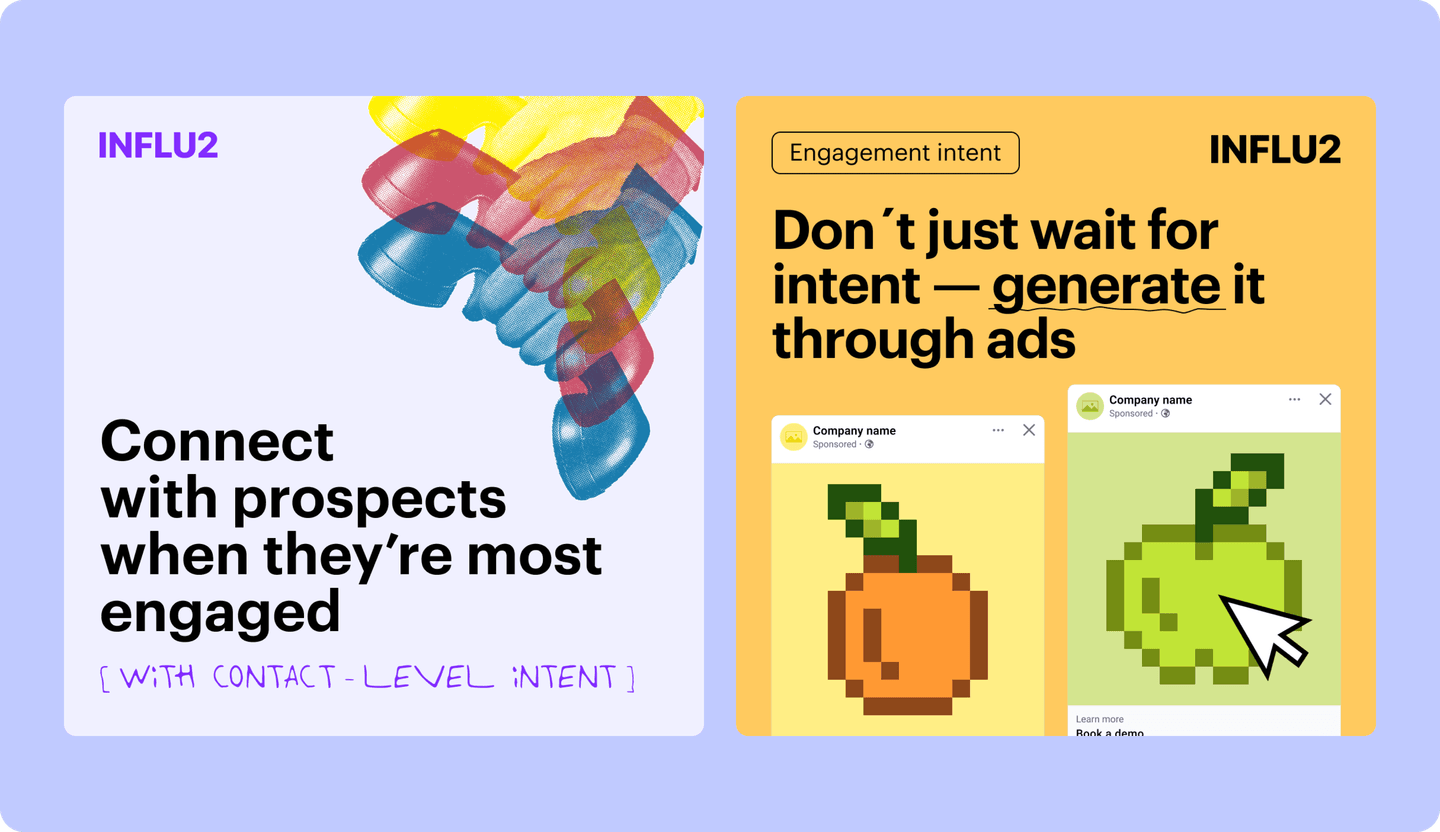
Both personas have a use case for contact-level intent, but the value they get from it looks very different, so our ad messaging needs to reflect that.
For marketers, it's about generating engagement and signals for Sales to capitalize on. For salespeople, it's about reaching out to buyers when they're already engaged.
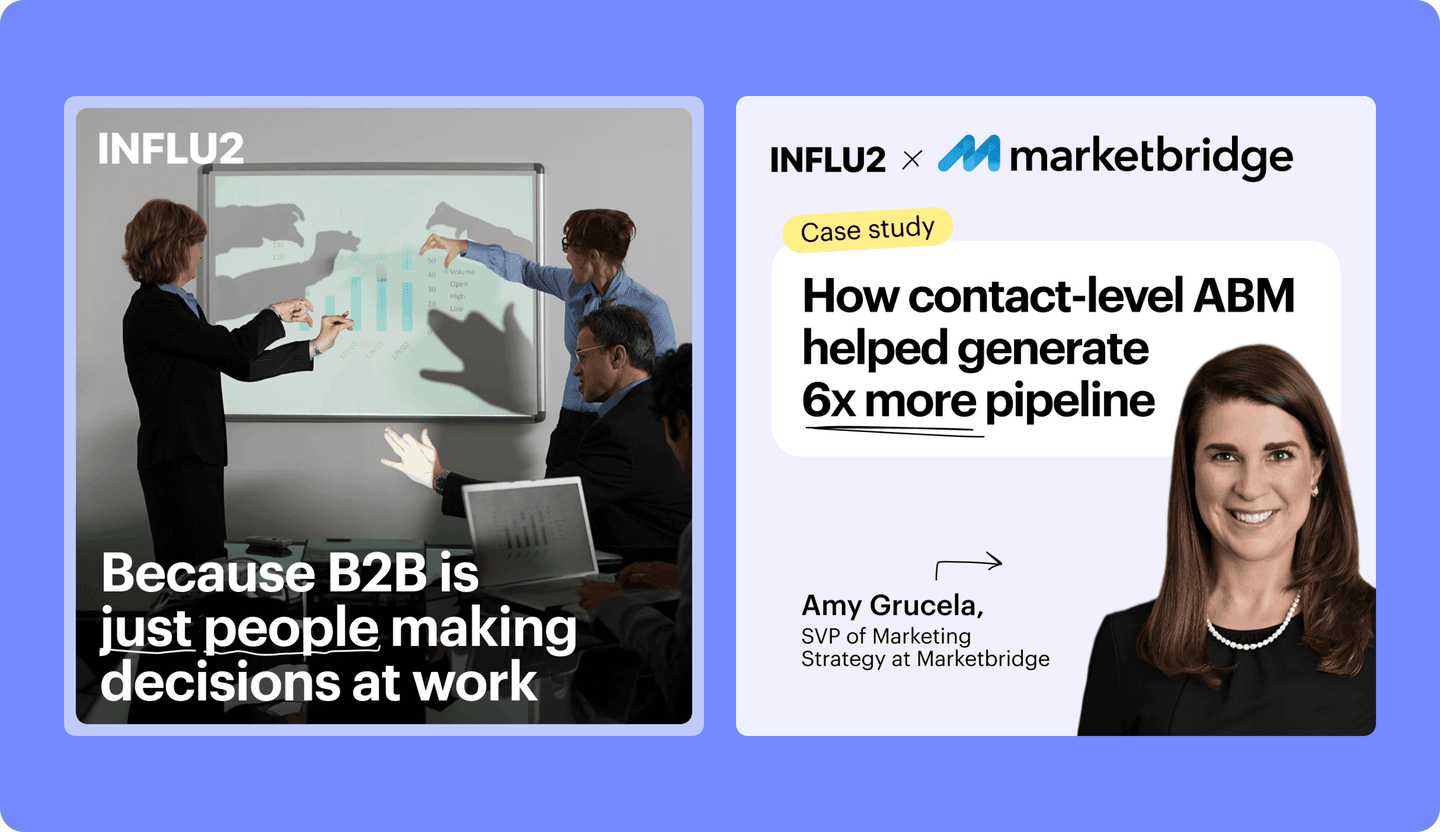
This approach is how Marketbridge scales contact-level ABM without sacrificing personalization and relevance.
We design campaigns around specific personas and adapt the ad journey based on how each person engages over time.
3. Have the right sales context
ABM programs shouldn’t be static—they should evolve as each prospect moves through the sales process.
Rather than throwing them everything you’ve got, all at once, think about how the typical buyer’s journey progresses.
For instance, a prospect who hasn’t spoken to a salesperson yet should see different ads than someone who’s had a discovery call.
This is where many teams miss out.
Your ads can (and should) shift automatically based on sales context—especially the SDR sequences your prospects are already in.
If a contact enters an outbound cadence, your ads can warm them up with aligned messaging. If they no-show for a meeting, your ads can reinforce value or handle objections.
You can also use performance data to understand which messaging angles resonate best at different sales stages (e.g., pain point messaging vs. objection handling), and which kinds of content prospects tend to prefer at each stage (e.g., case studies vs. thought leadership).
A simple example here is showing higher-level, value proposition messaging to people who are earlier in the journey, then shifting toward case studies as prospects progress.
4. Address individual engagement
Finally, you need to consider how each individual has engaged with your other programs.
For instance, if you're promoting a webinar, you can use this ad sequence:
The people you want to attend the webinar see your promo ad first.
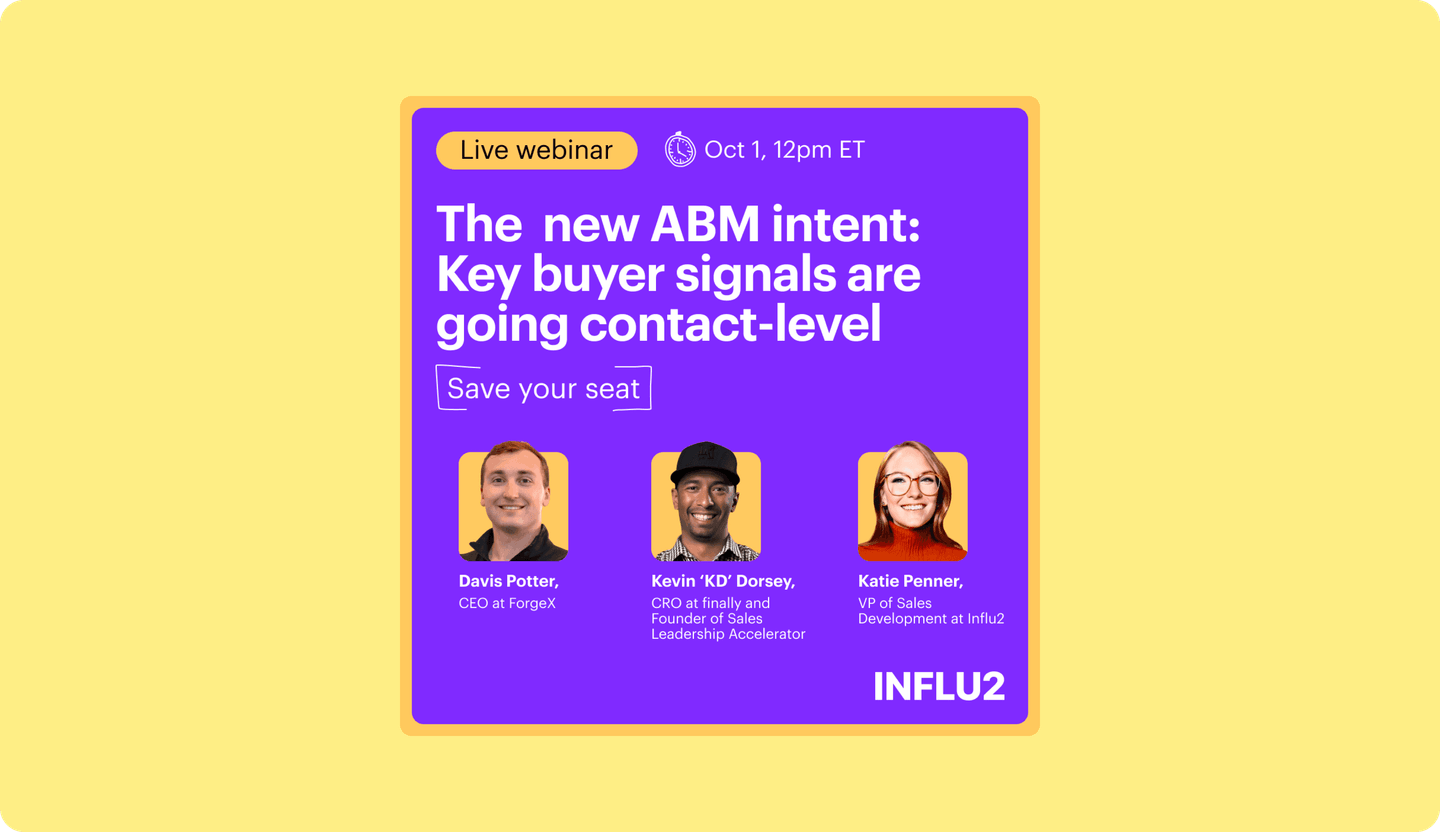
They’ll keep seeing that ad until they sign up. Once they’ve registered, you stop showing them that ad, and promote a new one designed to increase attendance.
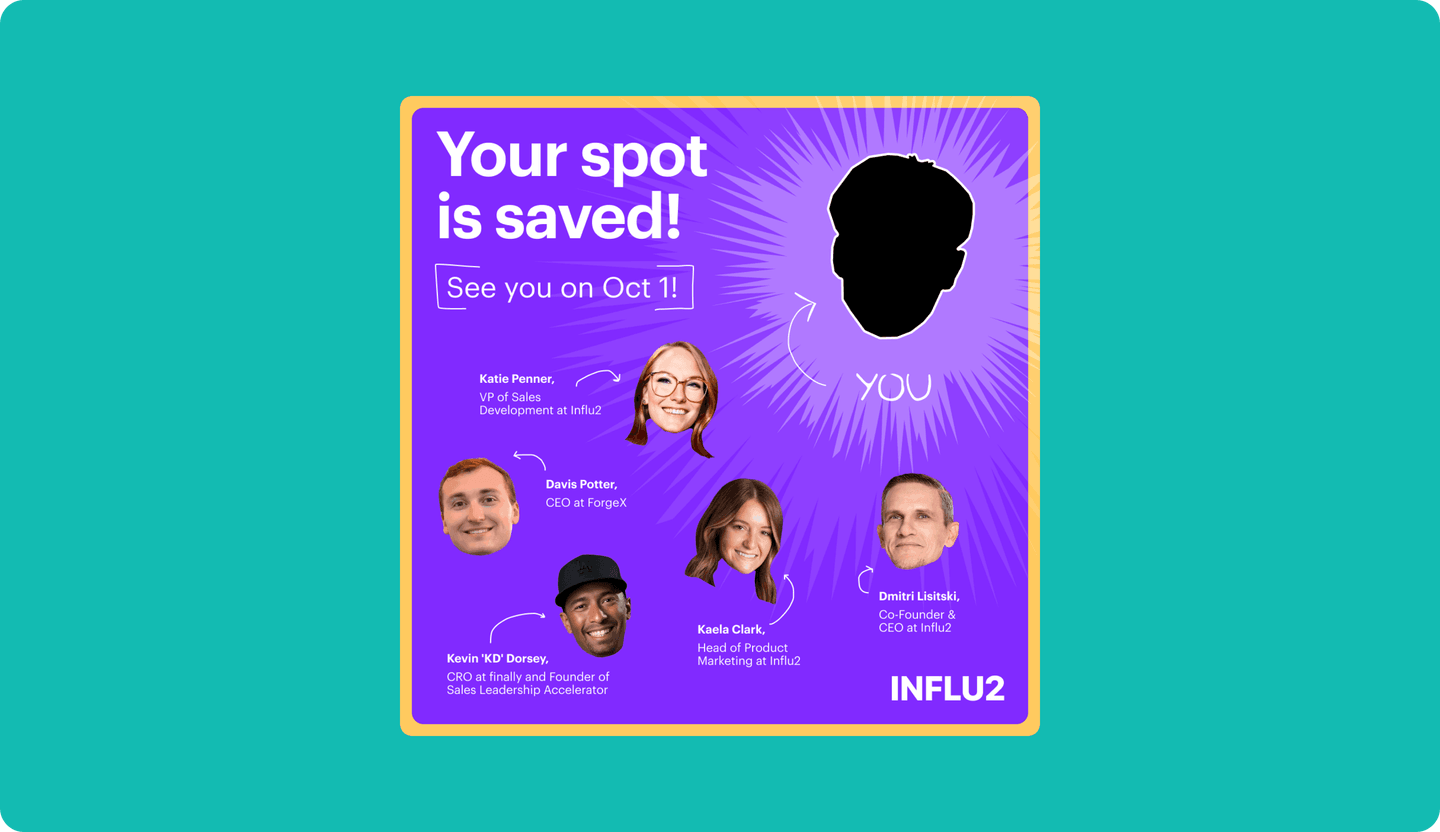
What about logo swaps and 1:1 campaigns?
Two approaches that come to mind when marketers hear “personalization” are 1:1 campaigns and putting names/logos on ads.
We’re not against those strategies, but we believe they have a time and place.
1:1 campaigns
1:1 campaigns typically involve creating custom messaging, creative, landing pages, and sequences for each individual target account or prospect. It sounds amazing in theory, but the reality isn't always so pretty.
Running 1:1 campaigns is incredibly resource-heavy and difficult to maintain once your prospect’s priorities start shifting and buying groups change. You’ll spend more time creating bespoke ads and landing pages than actually executing effective campaigns.
And even if you can keep up with it, the payoff eventually flattens. There’s only so much lift you get from hyper-personalized ads before the returns start dropping off.
That said, this level of effort can make sense for a small set of Tier 1 accounts you plan to go after intensively throughout the year.
Logo-swaps
Another common approach to personalization is putting a prospect’s company logo on ad creative (usually combined with high-level messaging).
We get a lot of interest in this strategy because we use it sometimes. People see our ads with their company logo and wonder how we did it.
But our use case is unique. We sell software to marketers who care about ad targeting, so showing their logo is directly tied to the value we’re trying to demonstrate.
For most companies, though, just adding a logo to ads doesn’t go far enough. It doesn’t tap into the problems your product helps prospects solve, their journey stage, or their previous interactions with your brand.
Ad personalization in B2B is about relevance
For B2B ad programs to perform, they need to adapt to the way people actually evaluate solutions.
Real ABM personalization happens when every touchpoint reflects who the buyer is and where they are in the journey.
Most B2B marketers know this, but they’re held back by legacy ABM tech stacks. Contact-level ABM removes that barrier.
Want to see how Influ2 makes real ad personalization possible? Let’s talk.

Dominique Jackson is a Content Marketer Manager at Influ2. Over the past 10 years, he has worked with startups and enterprise B2B SaaS companies to boost pipeline and revenue through strategic content initiatives.

