Why Account-Based Engagement Is a Company-Wide Initiative


ABM is more than a marketing program with a sales handoff bolted on at the end.
Account-based engagement is what you get when Marketing, Sales, and Customer Success are working the same accounts, targeting the same contacts, with aligned strategy across the full buying journey.
The difference sounds straightforward. In practice, it changes how GTM teams functions.
Key takeaways:
- Account-based engagement aligns Marketing, Sales, and Customer Success on the same specific contacts (not just account names) across the full buying journey.
- Traditional ABM typically runs as a marketing-only program. ABE is a company-wide go-to-market realignment that requires leadership buy-in across all three teams before you build anything.
- Influ2's platform data shows contact-level ABM programs deliver a 2.18x lift in pipeline conversion and a 1.74x lift in booked meeting conversion compared to non-engaged contacts.
- Measuring ABE means moving past impressions and MQLs. Track contact-level engagement rate, pipeline influence, engagement velocity, and revenue attribution.
- Start with leadership alignment. Get Sales, Marketing, and CS on the same account list before choosing channels or building campaigns.
What is account-based engagement?
Account-based engagement (ABE) is a B2B go-to-market strategy where Marketing, Sales, and Customer Success align on a specific list of target contacts and work together to engage those individuals across the full buying journey (from first awareness through closed deal and into retention).
As Dmitri Lisitski, CEO of Influ2, mentioned in a recent podcast: “We believe that people make decisions, not accounts.” That’s the operating principle behind ABE.
At Influ2, when we talk about engagement, we’re not just talking about those big shiny accounts on your list.
For us, ABE is about engaging with the real humans in buying committees at your target accounts, and building a conversation with them that lasts from the first time they hear about you to the moment they sign the contract (and beyond).
Why traditional ABM falls short
Traditional ABM often runs as a marketing experiment rather than a company-wide commitment. That’s the gap most programs never close.
In a traditional ABM strategy, you’re probably going to face one or more of these challenges:
- Since the strategy is mainly marketing-driven, it’s hard to get buy-in across teams or access to support.
- You're targeting broadly across an entire organization, and the engagement data you receive is not actionable for your sales team.
- Without a clear strategy to engage contacts over the course of the buying journey, you’re simply pouring marketing efforts into the same pool of people over and over again, and they’re not converting.
- You’re running on a first/last touch attribution model, so whenever marketing isn’t the first or last touch, it’s very hard (if not impossible) to tie your efforts to real revenue results—making it much harder to justify your costs.
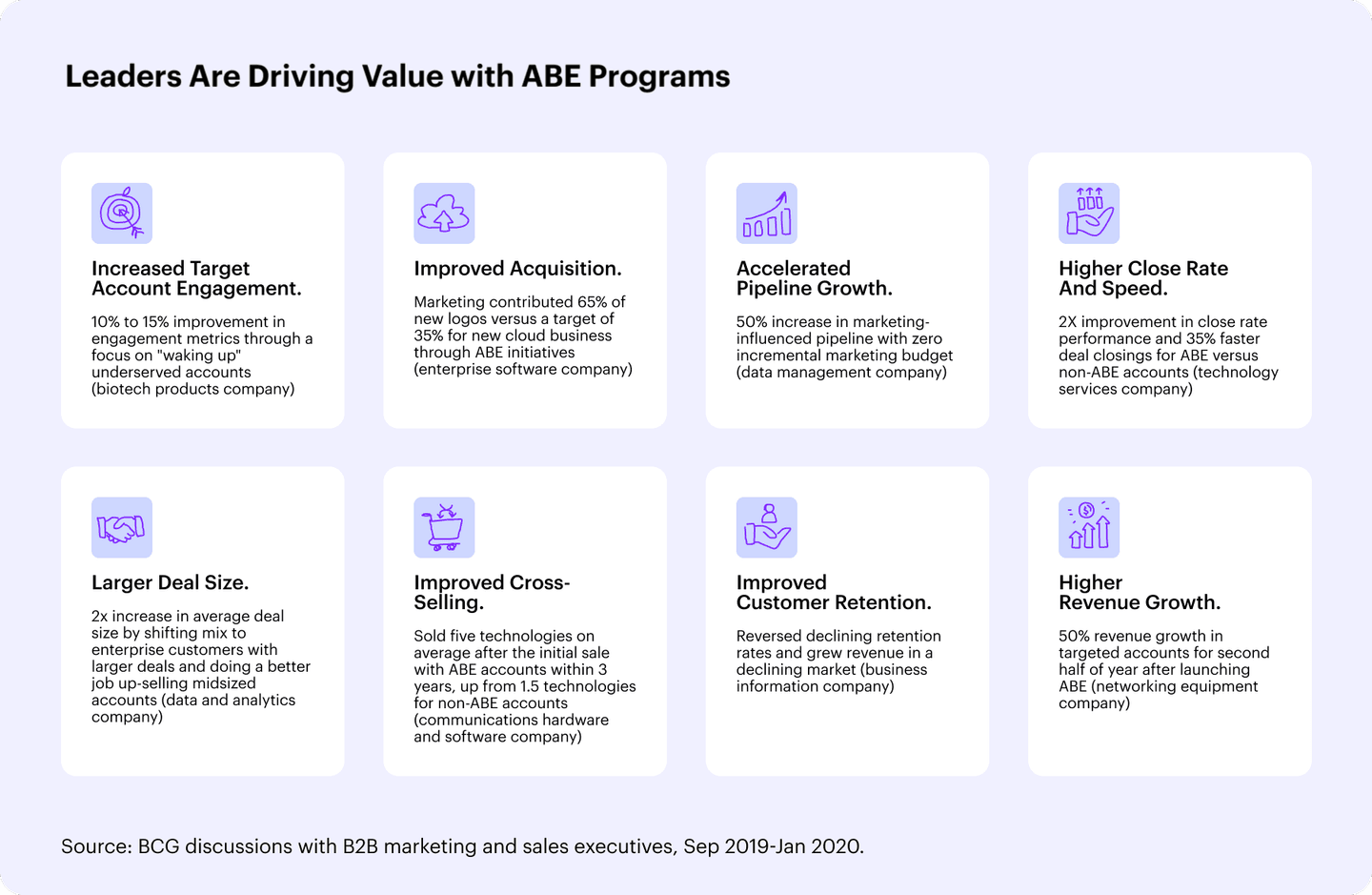
According to a joint BCG and Salesforce study, ABE programs consistently outperform traditional ABM:
- 97% of marketers using ABE said they experienced a higher return on investment.
- 83% saw a positive impact on pipeline growth.
- ABE leaders have seen major gains in account engagement, customer acquisition, pipeline growth, funnel velocity, deal sizes, retention, and revenue growth.
Influ2's own platform data puts more specific numbers on that outperformance: contact-level ABM orchestration is associated with a 2.18x lift in pipeline conversion for buying groups with at least one ad click, and a 1.74x lift in booked meeting conversion for engaged contacts.
It matters because competition is intense. Influ2’s 2026 enterprise buying survey found that 74% of B2B buyers are evaluating 3–5 vendors at the same time. Account-level tactics reach the logo. Contact-level engagement reaches the person making the decision.
ABM strategy should never be just a marketing project. Unless Marketing, Sales, and Customer Success are aligned on the accounts they want to target and how they’ll engage those accounts, the program will fight a constant uphill battle.
How things change with account-based engagement
ABE performs better than siloed ABM because it replaces account-level guesswork with contact-level precision.
Peter Lewis, CEO at Strategic Pete, has seen this shift play out across multiple client programs
The biggest reason ABE performs better? It prioritizes relationships over lead lists.
He explains: “We transitioned to an ABE strategy when we noticed that standard ABM was too concentrated on engaging accounts in the hopes of eventually getting them activated, rather than on the actual activation. Target advertising and SDR outreach are easy; if the real decision-makers don’t engage, all you have is a list of ideal customers who aren’t responding. ABE completely shifted how we approach engagement.”
Independent research confirms the shift is happening. According to Forrester research commissioned by Influ2, 72% of respondents believe contact-level technology is becoming a core differentiator for B2B marketing teams.
What's the difference between ABM vs ABE?
The table below captures the structural differences between account based marketing and account based engagement: in strategy and in day-to-day execution.
| ABM | ABE |
| Broad focus on a list of accounts | Narrow focus on the people within a buying committee at target accounts |
| Marketing-led strategy, often executed in a silo | A strategy that’s developed and executed by Marketing, Sales, and CS |
| Generates “leads” that may never be contacted by sales | Develops a list of contacts that are ideal customers, and targets those contacts with both Marketing and Sales working in tandem |
| Tied to the top of the funnel | Influences deals throughout their lifecycle: pipeline generation, deal progression, and expansion |
Your buyers are being bombarded by marketing. With AI SDRs and other automation platforms generating more outreach than ever, breaking through requires more than a well-targeted account list: it requires coordinated engagement from the humans they’ll eventually work with.
Anna Tsymbalist, Head of ABM at Influ2, put it this way in a recent podcast:
When you’re looking at MQLs as your main target, you’re optimizing for something so early in the funnel that you could be setting yourself up for failure. What happens to these MQLs down the road? Is sales wasting time disqualifying them? Are they churning? Are they a happy customer? Are they advocates?
If you’re not optimizing for the long-run results, you might as well be creating a bucket with holes in it.
The point? Stop optimizing for MQLs, and focus on the people.
How to build an account-based engagement strategy
Building an account-based engagement strategy is a company-wide go-to-market realignment. Start by getting the right people in the room before you build anything else.
Get buy-in from leadership across Marketing, Sales, and CS
Marketing Strategy Leader Carrie Holmes has seen ABE rollouts fail when this step gets skipped: “Do not 'pass go' without having Sales Leadership commitment."
Build open communication with your company’s go-to-market teams. Leadership from Sales, Marketing, and Customer Success should be meeting together (in-person or virtually), talking about how they can support each other and engage potential customers throughout their lifecycle.
Real data is your strongest argument. Says Peter Lewis: “Getting buy-in for ABE wasn’t difficult when we continued to show disparity in engagement rates.”
Anna Tsymbalist adds: “When the entire organization sees data that proves the accounts you’re going after will bring success in the long run—that’s how you get buy-in. That’s when Sales gets excited to get on that call. That’s when CSMs get excited to onboard people. It’s a win-win situation for everyone.”
When presenting ABE to your organization, paint the picture in terms of benefits for all teams. That’s the path of least resistance.
The full mechanics of running this kind of cross-functional alignment—shared signals, touchpoints, and joint pipeline definitions—are covered in the sales-marketing alignment playbook.
Focus on aligning with Sales and CS on objectives and target accounts
Once Sales, Marketing, and CS are ready to move forward together, align on your goals and your target accounts.
Set reasonable goals using your current ABM data as a baseline: conversions, engagement, retention, or other KPIs you want to improve.
Then comes one of the hardest parts of building an ABE strategy: audience selection. To build your list of target accounts:
- Work with sales and CS to identify key markers of successful customers in your current book of business.
- Build a list of accounts that fit that criteria.
- Narrow down that list by industry, needs, and remove any current customers or bad-fit leads.
- Use research tools to map the buying committees within those accounts, and identify key contacts your team will target.
When Marketing, Sales, and CS align on the account list together, you know you’re bringing in accounts and converting opportunities that work for all three teams.
Align on the channels of engagement that both teams will use throughout the buying journey
What tactics will Sales use to reach out to contacts at target companies? How will Marketing support that journey by targeting those same people with relevant content and ads?
For marketing, this typically includes paid advertising, social media, and website content. Sales channels vary by audience, but direct outreach (calls, email, LinkedIn messages, and in-person engagement) all come into play.
The key is analyzing which channels deliver the best results at different points in the buying process.
At Influ2, our team runs engagement cycles (defined periods of coordinated outreach where Marketing, Sales, and CS target the same contacts simultaneously) to maintain interest and keep our product top-of-mind. For three months, we actively engage contacts: value proposition and thought leadership messaging in ads, while the buying committee also gets an email sequence and cold calls from SDRs.
If they don’t convert, we send them to a nurture sequence with low-intensity brand awareness messaging for three months. The aim is to stay top-of-mind, because the engagement often worked: the timing just wasn’t right.
Influ2’s 2026 enterprise buying survey found that 60% of B2B buyers say their needs or priorities change at least occasionally during the buying process. That’s exactly why disappearing after one engagement cycle is a mistake.
Once we’re ready, we recollect the buying group and put them through another engagement cycle with updated content based on performance.
Use contact-level ABM and share intent signals directly with your sales team
Unlike most ABM tools that focus broadly on target accounts, Influ2 aligns with Sales on the individual contacts to engage, then delivers targeted ads to those specific people.
When you target individuals in buying committees, you can see at a contact level who is engaging with what messages (if you're using Influ2). Those are direct intent signals that you can send to your sales team.
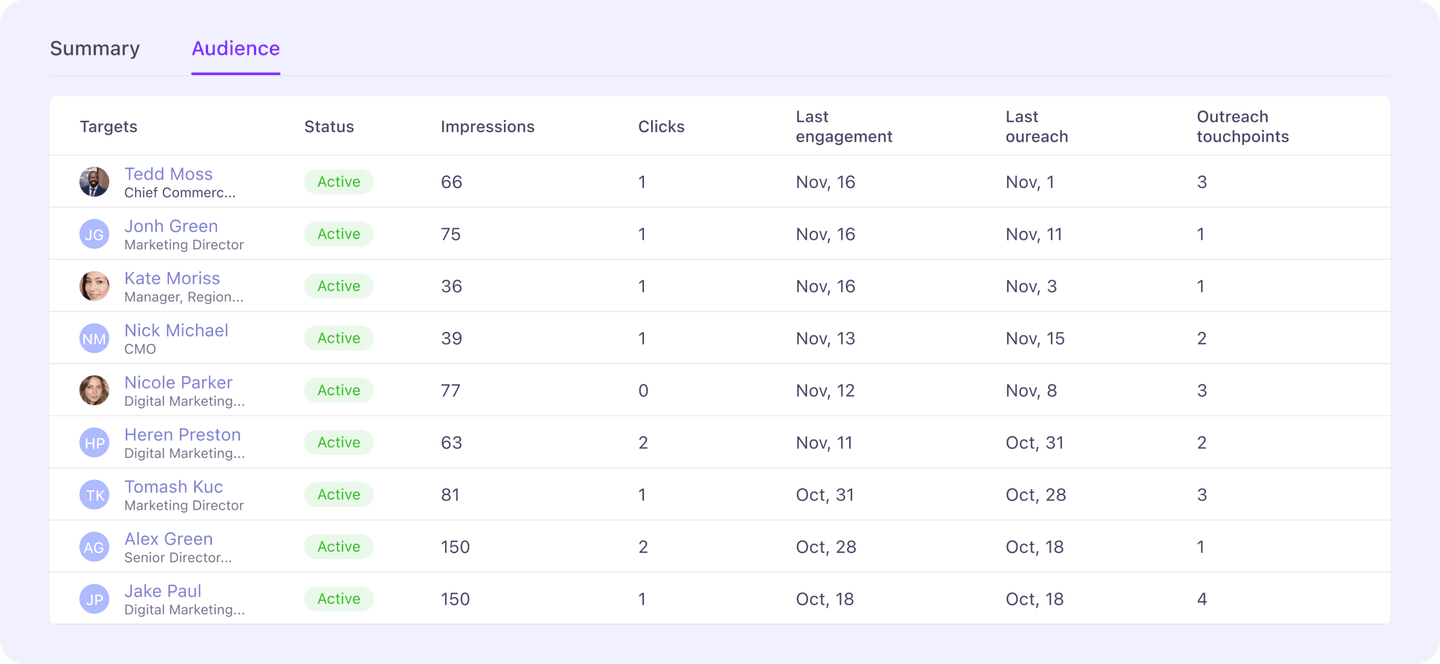
Instead of an account-score alert that says “Acme Corp’s engagement score increased this week,” you get a named contact and a specific relevant signal: this person searched your product category, engaged with your ad, and has been active on social media around your topic.
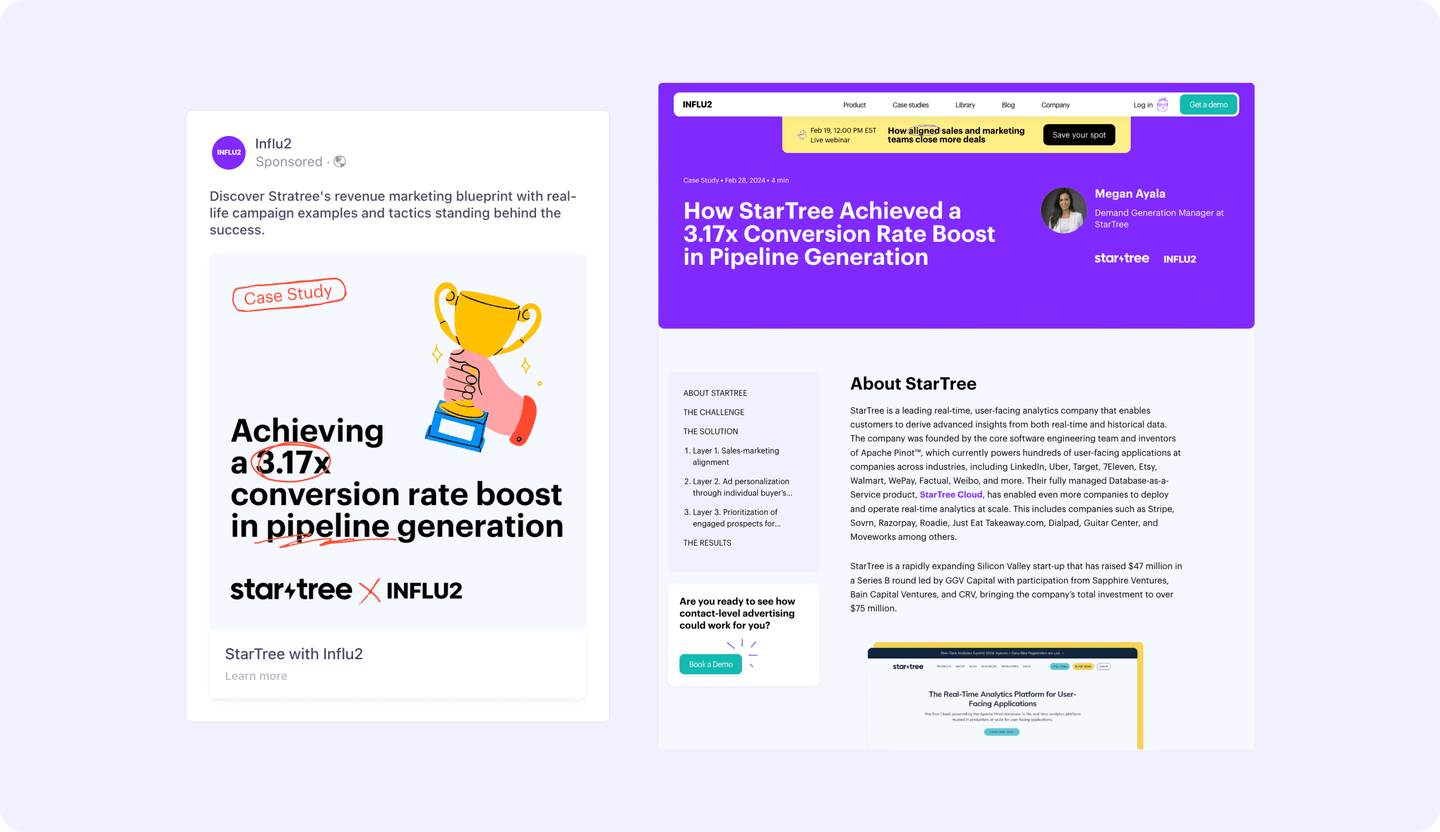
Quantexa’s team saw this play out directly: using contact-level engagement signals through Influ2, they achieved 4.53x higher conversion rates for contacts with relevant signal history compared to cold outreach.
Plus, Influ2’s 2026 enterprise buying survey found that 70% of B2B buyers say the #1 thing companies can do to stand out is provide content that helps them think through a real problem. That problem looks different for an IT decision-maker than it does for an end user. Contact-level targeting lets you address both simultaneously.
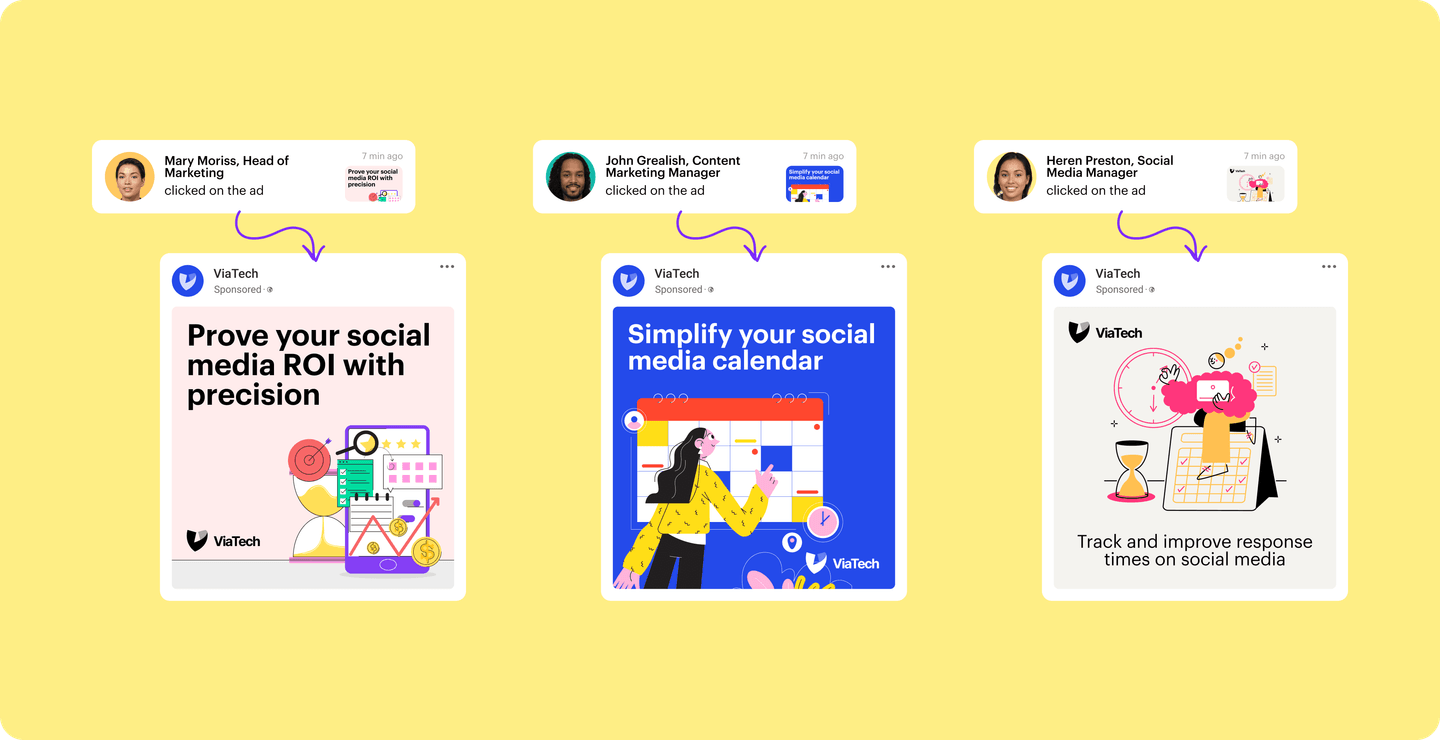
Start by building buyer journeys for different personas. If you know who’s involved in a deal (Execs and VPs, end users, procurement teams) and you know when those people typically enter a buying cycle, you can target them with personalized journeys for their specific role.
“Dividing our audience by persona is something that helped me keep engagement levels high,” says Anna of our program here at Influ2.
Once you have those persona-based insights, you can show your sales team who in a buying committee is engaged, what messaging piqued their interest, and how many actions they’ve taken that signal intent.
Launch pilot campaigns and learn from the results
You’re in this for the long haul. ABE changes how you target accounts across the full lifecycle, and it requires patience to show results.
Start with a few campaigns. During this time, get together regularly with Sales and CS to talk about the results you’re all seeing.
You may not see overnight results, but by tracking shared metrics and KPIs, you’ll see compounding improvement in the metrics that connect to revenue. Here's what to track:
- Have all teams measure revenue and pipeline influence on their own efforts. With Influ2's revenue reporting, you can see what direct influence your advertising efforts had on closed deals.
- Track ad CTR and conversion rates, but also monitor which stages of the buying journey and engagement cycles see higher conversions.
- Use your previous ABM performance as a benchmark to compare growth quarter-over-quarter or year-over-year.
Something else to keep in mind is what Peter Lewis calls “micro-engagements,” including ad clicks, post engagement, and responses to non-sales messages.
When those signals inform your strategy, incentives align, and marketing focuses on building relationships instead of MQLs.
Here at Influ2, about 86% of all outbound opportunities last year were ABM-influenced. Being able to measure with our own platform means we can prove the value of our ABE strategy.
How to measure account-based engagement
Measuring account-based engagement means moving past vanity metrics (impressions, click-through rates) and tracking what those signals mean for pipeline and revenue.
The metrics that matter most in an ABE program:
- Contact-level engagement rate: How many of the specific contacts on your list are actually engaging with your content? This tells you which people (not just which logos) are paying attention, and gives your sales team actionable context for outreach.
- Pipeline influence: What percentage of your open deals have had meaningful contact with ABE marketing touchpoints? Tracking ABM-influenced pipeline is how you connect marketing engagement to revenue without relying on first/last-touch attribution.
- Engagement by buying stage: Which channels and message types are driving engagement at each stage of the buyer journey? This informs how to adjust your engagement cycles over time and where to concentrate effort.
- Engagement velocity: How quickly are contacts moving from first engagement to a meaningful sales conversation? Faster velocity after ABE implementation is one of the clearest signs the strategy is working.
- Revenue attribution at the contact level: Ultimately, ABE needs to connect to closed revenue. Contact-level attribution (where you can see which individuals engaged with marketing before a deal closed) is what makes this possible, and what gives marketing a defensible claim on pipeline. Tools like Influ2’s revenue reporting make this attribution trackable at the individual contact level.
Sold on account-based engagement?
If you’ve made it this far, you’re not here to build some quick wins and get leadership off your back about ABM.
You’re invested in building a strategy alongside the rest of your org, and you’re ready to put in the work to pull it off.
Just remember, ABE is a long-term relationship that requires patience.
Marketing Strategy Leader Carrie Holmes adds this piece of advice: “Be patient. Account-based engagement is a proven force multiplier, but it takes time. You will get pressure to show immediate returns, but the value in this approach is a compound benefit over time. It’s important to set this context early with leadership.”
The best way to get started? leadership alignment first, then the account list, then the channels. Don’t try to build the whole system before you’ve tested the foundation.
Psst… Want to see how it works? Book a demo with our team.
FAQ: Account-based engagement
What is account-based engagement?
Account-based engagement (ABE) is a B2B marketing approach where Marketing, Sales, and Customer Success work together to engage specific contacts within target accounts across the full buying journey. Unlike traditional ABM, which targets accounts broadly, ABE operates at the contact level: you’re building relationships with the actual decision-makers in a buying committee, not just targeting a company name.
What’s the difference between ABM and ABE?
ABM (account-based marketing) is typically a marketing-led strategy that focuses on a set of target accounts. ABE (account-based engagement) is a broader, company-wide approach that includes Sales and Customer Success, operates at the contact level rather than the account level, and focuses on engagement across the full lifecycle, not just top-of-funnel lead generation.
What are the main types of engagement in an ABE program?
The two broad categories are digital engagement (targeted ads, email sequences, website content, social media interactions) and direct/physical engagement (sales calls, LinkedIn outreach, events, direct mail). Effective ABE programs combine both, coordinated across Marketing, Sales, and CS so contacts receive consistent messaging regardless of channel.
What metrics should I track for account-based engagement?
The most important ABE metrics are: contact-level engagement rate, pipeline influence, engagement velocity (how quickly contacts move from first engagement to a sales conversation), engagement by buying stage, and revenue attribution at the contact level. Vanity metrics like impressions and MQLs are much less useful in ABE. The goal is building relationships with specific people, and those show up in pipeline and revenue data.
What is account-based sales engagement?
Account-based sales engagement refers to the sales team’s coordinated outreach within an ABE program: email, calls, LinkedIn messages, and in-person engagement directed at the same contacts Marketing is reaching with ads and content. When Sales and Marketing target the same individuals simultaneously with aligned messaging, the combined effect is measurably stronger than either team working alone.

Dominique Jackson is a Content Marketer Manager at Influ2. Over the past 10 years, he has worked with startups and enterprise B2B SaaS companies to boost pipeline and revenue through strategic content initiatives.

