B2B Buying Committees: How to Target & Convert Decision Makers


What's inside


At large companies, B2B buying committees rarely leave purchasing decisions to one person. Every "yes" comes with approval from the entire group, and each member needs to be convinced.
Engaging multiple stakeholders with different agendas is like planning a vacation for your extended family. Everyone wants a say in the itinerary, you'll have to chase people down to get a response, and someone always insists on a last-minute change. And if you can't come to a consensus, the whole trip gets derailed.
But in the B2B world, failing to get buy-in from key stakeholders means you're losing revenue, not just skipping beach day.
This guide covers who's in a typical B2B buying committee, how to identify and map the stakeholders at a specific account, and how to engage every member with messaging that moves them forward.
Key takeaways:
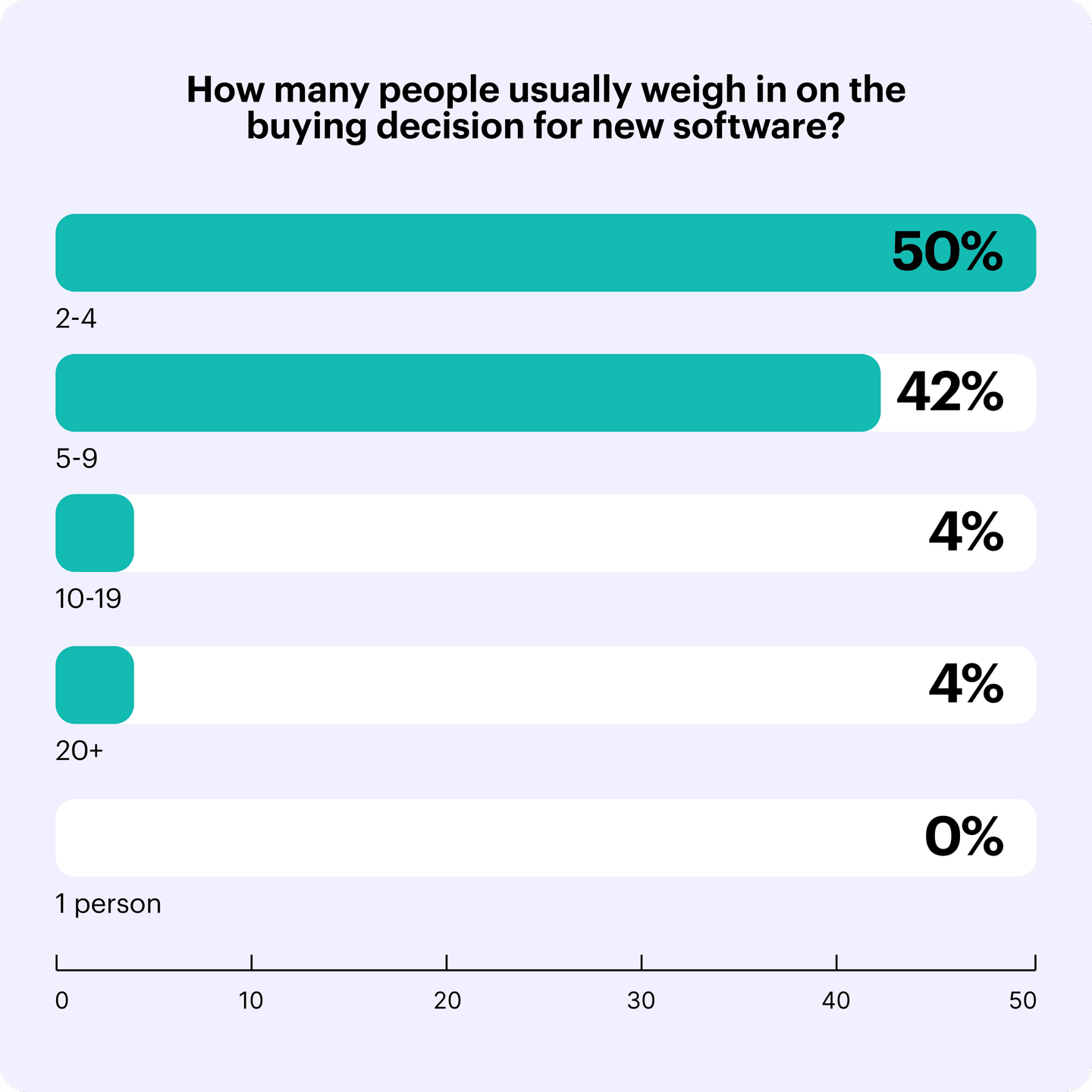
- Forrester's 2024 research puts the average B2B buying group at 13 people, but in Influ2's 2026 survey of 50 enterprise and mid-market buyers, 50% had buying groups of 2-4 people and 42% had 5-9. Size varies significantly by company size and deal complexity.
- Buying committees include multiple roles with different concerns: champion, economic buyer, technical buyer, end user, legal/procurement, and executive sponsor. End users carry the most decision-making weight for only 16% of buyers, per Influ2's 2026 survey.
- Identifying who's in the buying committee is step one. Mapping the group means documenting each contact's role, coverage status, and current engagement so gaps get caught before they become deal risks.
- The top deal bottlenecks per Influ2's 2026 survey: budget approval (34%), internal alignment (22%), and security concerns (20%). All three map to roles that most marketing programs under-reach.
What is a B2B buying committee?
A B2B buying committee is the group of people within a target account who are responsible for the buying decision. They're also called buying groups
According to Gartner research, most B2B purchases are driven by large-scale organizational changes. Buyers aren't solving a quick pain point; they're addressing long-term challenges that span multiple parts of the organization, which is why committees form around these decisions in the first place.
Forrester's 2024 State of Business Buying Report found that the average buying group has 13 people, distributed across various departments. That figure reflects the enterprise high end. In Influ2's 2026 survey of 50 enterprise and mid-market buyers, 50% said their buying group had 2-4 people and 42% said 5-9. Every respondent with a buying group of 10 or more came from a company with over 1,000 employees.
Gartner’s 2023 Global Software Buying Trends Report listed the most common titles involved in making software buying decisions (in order of prevalence):
- General manager and C-level executives (36%)
- CEOs, presidents, and owners (30%)
- Functional leads and managers (26%)
- VPs, directors, and business unit managers (26%)
- Analysts and internal consultants (13%)
- Staff / individual contributors (7%)
Not everyone in the committee has a direct use for your product. Some do (like the Head of Marketing Operations buying an email automation tool), and others have more tangential concerns (like a CMO's objections about cost). Most GTM teams map committee members to a standard set of roles:
- End users: The people who will directly use and benefit from your product or services.
- Champion: The internal advocate for the purchase. They're typically (but not always) an end user who believes strongly in the value of your product and helps convince other buying committee members.
- Economic buyers: The person who has the authority to allocate the budget, like a Director, VP, or C-suite level role.
- Technical buyers: Usually part of IT or software engineering (though also sometimes Marketing or RevOps). They focus on technical specifications, integrations, and capabilities.
Buying committee roles and how each one influences the deal
The roles above aren't equally weighted. Understanding who in the buying committee carries the most influence, and who most often raises objections, changes how you allocate your marketing attention.
| Role | Typical titles | Primary concern | When they get involved |
| Champion | Manager or Director in the buying function | Getting the problem solved; building internal credibility | Early and throughout |
| Economic buyer | VP, SVP, or C-suite with budget authority | ROI, total cost, organizational risk | Mid-to-late; signs off on final purchase |
| Technical buyer | IT, Security, RevOps, Engineering | Integrations, data security, implementation complexity | Mid-evaluation; delays if engaged late |
| End user | Individual contributors in the buying team | Usability, day-to-day workflow fit | Often late to engage, but their pushback is real |
| Legal/Procurement | Procurement manager, Legal counsel | Contract terms, vendor risk, compliance | Late stage; can kill a deal after everything else is agreed |
| Executive sponsor | C-suite or senior VP above the champion | Strategic alignment, organizational risk | Typically only for large or politically significant purchases |
Influ2's 2026 enterprise buying survey puts numbers to how influence actually breaks down: 32% of buyers said a senior leader or executive's opinion carries the most weight, and another 32% said it's a group decision. Day-to-day end users came in at just 16%.
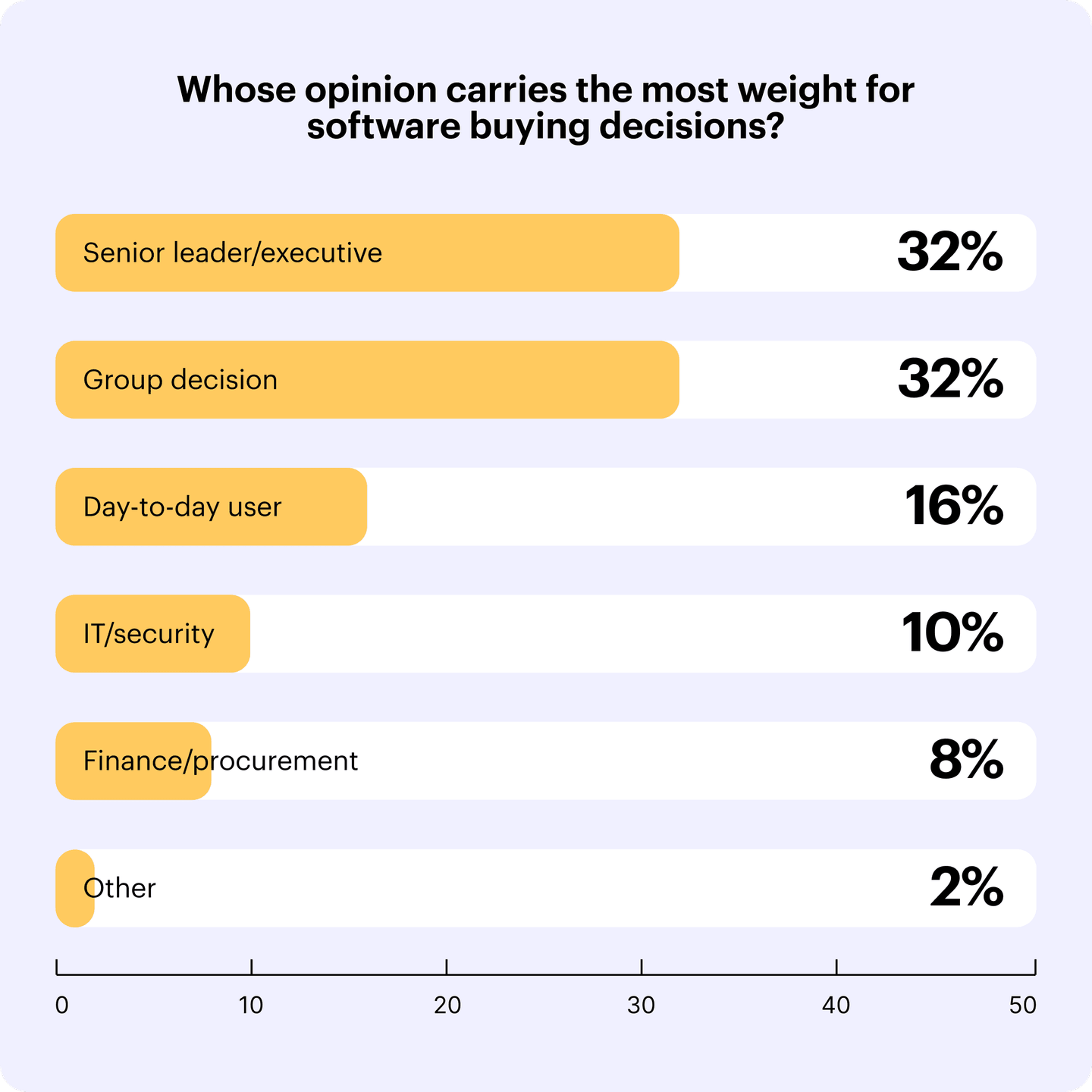
If your campaign is built primarily around the person who'll actually use the product, you're targeting the role with the least decision-making power.
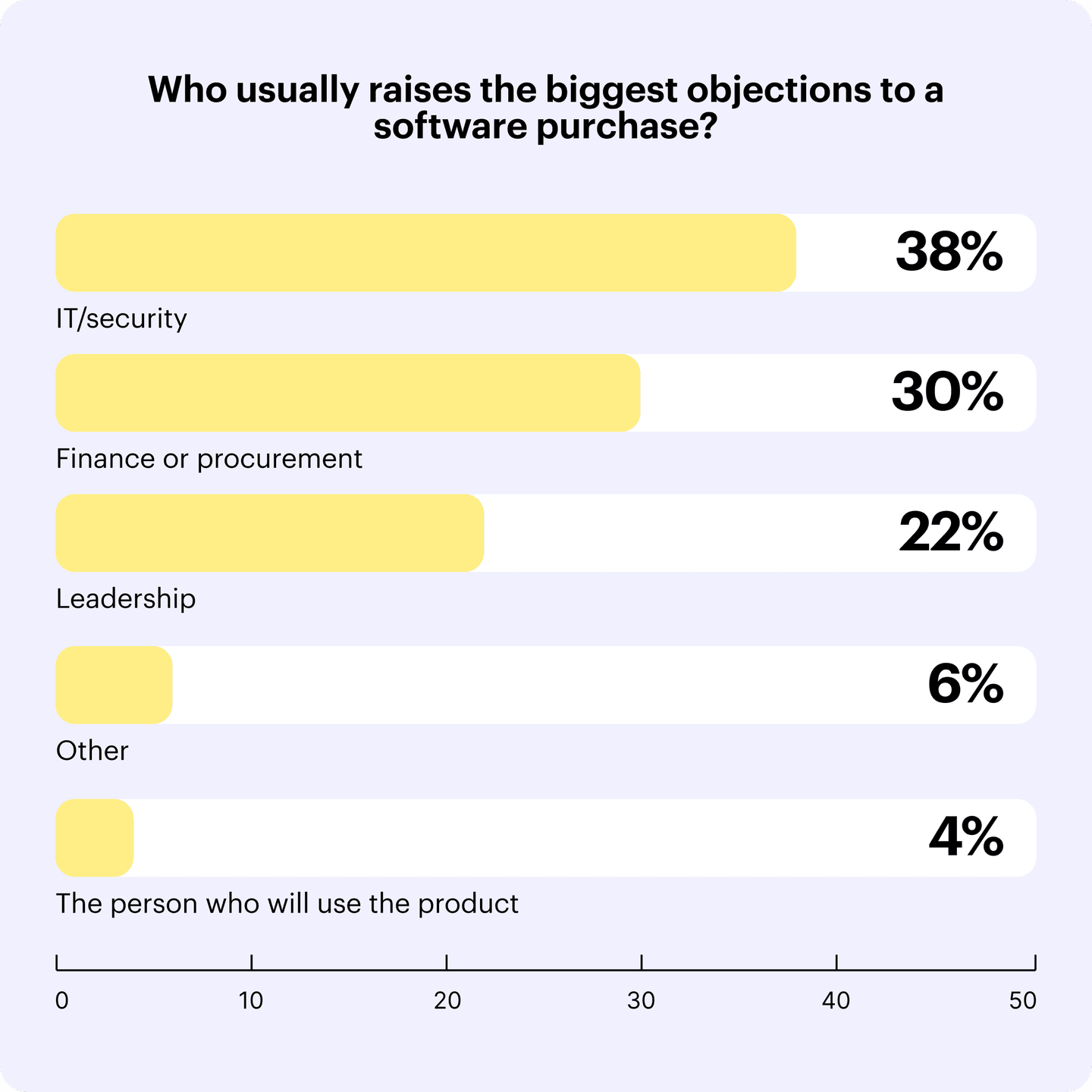
The same survey found that IT and Security raise the biggest objections in 38% of deals, with Finance and Procurement close behind at 30%. Both roles are typically engaged late in the evaluation process, which is exactly when they can stall or kill a deal.
Here's an example of why this matters.
Take a company like Pipedrive.
As a CRM, Pipedrive's end users are salespeople and their main buyers are sales leaders. But at the enterprise level, the VP of Sales is unlikely to sign off alone.
With a $99 per seat per month price tag, a CRM for a 100-person sales team is a $100k+ annual investment, something that’s almost definitely going to require executive sponsorship. Which means someone in the C-Suite will be part of the buying committee. But CRM doesn’t just touch sales.
It spans the entire revenue team, meaning VPs and directors across Marketing and Customer Success (CS) may be involved in the purchasing decision as well.
Then, you’ve got buying group members with technical concerns.
The Chief Information Security Officer (CISO) is concerned about data security and potential exposure. The Director of Revenue Operations is interested in the solution’s automation capabilities.
And we haven’t even included an end user (sales dev and account executives) yet.
If Pipedrive wants to influence enterprise-level customers, they need to map out and target the entire buying committee for each target account, from technical buyers to economic decision-makers, and create messaging that speaks to the unique concerns of each person.
Why it’s so difficult to reach B2B buying committees
One of the main reasons companies struggle to meaningfully engage buying committees is a lack of the right tools.
Many teams rely on traditional ABM software to reach prospects at key accounts. However, the main purpose of those tools is to help identify in-market accounts, not to engage the specific contacts you want to convert.
For example, imagine if Figma wanted to target an enterprise company like Microsoft.
Microsoft has around 200,000 employees. ABM software might help Figma reach around 5,000 of them.
However, most ABM tools don't tell you who actually saw or clicked your ads, so Figma has no way to know if any of those 5,000 are even part of the buying committee.
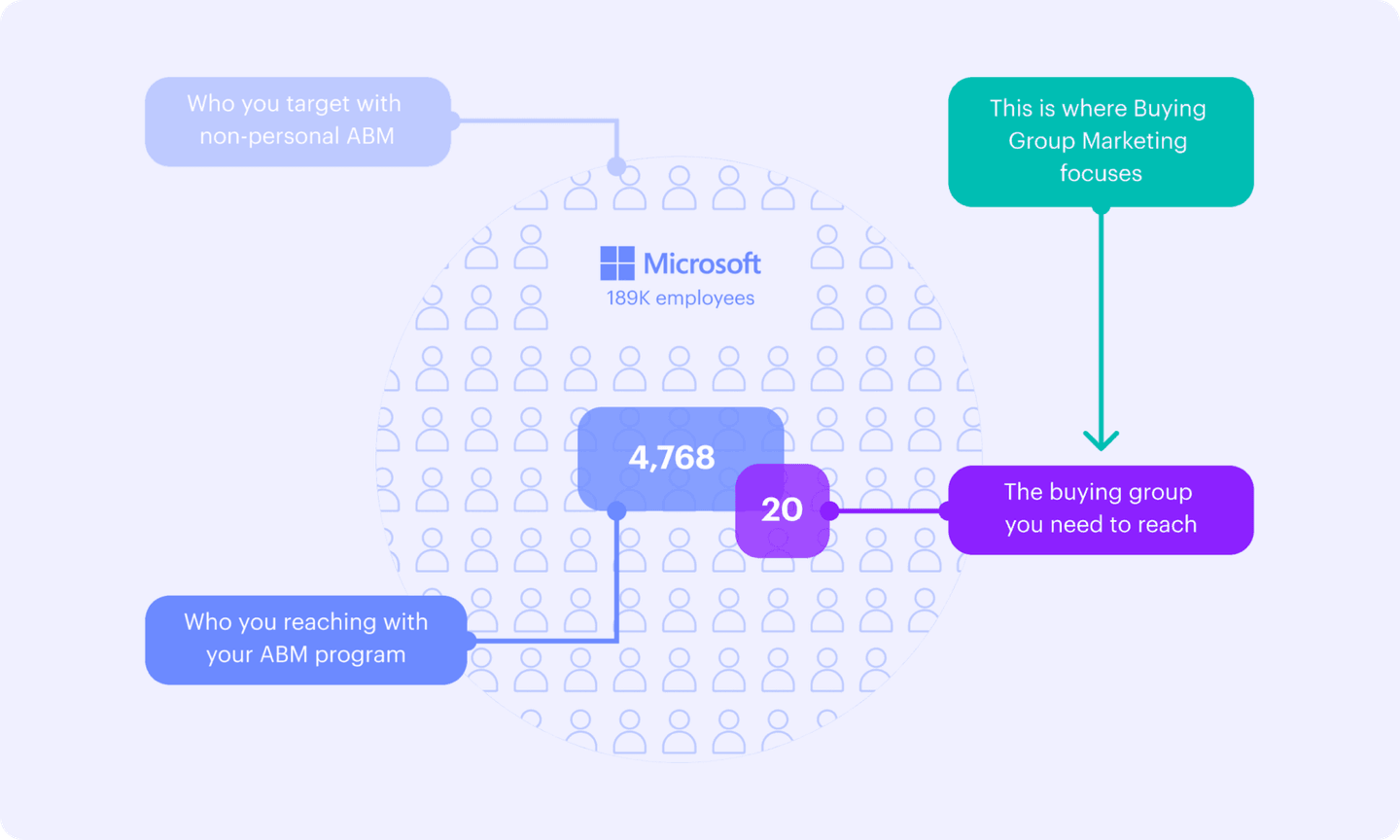
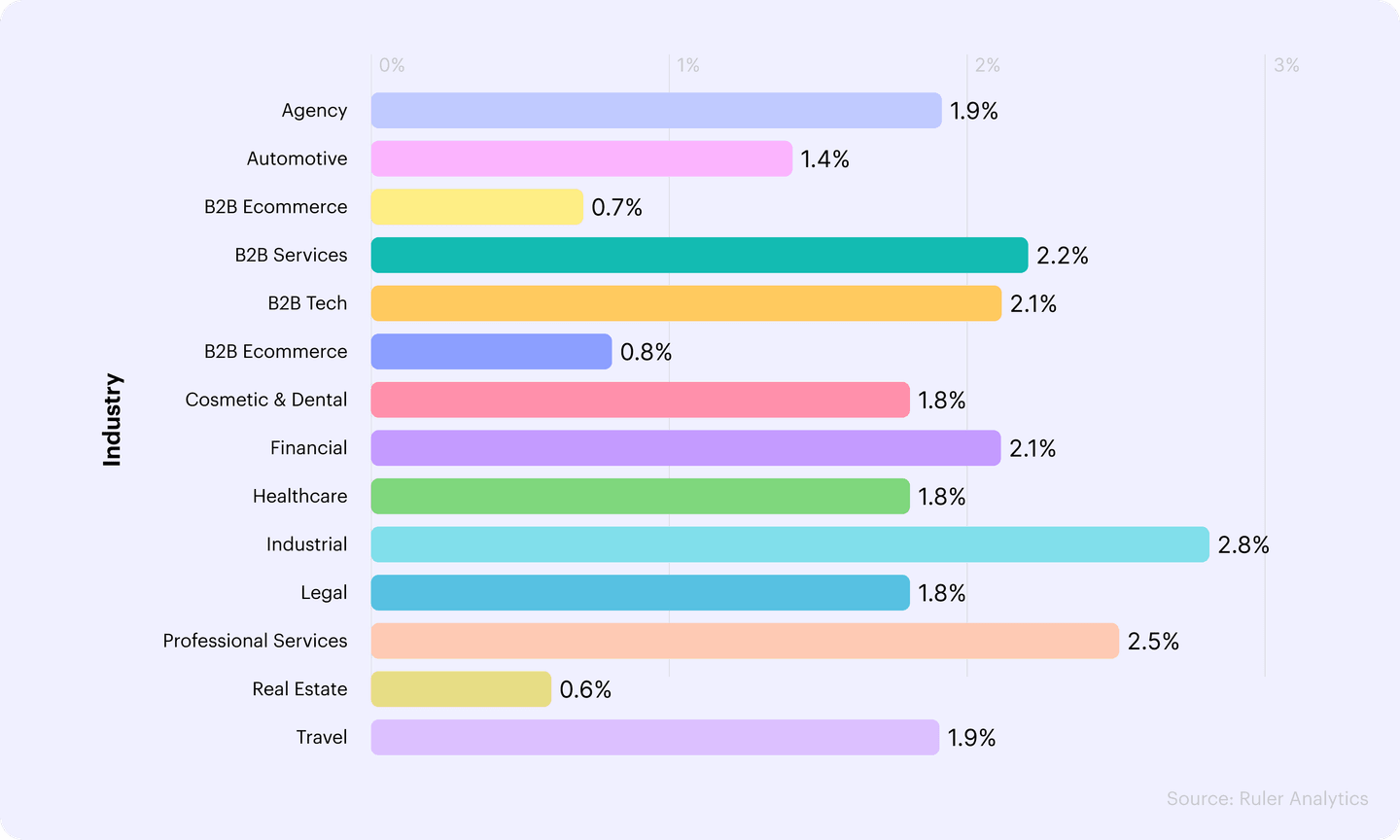
Figma’s only hope of identifying who’s engaging with their ABM program is if someone from Microsoft fills out a form on their website. However, the average form-fill conversion rate for B2B is only around 2%.
The real barriers run deeper than any single conversion rate. Influ2's 2026 enterprise buying survey found that budget approval is the top deal blocker for 34% of buyers, getting internal alignment for 22%, and security review concerns for 20%.
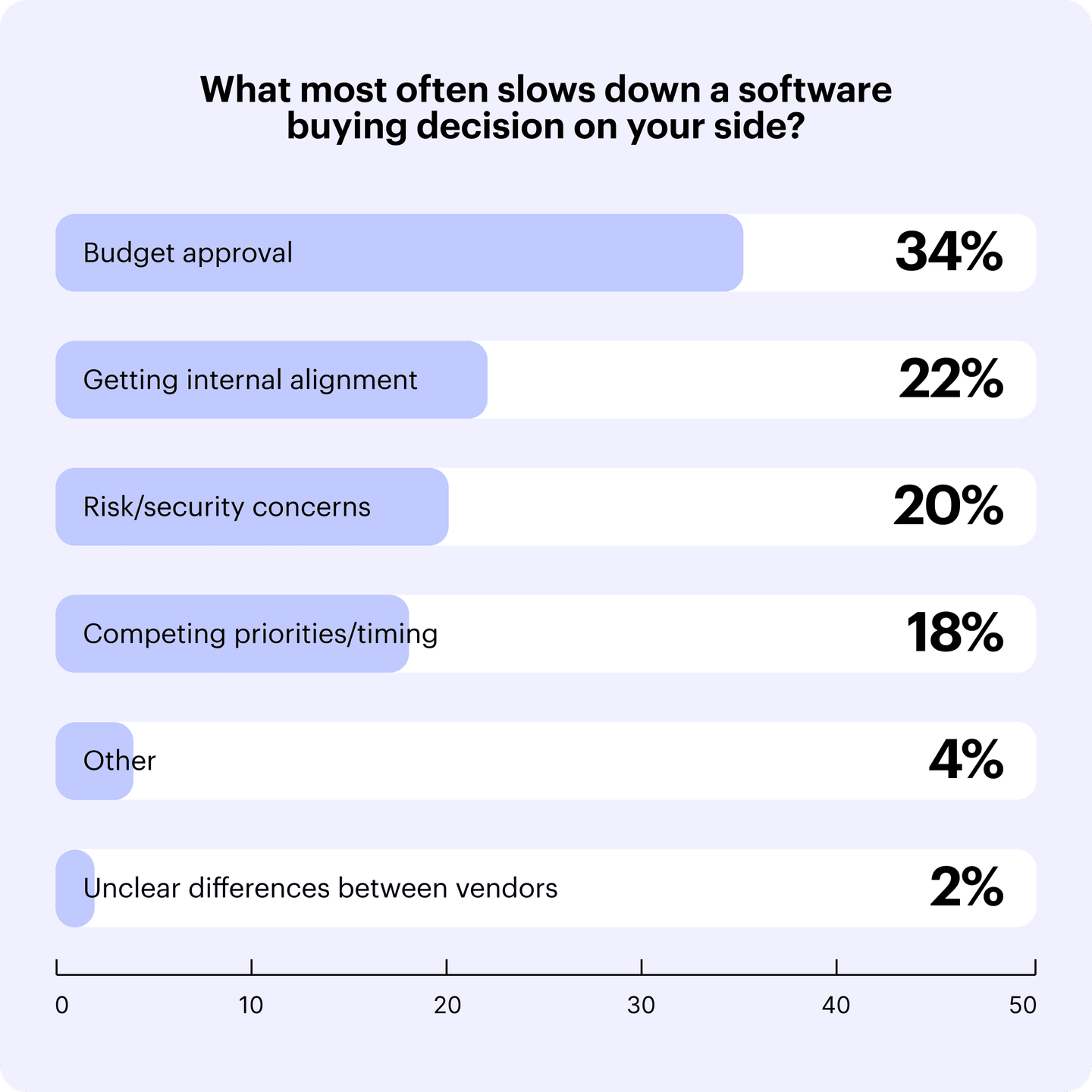
Each bottleneck maps directly to a role most ABM programs under-reach: the economic buyer, the broader stakeholder group, and the technical buyer.
Influ2 helps solve these problems with contact-level ABM (targeting and tracking engagement at the individual person level, not just the account). You can target named contacts at priority accounts and track who views and clicks your ads even if they don't fill out a form.
How to identify who's in a buying committee
Collaborate with Sales to align on personas
Marketing should work closely with Sales (and potentially CS) on this because they speak with prospects and customers every day.
You can build a relevant buying committee list just by sitting down with reps and asking who's typically involved in deals. Use real-world data to back up and expand on those assumptions.
A good starting point is to identify buying group personas by researching titles associated with past opportunities in your CRM. You'll likely find some obvious trends, like a technical stakeholder such as a CTO always being involved.
One important thing to keep in mind: focus on your ideal customer profile (ICP). Just because a deal was won doesn't mean it's the type of account you want more of.
Mapping personas for your buying committees based on accounts that churned puts your entire program on a shaky foundation. Build your buying group personas based on your happy customers, since that's what you want to replicate.
Once your personas are mapped out, you can use tools like LinkedIn Sales Navigator to find the right people at your target accounts.
Use buying intent signals
At this point, you have a list of people you think are on the buying committee. Contact-level ads help you dig deeper to understand exactly who at your target account is expressing interest.
With Influ2, you can show ads to the people you believe are in a buying committee and track who engages with your ads.
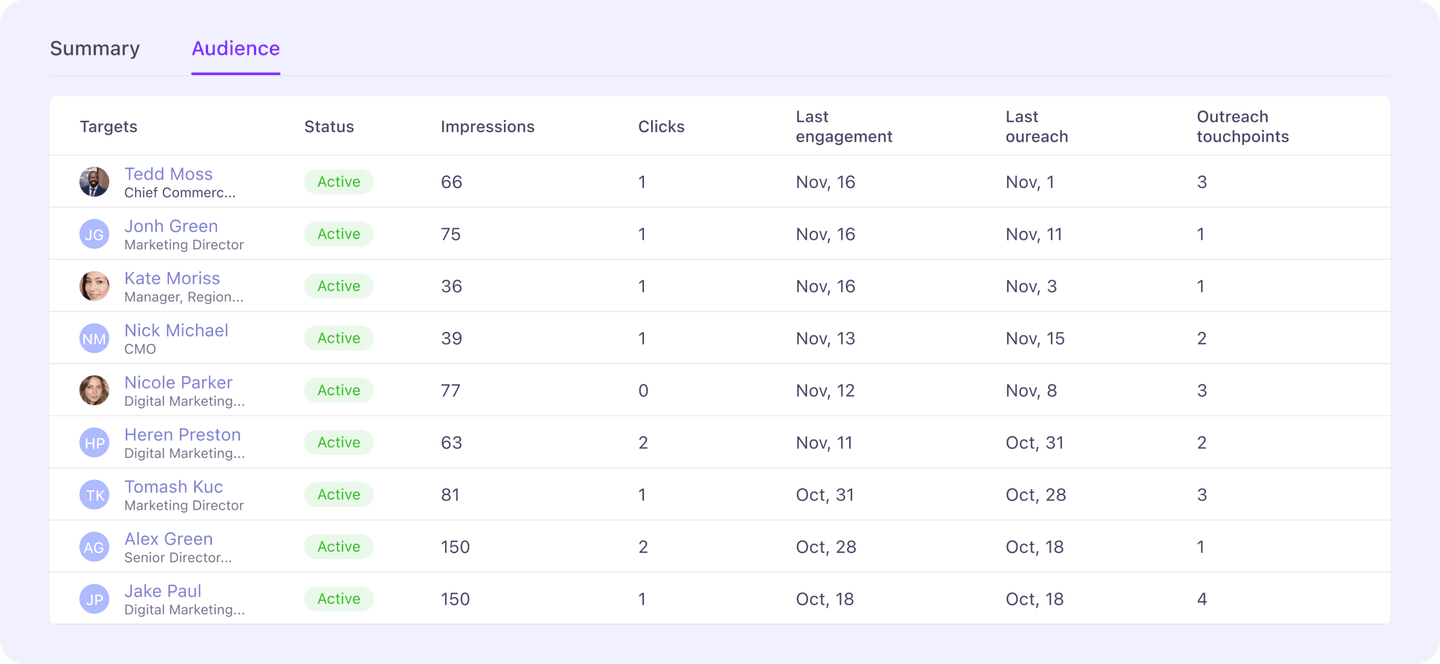
When a targeted prospect clicks on your ad, it's a signal they have some level of interest in your product. Influ2 will send a notification to Sales with who clicked which ad.
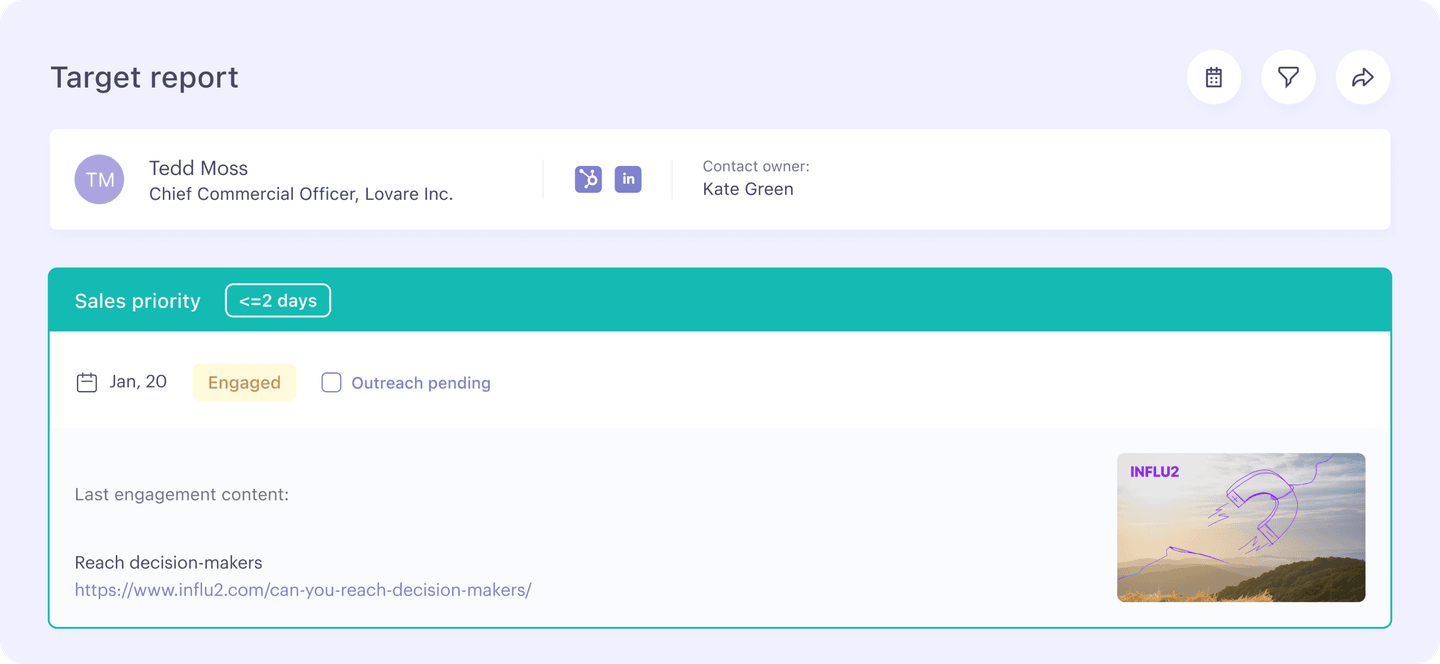
While ad engagement alone doesn't confirm someone is part of the buying committee, it gives the sales team context to reach out and start a conversation. If they can book a call, they can learn more about the company's needs and find out who else is involved in the decision-making process.
The signal that a contact is in the buying committee isn't always explicit. A new name shows up on a security review request. An executive joins a call that previously only involved the champion. A contact who was previously unknown starts engaging with category-relevant content. Those behavioral signals are worth capturing in CRM immediately, because they're often the first sign that the deal has grown more complex than your opportunity record currently reflects.
How to map your buying committee
Identifying who's in the buying committee is step one. Mapping it means documenting the structure of the group: who influences whom, which roles are missing coverage, and what each contact's current engagement status looks like.
A buying committee map doesn't need to be a complex diagram. The minimum useful version answers four questions for each contact: what's their role in the decision, what do they care most about, have they been reached yet, and what's their current engagement status?
Most teams build this in CRM, creating contact records for each stakeholder and tagging them with a role field (champion, economic buyer, etc.), a persona, and a coverage status. The value of the map comes from how it's used: in deal reviews to surface coverage gaps, in marketing to build precisely targeted cohorts, and in forecasting to flag deals where the economic buyer still hasn't been engaged.
The map needs to be treated as a live document, not a one-time exercise. A champion who goes quiet, a procurement contact added late in the process, an executive who gets looped in unexpectedly: these are the inflection points that change deal trajectories when caught early and get ignored when they're not.
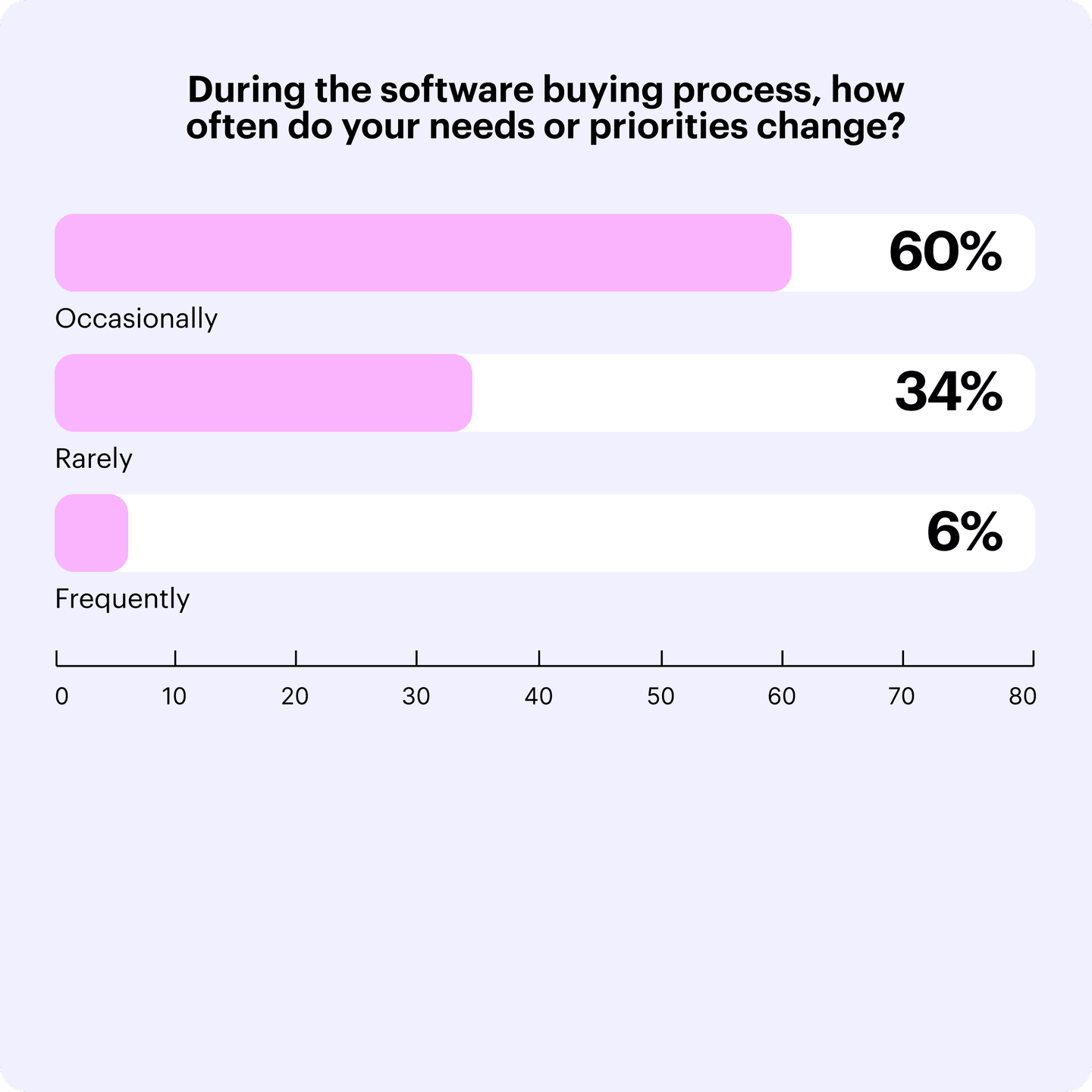
There's also a less obvious reason to keep the map current. Influ2's 2026 enterprise buying survey found that 66% of B2B buyers either occasionally or frequently shift their needs or priorities during the buying process. A committee map that reflects the situation from 3 months ago may not reflect what's actually blocking the deal today.
Influ2's cohort builder lets marketing teams turn CRM buying committee data into targeted ad audiences, grouping contacts by role, deal stage, and account criteria with automatic updates as the CRM changes. When a new contact is added to an opportunity as a technical evaluator, they can be pulled into the right campaign without any manual list management.
How to engage buying committees with multithreading and ads
The idea behind multithreading is to engage different members of the buying committee across multiple channels simultaneously, with messaging tailored to their needs and stage in the decision-making process.
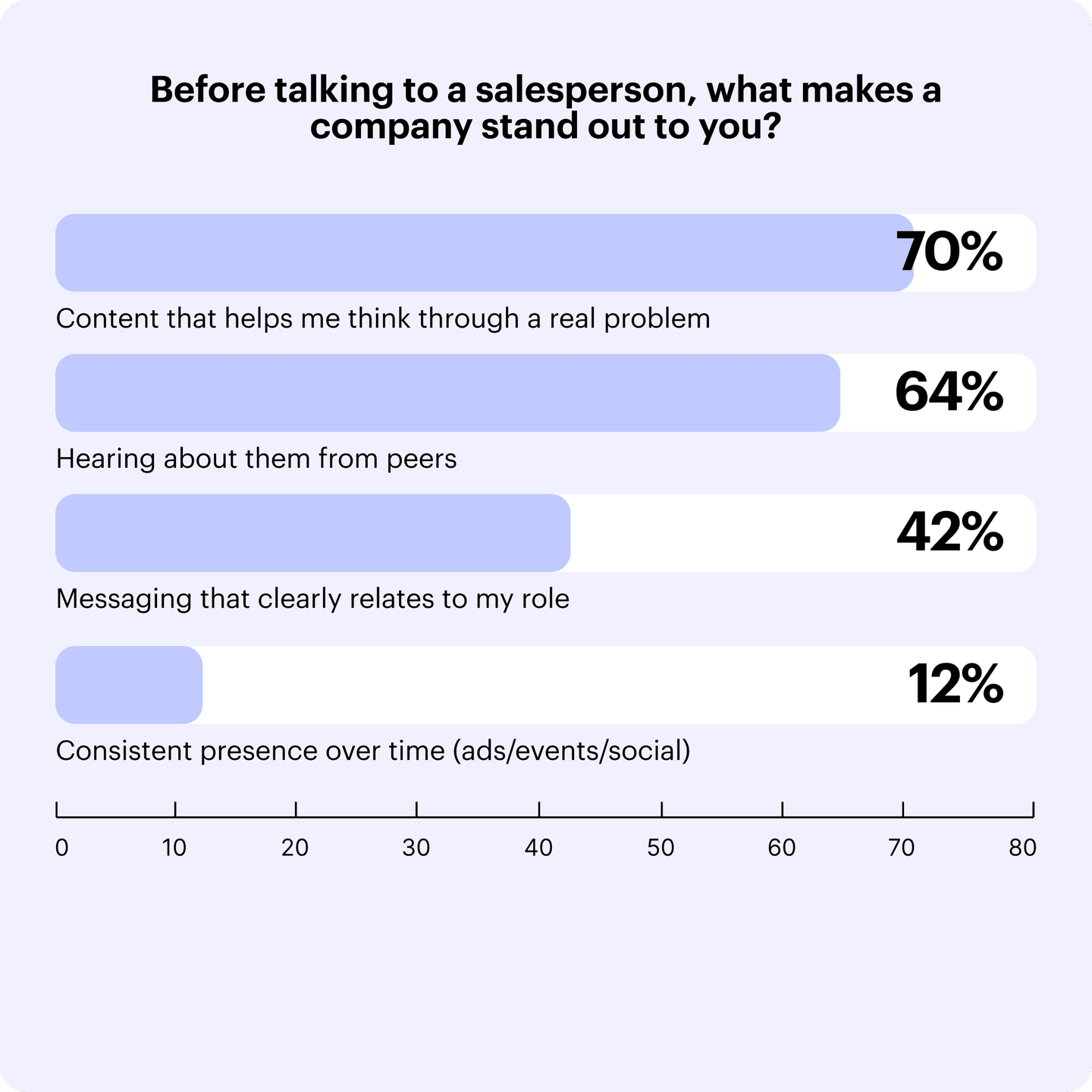
What that content says matters as much as where it runs. Influ2's 2026 enterprise buying survey found that 70% of B2B buyers say the top thing companies can do to stand out is provide content that helps them work through a real problem, specific to their role and situation. That looks different for every person in the buying committee.
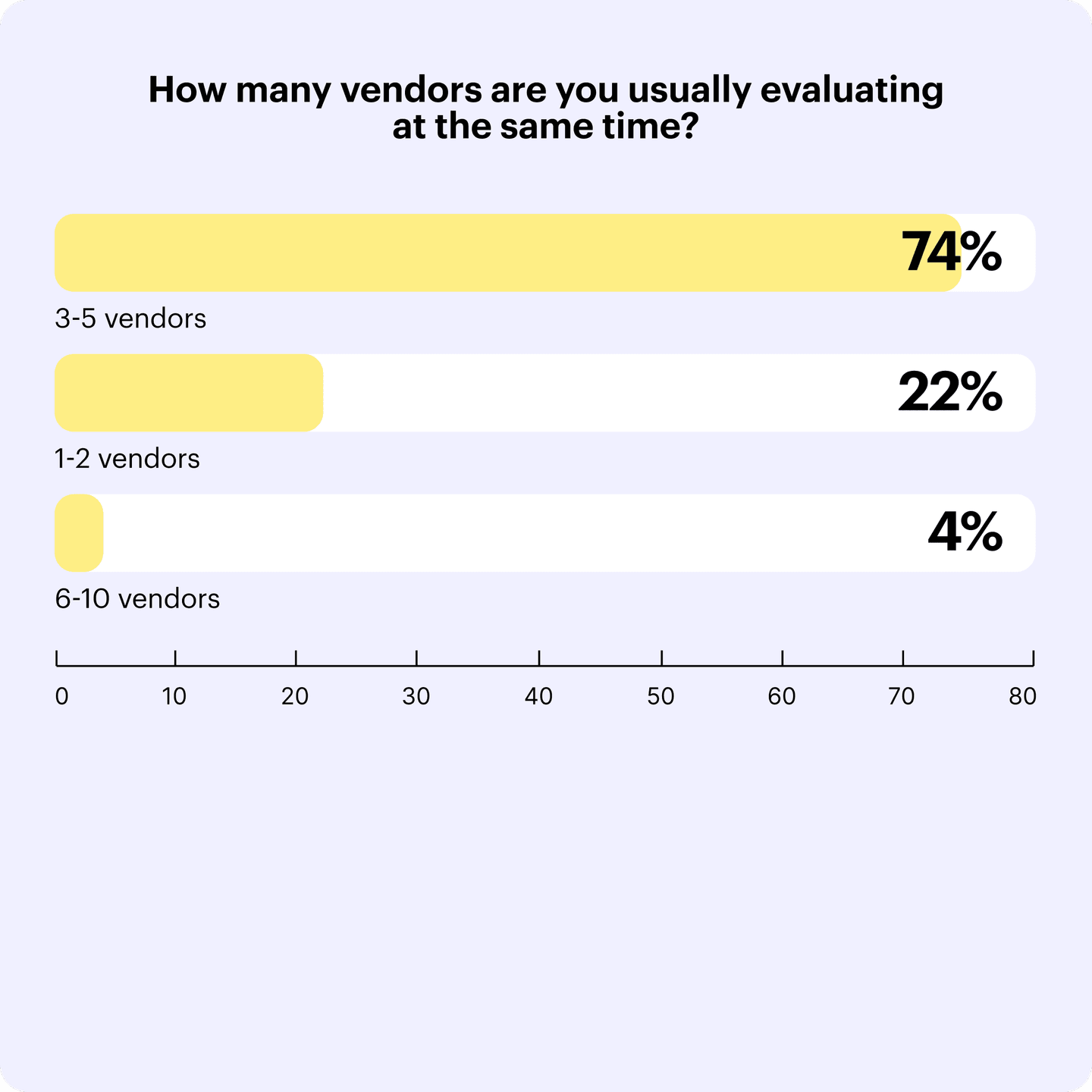
The competition makes this more urgent: 74% of buyers in the same survey said they evaluate 3-5 vendors simultaneously. Generic account-level messaging doesn't differentiate you from anyone else on that shortlist.
While multithreading is often treated purely as a sales motion, marketing can support it with contact-level ads across three angles: persona, buyer's journey stage, and intent.
Persona
Your messaging should be tailored to the needs, challenges, and desires of each person in the buying group.
Say your sales team is in talks with a target account but the CMO and CTO have some hesitations. Even though they're both in the buying committee, they have different concerns that are prolonging the deal. The CMO thinks your software overlaps with their existing tech stack, and the CTO is worried about protecting customer data.
You might show the CMO ads that target the "our tools already do that" objection, while your CTO messaging focuses on data security concerns.

While Sales follows up via email and LinkedIn, marketing is showing relevant ads across Facebook, Instagram, LinkedIn, and display networks to address each buying committee member's specific concerns.
Buyer’s journey stage
There's a common misconception that everyone within a target account moves through the buying journey at the same pace.
Your champion might have already had a demo of your product, while a VP at the company is only slightly familiar with your brand. Targeting them with the same messaging doesn't make sense.
With Influ2's custom buyer journeys, you can show prospects at the beginning of the sales cycle thought leadership content and brand awareness messaging, while people further along can see messaging that speaks to the value of your product, backed up by social proof.
For example, an ad flow might look like this:
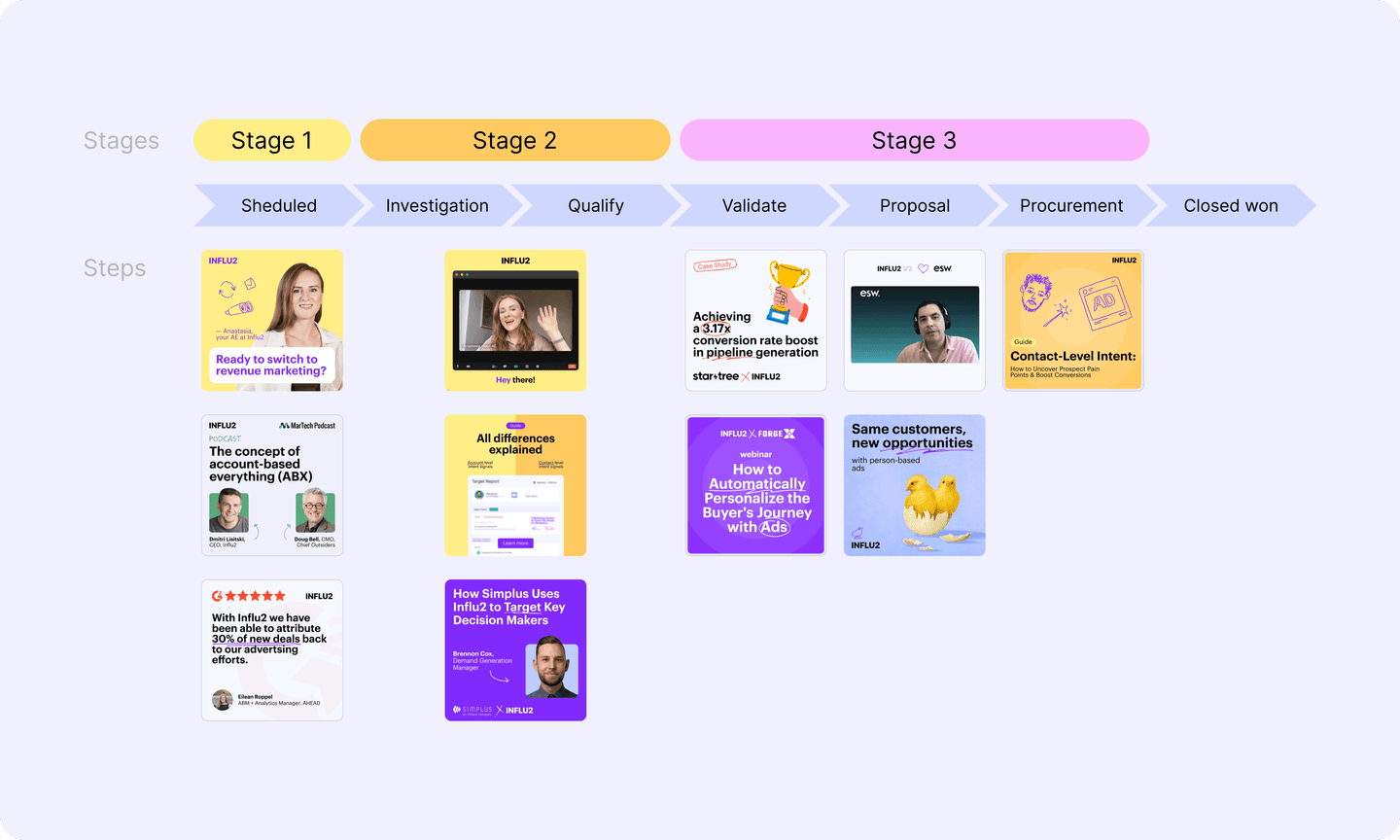
At Stage 1, our messaging is based on building trust and awareness.
At Stage 2, the prospect is aware of your company, so ads start incorporating more product, like videos that showcase capabilities.
As the buyer moves into Stage 3, the ads shift to in-depth resources like case studies and guides.
Intent
Here’s a common scenario.
Your sales team is in talks with their champion at a target account, but they need buy-in from their Director (another buying group member) before moving forward.
The Director has a lot on their plate and a sales call is at the bottom of their priority list, so the deal gets stalled.
This is a great opportunity for marketing to provide air coverage by targeting the Director with ads that reinforce the value of your product and nudge them into taking action.
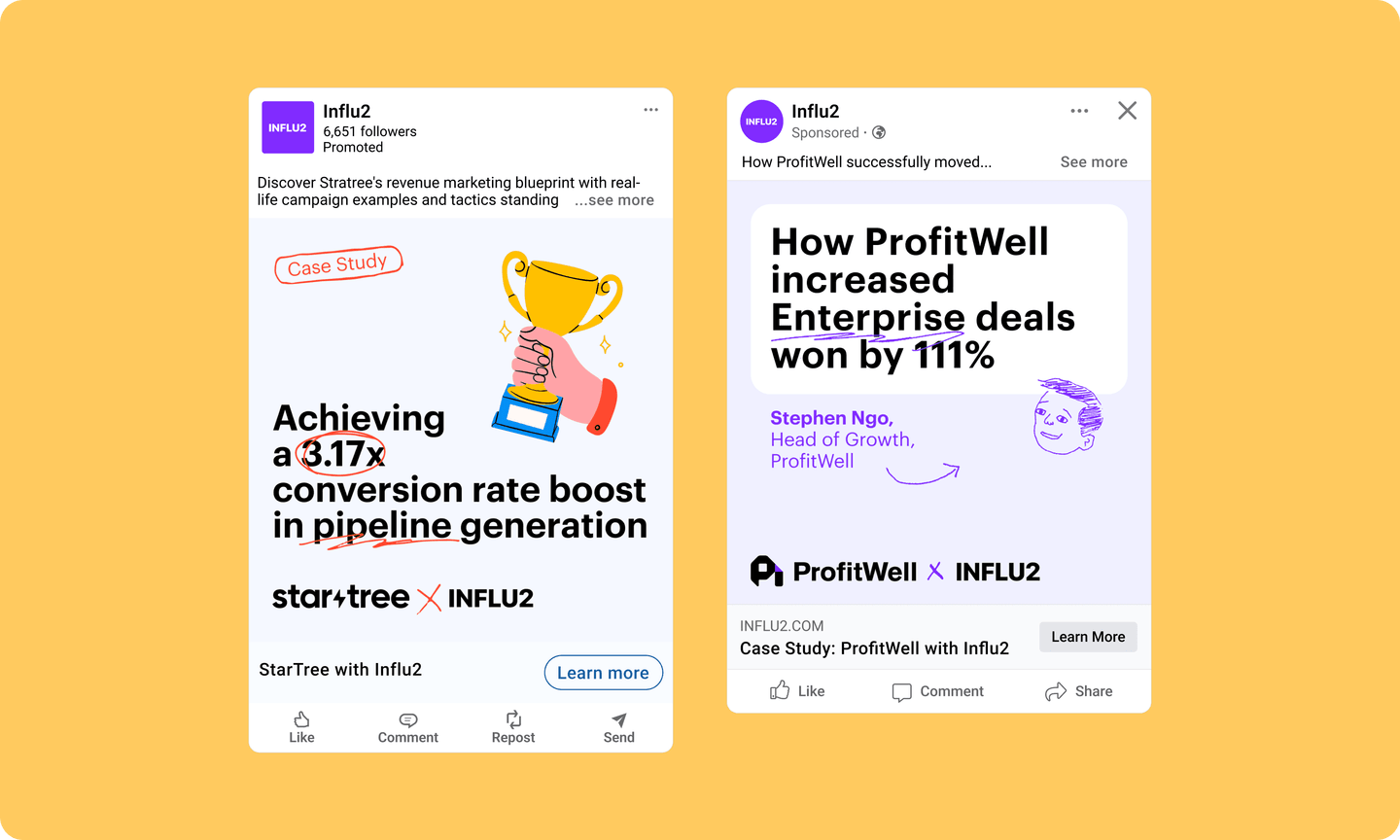
Influ2 will track when the Director sees and engages with the ads. Once they click an ad, that's the right moment for Sales to follow up with a message that references the champion at the company and the context of the ad they clicked.
Influ2 tracks multiple contact-level intent signals for targeted contacts: search intent (when a contact searches for relevant category terms), content intent (when they engage with related third-party content), social intent (when they post about relevant topics), and ad engagement intent (when they engage with your ads).
How to keep Marketing and Sales on the same page throughout the deal
The foundation of Sales and Marketing alignment is an agreement on which people are targeted.
The problem is that as deals progress, it's challenging for each team to track who the other is targeting or engaging with. Here's an example of how Marketing and Sales can work together to uncover and target a buying committee as a deal moves forward.
Say your company is a sales engagement platform and you're targeting PandaDoc. Sales and Marketing worked together to map out the account. Before Sales starts reaching out, Marketing is already running awareness-focused ads using Influ2 to target specific contacts in the account.
Marketing also sets engagement thresholds in Influ2 to automatically notify Sales when a target prospect engages with an ad.
Initially, the VP of Global Sales at PandaDoc was identified as a key stakeholder. But one of the company's Sales Managers clicked your ad.
That data gets passed to Sales, including who engaged and what they engaged with. Sales hopes to leverage the Sales Manager to influence the VP of Global Sales, so they reach out and book a meeting.
Through the call, Sales learns that while the VP is involved in the buying process, the Director of Revenue Expansion is also a key player. This Director is added as a contact in the account, which is synced to Marketing's target list in Influ2 so they can also be targeted with ads.
The process makes it easier for both teams to know what the other is doing and gives insights into exactly who's being targeted at all times.
Final thoughts
Every GTM leader knows that you can’t win just by buying more volume anymore.
Figuring out who makes up the buying committee is one thing, but loading them up with email outreach, cold calls, and generic ad creative isn’t going to help influence a decision.
Personalization and relevant messaging are key, no matter what channel you’re operating in.
For more tangible examples of ad personalization in practice, check out our playbook: 15 ABM Campaign Examples to Personalize Every Stage of the Buyer’s Journey.
And if you’re interested in learning how Influ2 can help you engage buying committees with contact-level ABM, let’s talk.
Frequently asked questions
What is a B2B buying committee?
A B2B buying committee (also called a buying group) is the group of people inside a target account who collectively evaluate, influence, and approve a purchase decision. In enterprise B2B, buying decisions are rarely made by one person: they're distributed across multiple roles, departments, and levels of seniority.
How many people are typically in a B2B buying committee?
It varies more than the commonly cited averages suggest. In Influ2's 2026 survey of enterprise and mid-market buyers, 50% said their buying group had 2-4 people and 42% said 5-9. Buying groups of 10 or more were limited entirely to enterprise companies. Forrester's 2024 research puts the average at 13, which reflects the enterprise high end rather than a typical deal.
What roles are in a B2B buying committee?
Most enterprise buying committees include a champion (internal advocate), economic buyer (budget authority), technical buyer (evaluates integrations and security), end user (assesses day-to-day usability), legal/procurement (reviews contracts and compliance), and an executive sponsor (provides organizational cover for large purchases). One person can cover more than one role, especially at smaller companies.
How do you identify the members of a buying committee?
Start with three anchors: the champion (who first raised the problem internally), the economic buyer (who controls the budget), and the technical evaluator (who runs the integration and security review). LinkedIn research filtered by department and seniority level surfaces most of the remaining names. CRM contact history fills in the rest, particularly the later-stage additions like procurement and legal contacts who typically join after initial evaluation.
What is buying committee mapping?
Buying committee mapping is the process of documenting who each stakeholder is, what role they play in the decision, what they care most about, and what their current engagement status is. The goal is to give marketing and sales a shared, up-to-date picture of the buying group so coverage gaps get caught before they become deal risks.
How do you target a buying committee in B2B marketing?
Effective buying committee targeting starts with segmenting contacts by role and building persona-specific message tracks for each one. The economic buyer needs business case content, the technical buyer needs integration and security specifics, and the champion needs shareable materials for building internal consensus. Running these simultaneously, rather than in sequence, compresses the time it takes to move the full committee from awareness to decision.


