Buyers Are Researching Your Category Right Now, And You Have No Idea


By the time your ABM platform shows an account is in market, the buying committee has likely been researching for weeks.
They’ve read articles, asked Google and ChatGPT, and talked to their network to build a shortlist of options. If you’re waiting for an account to “surge” before your sales team takes action, you’re probably too late.
Timing and relevance matter more today than ever, but too many teams are losing out because they can’t surface intent quickly enough and can’t tie signals to specific people.
What buying intent looks like before it shows up in your data
The majority of the buying journey happens before a prospect contacts any vendor. Gartner's research puts time spent with potential vendors at just 17% of the total process.
The other 83% looks like this:
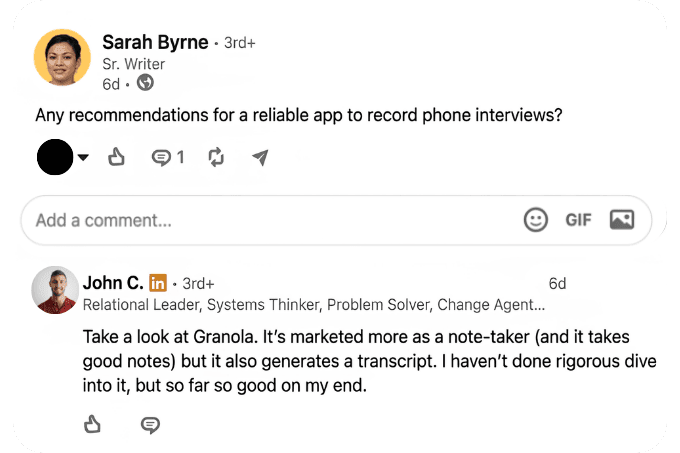
Asking for product recommendations on LinkedIn.
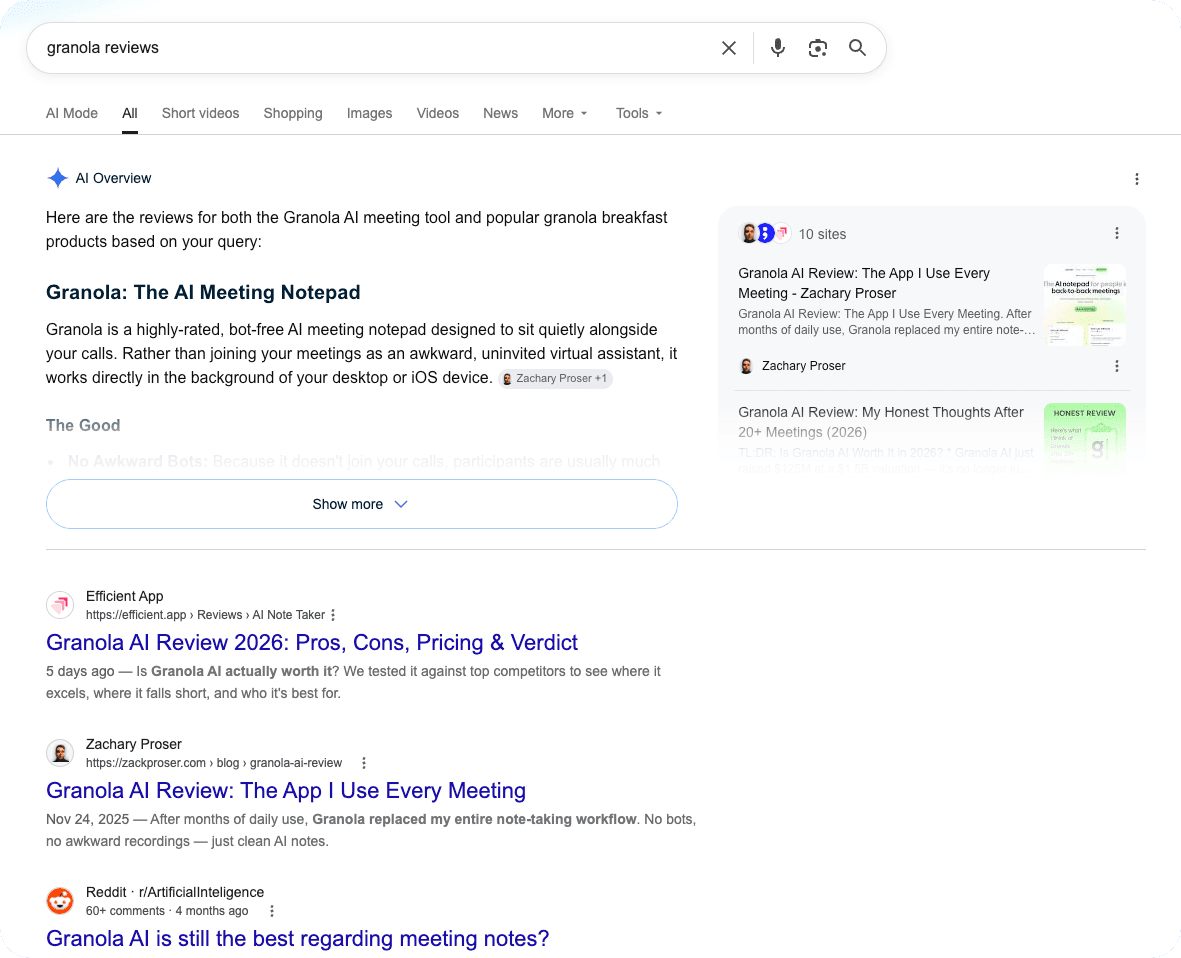
Searching for products they heard about from social media, ads, newsletters, or podcasts.
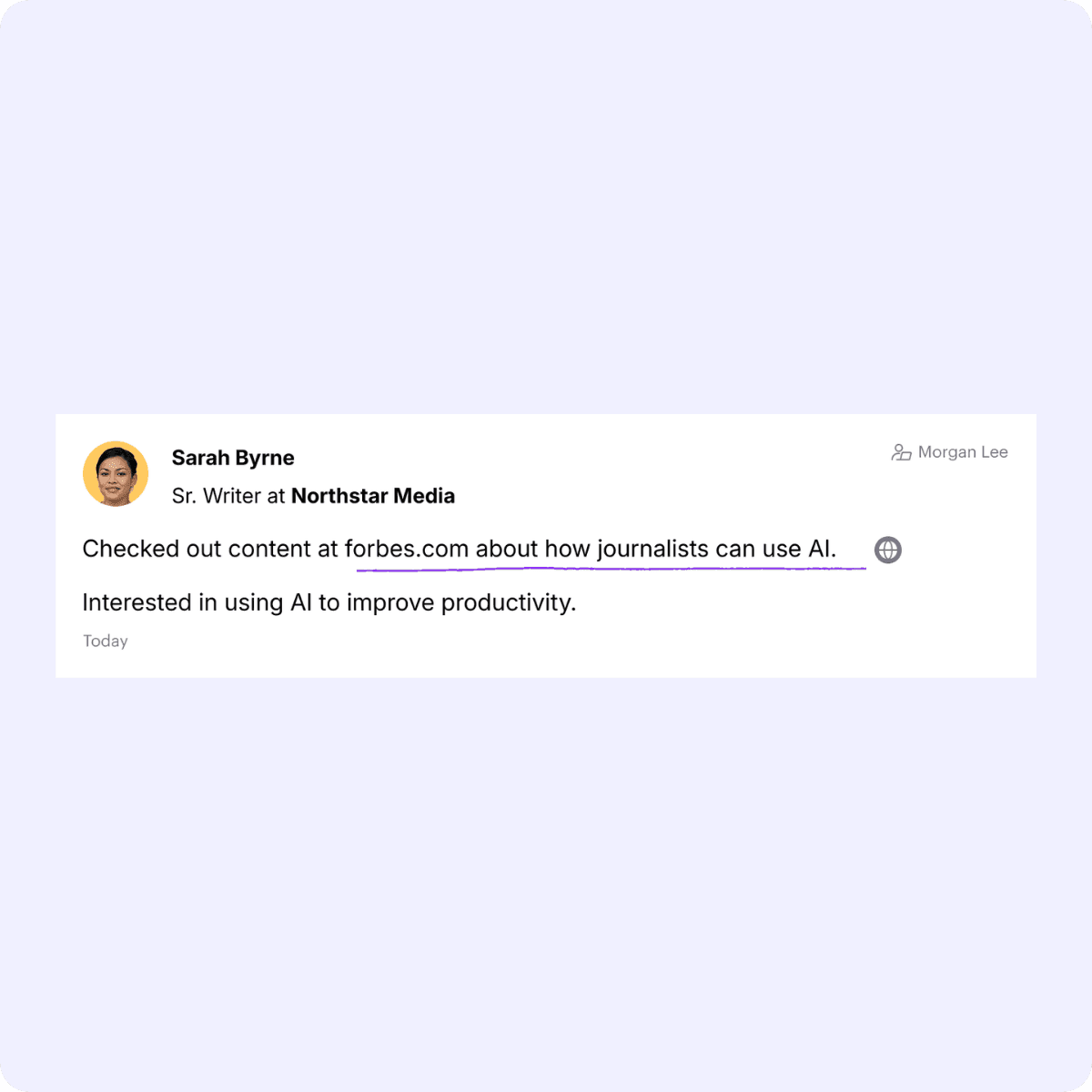
Reading articles about changes in their industry.

Doomscrolling on social media between meetings and seeing ads.

Each of these moments is a signal. But unfortunately, most teams miss the breadcrumbs because their tools give them a limited view.
Why traditional ABM platforms fall short
Forty-two percent of marketers say their biggest ABM challenge is identifying which specific buyers within their target accounts are showing interest, according to the Influ2 & Forrester Contact-Level ABM Report.
The root cause is their tech stack. Traditional ABM tools operate at the account level, so their signals are based on aggregated data across the entire company and aren’t tied to anyone in particular.
So imagine you’re targeting a 1,000-person company and your ABM tool tracks all these signals from the account:
- Someone Googled a competitor's name (a junior-level employee casually browsing).
- Someone read an article about your industry (a manager with an immediate pain point).
- Someone clicked your ad (a marketer building a swipe file).
Since the tool operates at the account level, it can’t tell you which person did what unless they fill out a form.
On top of that, each of those signals happens at different times, but your ABM tool doesn’t notify you until the account meets a “threshold” and determines it’s time to reach out.
So you’re not sure who’s interested in what, and the person with actual buying power might already be close to a decision by the time Sales contacts them.
We see this scenario play out in some form all the time. The fix starts with reversing the approach most teams are used to.
Influ2 starts from your contact list, not account signals
Most intent data starts from anonymous signals and tries to work backward to a person. Influ2 is a contact-level ABM platform that runs in reverse.
You start from a list of named contacts. These are people you've identified as the buyers you want to reach at target accounts. Then Influ2 surfaces when each person shows relevant signals across:
- Search: Searches for your brand, competitors, or pain points that get captured even if the contact never clicks through to your website.
- Content: Relevant content read on a third-party site.
- Social media: Posts about topics relevant to your business.
- Ad engagement: Impressions and clicks on your Influ2 ads.
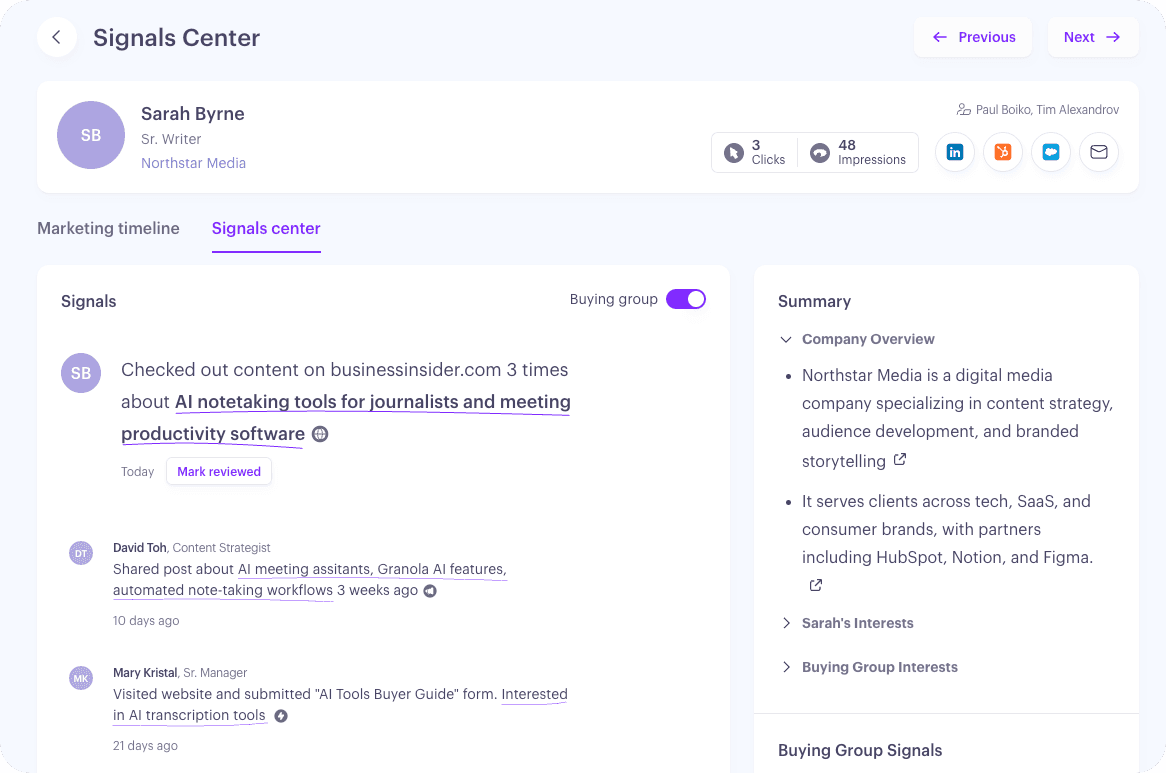
All of it lives in Signals Center, where every action is tracked and categorized.
When you click into a signal, you see all of that contact’s activity, a summary of their interests based on their behavior, and a buying group view that gives you the bigger picture of what each stakeholder cares about.
On top of that, each signal can be used to trigger the next best action. For instance, you might want to put people who search for a competitor into a new sales cadence, or start showing a new set of ads to people who attend a webinar.
All of this is orchestrated at the contact level from Influ2.
How contact-level signals translate into sales conversations
A signal is only useful if it reaches the person who can act on it. Thirty-seven percent of marketers say their biggest challenge is helping salespeople time their outreach effectively.
Whenever Influ2 detects a signal, the sales team gets a notification through the channels you choose (Salesforce, Slack, email).
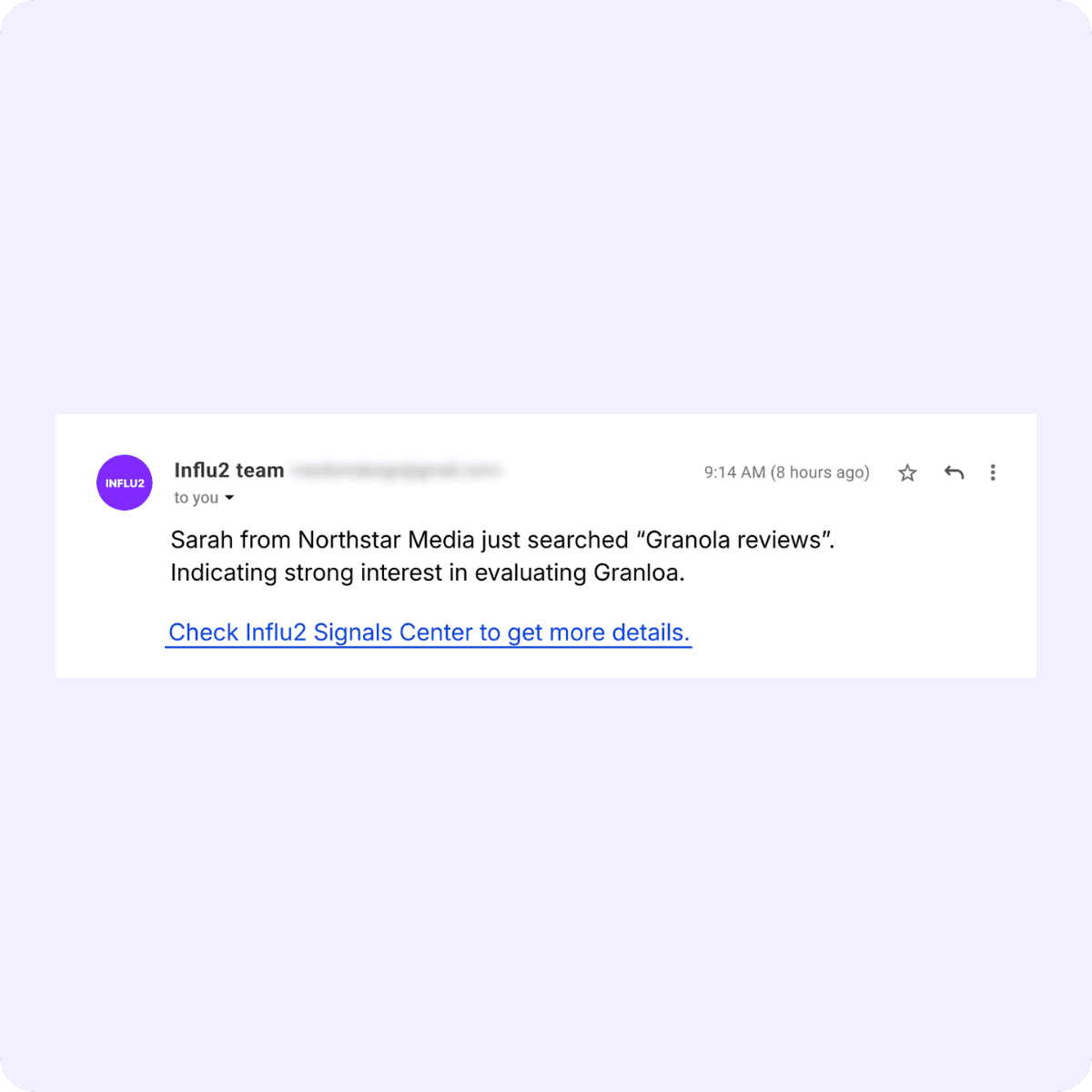
The notification gives them the context they need to act, including who the signal is from, what they did (clicked an ad, searched a keyword, etc.), and the topic they’re interested in. You can even see the details of what they engaged with—the website they visited, the social media post they saw, the ad they clicked, or the topic they searched.
Your sales team can use that insight to lead with value instead of resorting to the dreaded “I saw you just raised a Series A, want a demo?” messages that people ignore. In fact, a recent Gartner survey found that 73% of B2B buyers actively avoid suppliers who send irrelevant outreach.
Taking a contact-level approach that’s tailored to each person’s actual behavior is how you avoid adding to the noise. Plus, it makes a tangible difference on pipeline and revenue.
Bonterra used contact-level signal workflows to reach 80% of their buying committee and achieved a 91% sales-marketing handoff rate. Quantexa used Influ2 to increase their open pipeline conversion rate by 4.53x compared to cold outreach.
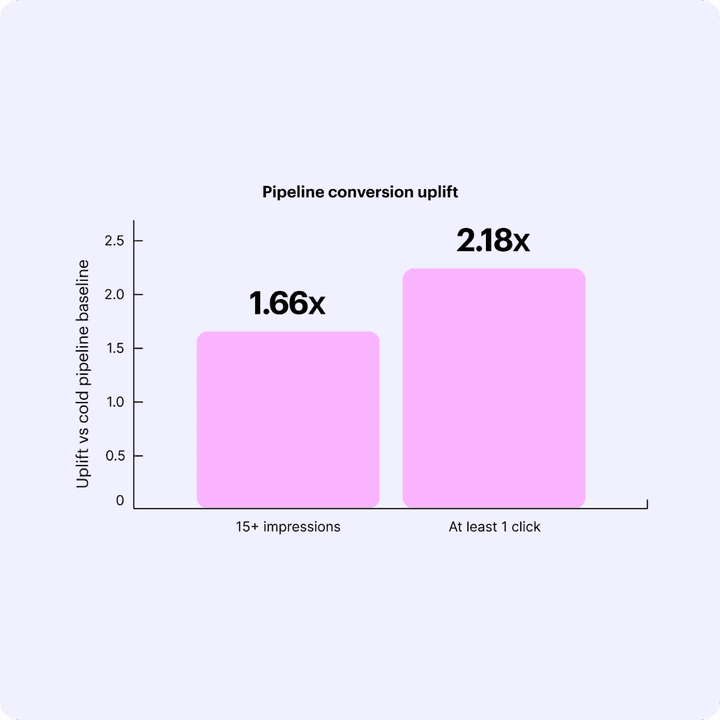
These aren’t isolated incidents. We analyzed the impact of contact-level ABM on 2 million targeted contacts and found:
- Contacts who engage with Influ2 ads book meetings at 1.74x the rate of non-engaged contacts,
- Buying groups where at least one person clicked an ad convert to pipeline at 2.18x the rate.
Orchestrating your GTM strategy around what each person cares about, during the moments when they’re actively showing interest, is a winning combination. Influ2 makes it all possible.
Curious how it can work for your business? Let’s talk!

Dominique Jackson is a Content Marketer Manager at Influ2. Over the past 10 years, he has worked with startups and enterprise B2B SaaS companies to boost pipeline and revenue through strategic content initiatives.

